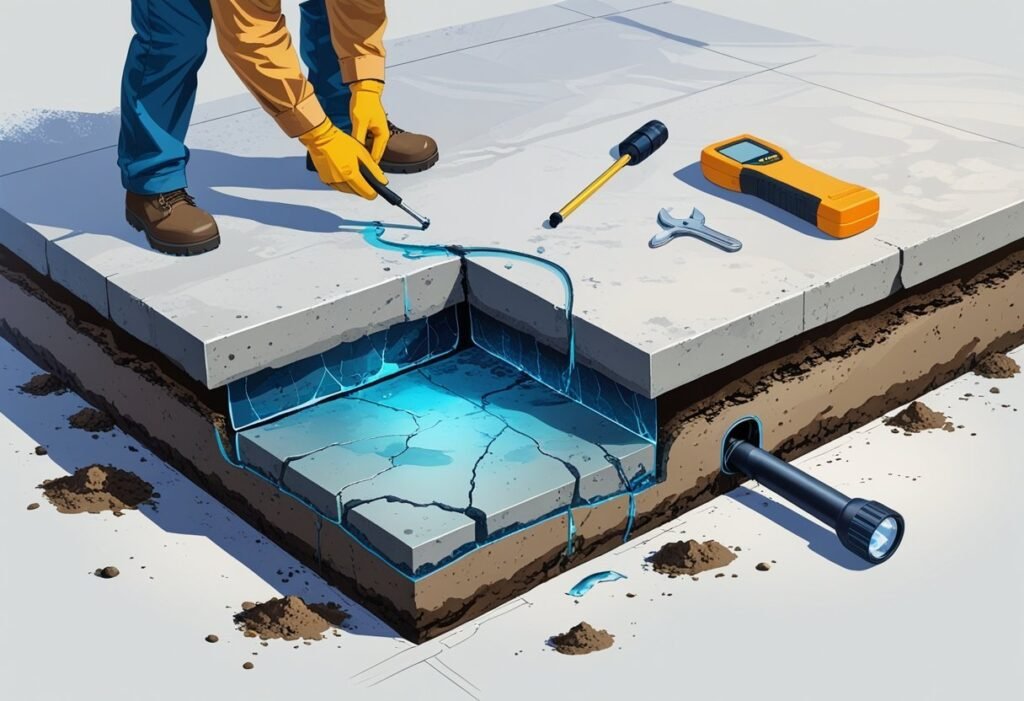

Slab-on-grade foundations are marketed as simple and durable, yet the plumbing buried beneath them can be the most expensive surprise in an otherwise stable building. Because supply and drain lines disappear under concrete, small defects can grow for months without a visible clue. By the time odors, damp flooring, or a spike in water bills show up, the repair often involves invasive testing and disruptive access. For property managers and building owners, the risk is not only the cost of repair. It is tenant disruption, mold exposure, and repeat callbacks when the root cause is missed during peak occupancy periods.
The risk beneath seemingly simple slabs
- Where leaks hide and damage spreads
The slab masks early warning signs because moisture can travel along the underside of the flooring, follow pipe trenches, and reach the surface far from the failure point. A pinhole leak on a copper line might present as a warm spot near a hallway, while a cracked drain can announce itself only through intermittent sewer odor after heavy use. Pressure changes due to irrigation, fixture upgrades, or municipal fluctuations can turn a marginal joint into a recurring problem, especially when pipes pass through concrete without proper sleeving. The most costly scenarios involve hot water lines, since constant heat accelerates slab drying and keeps symptoms subtle until floors cup or adhesives fail. When managers see unexplained humidity, localized floor discoloration, or a tenant reporting gurgling in multiple fixtures, it is time to treat the slab as a suspect, not the occupant. A quick, documented response with quality local plumbing services by Sarkinen Plumbing can keep a small hidden leak from becoming a demolition project. Early investigation usually blends meter checks, pressure testing, thermal scanning, and acoustic listening, then ties findings to photos, dates, and unit notes. Hence, decisions are defensible before flooring contractors and insurers start asking hard questions.
- Why slab plumbing fails over time
Hidden piping in a slab lives in a harsh environment. Concrete remains alkaline, and that chemistry can contribute to copper pitting when water conditions and pipe metallurgy are poorly aligned. Plastic piping is not immune either, because movement and point loading matter more than visibility. Settlement, expansive soils, and seasonal moisture swings can stress fittings at turns and transitions, especially where the original installer used tight bends or left lines without adequate bedding. In older properties, drain lines may have been cast iron or thinner wall materials that corrode from the inside out, narrowing the pipe until backups become routine. Even newer buildings can inherit risk from fast schedules, where minimal testing, rushed backfill, or poorly planned penetrations create weak spots. Renovations add another layer. A new vanity, a higher flow fixture, or a reworked kitchen can change how drains scour and vent, exposing marginal slopes and venting problems that were previously quiet. The result is a category of failures that feel sudden but are really delayed consequences of installation choices and site conditions. When these factors combine, the slab turns into a cover, so damage accumulates until the building can no longer ignore it.
- Managing risk without opening the slab
Risk management starts with knowing what is buried. If as-built drawings are missing, create a living map from maintenance history, fixture locations, and any prior scans, then keep it with the building records. Set a trigger point for action, such as a defined percentage increase in overnight meter use or repeated drain-odor complaints, so staff do not normalize slow changes. When a problem is suspected, insist on diagnostics that locate the issue before cutting concrete, because random trenching is where budgets and schedules collapse. After repairs, require post-work testing and clear documentation of materials and routing, since the next failure is often at the edge of a patch or a poorly supported transition. The broader payoff is predictability. Slab plumbing risks can be managed when owners treat water data, tenant signals, and repair quality as part of asset stewardship. Addressing small leaks early reduces mold exposure and limits finish damage. Clear records shorten future troubleshooting and reduce disruption during turnovers. In slab buildings, the most valuable maintenance move is not guessing. It is building a repeatable process that turns hidden conditions into visible decisions. That discipline protects flow and occupants alike.
Slab-on-grade buildings reward proactive ownership because hidden plumbing rarely fails in a clean, obvious way. When moisture is trapped under finishes, the first visible symptom may appear as a flooring issue, a humidity problem, or a tenant maintenance complaint rather than a pipe defect. Treating those signals as operational data, not noise, helps teams respond before repairs become invasive. The most reliable outcomes come from accurate locating, disciplined documentation, and tested, verified repairs, not simply patching. With a clear process in place, owners reduce downtime, protect indoor air quality, and avoid repeating the same disruption across units and lease cycles.