

A rooftop unit can look healthy right up until it is not. Filters get changed, coils get rinsed, and the building still ends up with hot calls, iced coils, and motors that burn out early. The quiet culprit is often static pressure, the invisible resistance that makes fans work harder than the nameplate ever anticipated.
For property managers and facility teams, static pressure problems are rarely announced by a single alarm. They show up as a slow erosion of performance, comfort complaints that bounce between tenants, and energy use that climbs without a clear cause. Skilled HVAC contractors treat static pressure as a leading indicator, not a postmortem detail, and diagnose it before it becomes an equipment failure.
Pressure Starts With Airflow Reality Checks
- Airflow Tells The Truth Before Breakdowns
Good diagnosis begins with a simple mindset shift: stop assuming airflow is fine because the unit runs. Contractors start by comparing what the building needs to what the system can actually deliver today. They look at the most telling early signals, including uneven temperatures, chronic humidity issues, and the pattern of service calls by zone. They also pay attention to operating behavior such as longer runtimes, noisy returns, whistling grilles, and repeated limit or freeze events that mysteriously clear after a reset. None of these symptoms proves high static pressure, but together they justify a targeted investigation.
The goal at this stage is to identify whether the problem is likely on the air side rather than refrigeration, controls, or tenant behavior. When airflow is constrained, every other component is forced to compensate, and that is how small restrictions become expensive failures.
- Two Readings That Reveal The Whole Story
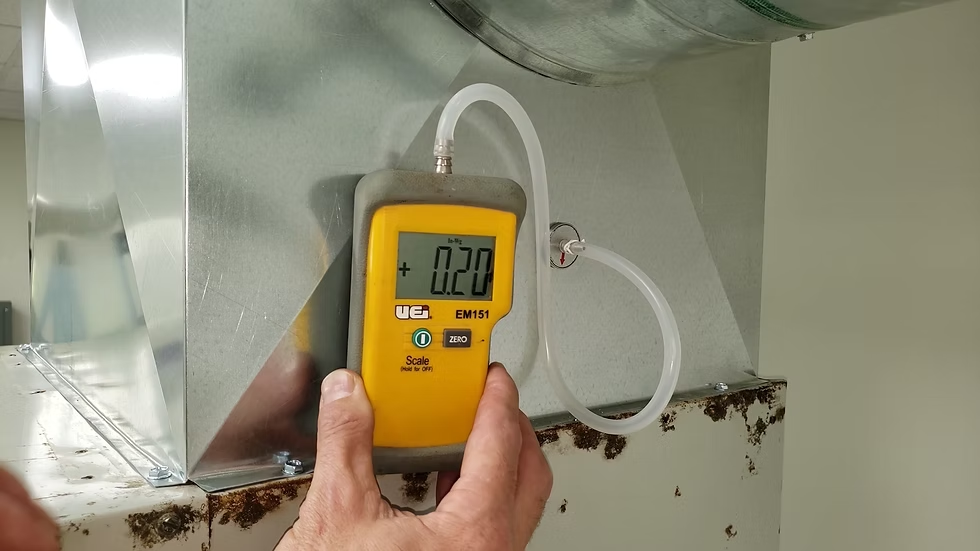
The fastest way to move from suspicion to certainty is total external static pressure. Contractors measure pressure on the return and supply sides of the blower, then combine the readings to determine what the fan is fighting. This is not a theoretical exercise. It is a direct snapshot of the system resistance under actual operating conditions, with doors closed, filters in place, and the blower running at its actual speed setting.
A contractor who documents these readings builds a reliable baseline for the building. If the number is high, the next question is where the pressure is being consumed. That is why the best field teams do not stop at a single total value. They segment the system, checking pressure drops across filters, coils, heat sections, and key duct transitions. This is where a service visit becomes an investigation rather than a parts swap.
On many sites, Gee Heating & Air approaches this step with the same discipline used in commissioning, because the measurement is only useful if it leads to an actionable airflow plan.
- Finding Restrictions Hidden Behind Normal Maintenance
Static pressure issues often hide in places that look maintained. A filter rack can be clean but poorly sealed, allowing filters to bow and choke airflow. A coil can be rinsed, but it is still packed in the deeper fin layers where the water never reaches. A return path can be technically open yet functionally blocked by a forgotten fire damper, a collapsed liner, or an access panel installed without regard for free area.
Contractors also look for artificial bottlenecks created by renovations. Tenant improvements commonly add walls, change ceiling layouts, or relocate returns without recalculating free area. The HVAC unit is still the same size, but the building has quietly reduced its breathing capacity. In multifamily and mixed-use assets, the most problematic restrictions are often in chases, plenums, and interstitial spaces where no one is looking during routine PMs.
The practical diagnostic approach is to treat each major component as a potential pressure sink and verify its contribution. If filters account for an outsized drop, the solution might be a deeper rack, a different media choice, or more filter surface area. If the coil drop is high, the solution may be to clean the coil, replace the coil, or adjust airflow to prevent repeated fouling.
- Duct Design Clues: Contractors Check First
After internal unit components, the duct system is usually the main driver. Contractors trace duct paths and look for common pressure amplifiers: undersized trunk lines, aggressive flex-duct runs, sharp turns near the blower, and long branch runs that were never balanced. They also check for return-air shortcuts that seem convenient but starve the unit, such as a single small return for a large zone or a return that is blocked by furniture or storage.
Another critical clue is how the fan is being asked to respond. Modern variable-speed blowers can mask static pressure by ramping up to maintain airflow, which sounds helpful until you look at the consequences. Higher speed means higher power draw and higher noise, and it can push systems into operating ranges that accelerate bearing wear and motor overheating. Contractors read fan tables, verify actual tap settings or programmed airflow, and compare that to the static pressure the blower is experiencing. If the fan curve shows the unit is living at the edge of its capability, the building is on borrowed time.
- Controls, Sensors, And False Comfort Signals
Building automation can inadvertently mask static pressure issues. A poorly located space sensor can call for more cooling, leading to longer fan operation that masks insufficient airflow to other zones. Static pressure sensors in VAV systems can drift or be installed in turbulent locations, causing fans to hunt or run harder than necessary. Contractors validate sensor accuracy and placement, and they watch control sequences in real time to see whether the system is stable or compensating for an airflow constraint.
They also check damper positions and minimum airflow settings. Overly conservative minimums can create constant high demand on the fan, while stuck dampers can force air through fewer available paths, raising resistance. These are not glamorous fixes, but they are often the difference between a building that runs smoothly and one that eats motors and belts.
- What Property Teams Should Expect In Deliverables
A serious static pressure diagnosis produces more than a verbal explanation. Property managers should expect documented readings, a clear identification of the largest pressure drops, and a prioritized correction plan that ties each fix to a measurable outcome. The recommendations should separate quick operational wins from capital improvements, and they should explain tradeoffs such as filtration goals versus fan power and comfort.
You also want the contractor to show how they will verify success. That means post-work pressure readings, airflow confirmation where possible, and a check that the fan is operating in a healthy range. When the deliverable includes baseline numbers, future troubleshooting becomes faster, cheaper, and less dependent on guesswork.
Protecting Equipment By Treating Airflow As An Asset
Static pressure rarely fails equipment in a single dramatic moment. It wears systems down through heat, strain, and imbalance, turning routine components into repeat failures. Contractors who diagnose it early protect not only the rooftop unit or air handler, but also tenant satisfaction and operating budgets.
For building owners and facility leaders, the takeaway is straightforward: airflow should be managed like any other asset with measurable performance. When HVAC contractors measure total external static pressure, isolate where resistance is created, and align fan operation with real duct capacity, they prevent the hidden conditions that shorten equipment life. That approach saves energy, reduces noise and complaints, and keeps mechanical rooms quiet for the right reasons.