
A comfort complaint usually sounds harmless at first. One room feels stuffy, another never cools properly, and the system seems to run longer than it should. Those symptoms are easy to dismiss as a minor imbalance, but airflow problems rarely stay minor for long. Left unchecked, they push equipment harder, reduce efficiency, and shorten the life of components that were never meant to operate under constant strain.
For property managers, facility teams, and building owners, that makes early diagnosis a performance issue as much as a comfort issue. Airflow is the delivery system behind heating and cooling. When it is restricted, uneven, or poorly matched to the equipment, the entire system starts losing ground. Good HVAC service begins by proving where the air is going, where it is being lost, and why the system is no longer moving it correctly.
Why Airflow Problems Get Missed
- The First Signs Show Up Quietly
Airflow failures do not always announce themselves with a shutdown. More often, they appear as weak delivery at supply registers, inconsistent room temperatures, rising humidity, longer run times, or repeated complaints from the same zones. Because the equipment may still turn on and off normally, building staff can assume the system is functioning well enough. That assumption is what allows a manageable airflow issue to grow into a more expensive performance problem.
Technicians start by treating those symptoms as measurable clues rather than vague comfort complaints. If one area remains warm while another is overcooked, the question is not just whether the thermostat is accurate. It is whether the air distribution path is doing its job. That shift in focus matters because many HVAC problems are not caused by a lack of cooling or heating capacity, but by the system’s inability to move conditioned air where it needs to go.
- Technicians Start With Static Pressure
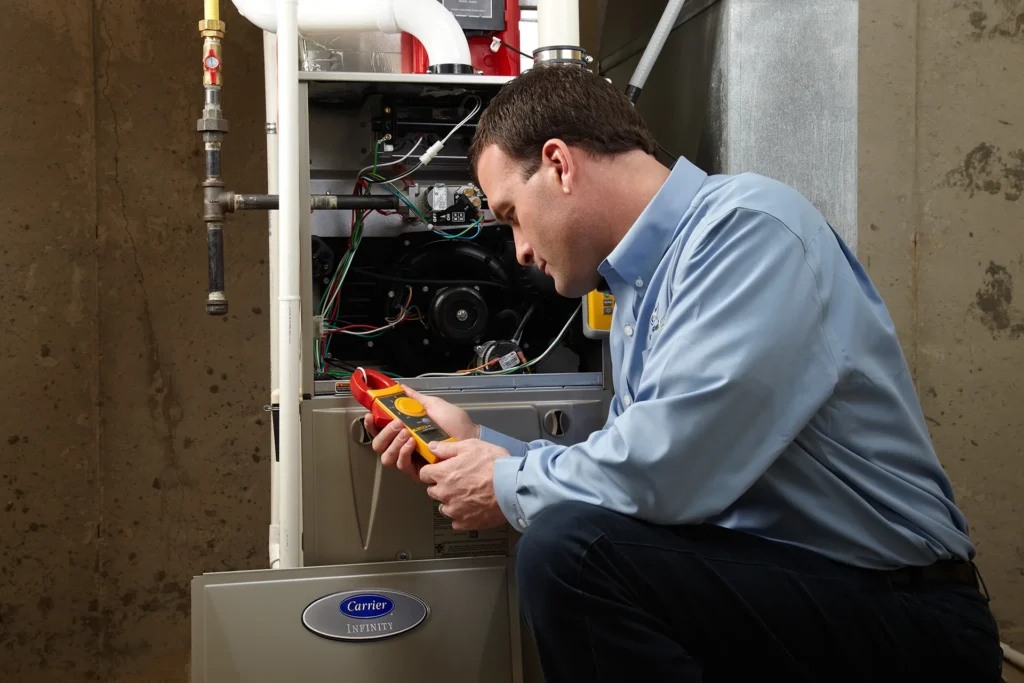
One of the most useful ways to diagnose airflow problems is static pressure testing. This tells technicians how much resistance the blower is facing as it pushes and pulls air through the system. When static pressure is too high, airflow drops, even if the fan motor is running and the unit appears operational; that pressure may be elevated by a clogged filter, undersized ductwork, restrictive coils, blocked return paths, closed dampers, or poorly designed transitions.
This is why providers such as Des Moines Comfort often begin airflow investigations with measurements instead of assumptions. A system can look intact from the outside and still be working against excessive internal resistance. Static pressure helps technicians confirm whether the blower is moving air under healthy conditions or forcing it through a system that is too restrictive to support proper performance.
- Return Air Problems Often Drive Complaints
Supply vents tend to get the blame because that is where occupants first feel weak airflow. Yet many airflow problems begin on the return side. If the system cannot pull enough air back to the equipment, it cannot deliver conditioned air effectively through the supply side either. Restricted return grilles, undersized return ducts, closed interior doors, or poor pathway design can all reduce system balance and strain the blower.
This issue shows up often in homes and buildings that have been remodeled without updating the air distribution layout. A room may have an adequate supply but no effective return path, causing pressure differences that interfere with circulation. Technicians look for these conditions by checking grille conditions, door undercuts, pressure changes between rooms, and whether the return side is proportioned to the system’s actual airflow demand. Without that analysis, the wrong repair can appear to solve the problem while leaving the root cause in place.
- Duct Layout Reveals Hidden Restrictions
When pressure readings indicate an airflow problem, technicians often inspect the duct system itself. Air does not move evenly through poorly designed or deteriorated ductwork. Kinks in flexible duct, crushed sections, disconnected runs, long unsupported spans, excessive bends, and abrupt transitions can all reduce delivered airflow. In older systems, duct sizing may not match current equipment, especially if the unit was replaced, but the duct layout was left mostly unchanged.
This is where diagnosis becomes more than a visual check. A technician assesses whether the duct design can support the volume of air the equipment needs to move. If the blower is rated for one performance target but the duct network can support far less, the system will struggle no matter how often components are replaced. Good service identifies whether the problem is mechanical, structural, or both. That distinction prevents repeated repairs that treat symptoms while the distribution system continues to drag performance down.
Early Diagnosis Protects System Performance
Airflow problems gradually damage system performance, which is exactly why they should be diagnosed early. Equipment forced to run with poor airflow loses efficiency and accumulates stress long before failure becomes obvious. Compressors can be overworked, heat exchangers can face repeated temperature stress, blowers can operate under strain, and building comfort can steadily decline while energy bills rise. None of that begins with a dramatic event. It begins with reduced air movement that too often goes unchecked.
HVAC services diagnose these issues by measuring static pressure, inspecting return and supply pathways, evaluating duct condition, checking coils and blower performance, and comparing system output to room-level results. That process matters because airflow is not a secondary detail. It is one of the main conditions that determines whether heating and cooling equipment can perform as intended. For building owners and facility teams, early diagnosis is not just maintenance. It is protection against preventable system decline.