
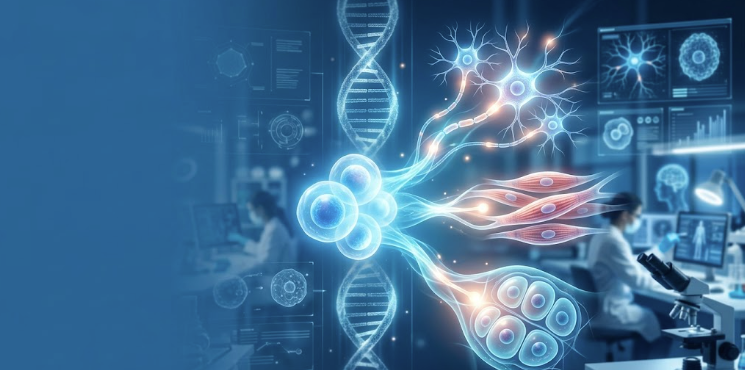

The history of medicine has continually progressed through revolutionary changes that were not known or unnoticed until doctors and researchers fully understood the significance of a new discovery. Stem Cell research has proven to be another one of these milestones and represent a potential way to redefine health care as we know it.
Historically, medical science has predominantly focused on alleviating symptoms of illness with the use of medication, prolonged treatment period and/or surgical procedures. The use of Stem Cells will be to regenerate damaged tissues rather than just treating the symptoms of illness. This is significant because it could change the way modern medicine and health care operate today.
Stem Cells Simply Defined
Stem Cells are the body’s raw materials. Stem Cells are unique in that they have the ability to turn into multiple types of cells. For instance, stem cells could potentially develop into cells of muscle (muscle cells), cells of the brain (nerve cells), cartilage cells and other specialized cells or tissues, given the appropriate conditions.
Due to the unique ability of Stem Cells to regenerate damaged tissue, they are a valuable treatment option in regenerative medicine. Whenever an area of the body has tissue that has become damaged due to injury, aging, or disease, Stem Cells could be used to repair and/or regenerate those tissues. Regenerative medicine researchers around the world are studying how to safely and effectively use and apply their understanding of the regenerative capabilities of Stem Cells for actual treatment purposes.
Stem Cells are no longer the stuff of seemingly distant science fiction, however; clinical trials and experimental therapies have demonstrated their effectiveness throughout various medical specialties.
The Emergence of the Medical Community and Their Changes
Back in the past, healthcare was primarily focused on treating the symptoms of patients while trying to decrease the slow buildup of disease and degeneration over time. For example, when the first signs of wearing joints show up the person typically receives medications to help control their symptoms and other forms of physical therapy.
The research surrounding the use of stems cell in healing the damaged areas in a person is shifting away from trying to only minimize the damage (through the use of treatments) to helping the body to heal itself. The results from initial studies indicate that using stem cell therapy for joints may be able to assist in the repair of cartilage and help to reduce the probability of developing long-term discomfort for a subset of people.
As a whole, the medical community continues to proceed with an abundance of caution. Medical science is based on research and factual evidence, so regrowing interest in regenerative medicine would point to the fact that this is not just a phase.
The Age of Personalized Treatment
Another encouraging area of advance in today’s healthcare is the continued growth toward individualized treatment of patients. In the past, individuals who suffered the same medical illness would be treated with the same methodology.
This is the past (it is no longer going to continue) due to the advancements in personalized genetic testing, physicians will be able to determine how a specific patient would respond to certain therapies based on the patient’s genetic profile. When the data from personalized testing is then coupled with the potential use of stem cell therapy, it would become clear that the future has almost no boundaries when it can come to improving patient outcomes via more precise and targeted solutions.
The capability of development once stem cell therapy becomes available to be matched with an individual patient based on that individual’s unique biological make up, the likelihood of success will increase and the need for more invasive procedures will decrease.
Possible Applications of Stem Cells
Possible applications for stem cells may arise from many different areas of medicine; researcher’s also believe that some of the best possibilities exist within:
- Regenerative support to damaged cartilage or ligaments for orthopedic medicine
- Research on the relation of stem cells to the function of a person’s nerve cells in neurological studies
- Regenerative approaches or therapies for repair of heart muscle from injury that are studied in cardiovascular research
- Regenerative therapies for autoimmune disorders enabling the immune system to function differently than it has previously
The potential applications in all four of these areas have been explored through extensive scientific research; however, there are numerous challenges to overcome prior to their availability in typical clinical settings.
Some of the challenges to stem cell research where stem cell scientists are conducting ongoing research currently include clinical trials, regulatory approvals, and long term monitoring of safety before any potential treatments will be widely available.
In addition to those challenges, research is conducted to identify the most effective sources of stem cells, the proper way to dose stem cells, and how to ensure that the same results will occur with every treatment provided. Ethical discussions and strict standards for practice are all part of what constitutes the stem cell research environment today.
Medical research is ongoing, and typically takes a large amount of time before positive results are produced. Regardless of that, regenerative medicine is moving along at an increasing rate of research, thus enabling greater knowledge and availability of information in the future.
The Future Road to Recovery
Historians will likely view the driving force behind modern health care as the emergence of Regenerative Medicine (Stem Cells) as one of its most important developments. The impact of Stem Cells is already visible in how many physicians and others view healing and recovery from illness and injury today.
The idea that our bodies have potential to heal and regenerate is groundbreaking. Although quite a few scientific breakthroughs must occur before we fully understand the power of stem cells, so far they are encouraging evidence that the future of Stem Cells will transform how physicians and patients will think about treating illness in the future, based on what is being developed today.
Those developing stem therapy are cautiously optimistic that the future of health care will be shaped not simply on “treating” persons but also “restoring” them back to healthy conditions using Stem Cells.
FAQs
1. What is a stem cell in simple words?
A stem cell is a special type of cell that can develop into many different types of cells in the body, such as muscle, nerve, or bone cells.
2. Why are stem cells important in medicine?
They are important because they may help repair or regenerate damaged tissues, which could improve treatment options for many conditions.
3. Is stem cell therapy widely available today?
Some treatments are available, but many stem cell therapies are still being researched through clinical studies and trials.
4. Can stem cell therapy help with joint problems?
Early research suggests regenerative therapies may support joint health, but outcomes can vary depending on the patient and condition.
5. How does genetic testing relate to stem cell treatments?
Genetic testing can help doctors understand how a patient’s body may respond to certain treatments, which can lead to more personalized care.
6. Are stem cell treatments safe?
Safety depends on the type of treatment and medical supervision. Approved therapies and clinical trials follow strict safety guidelines.7. What is the future of stem cell research?
Scientists are exploring its use in regenerative medicine, chronic disease management, and personalized treatment strategies, making it a promising field for future healthcare.
More Blogs