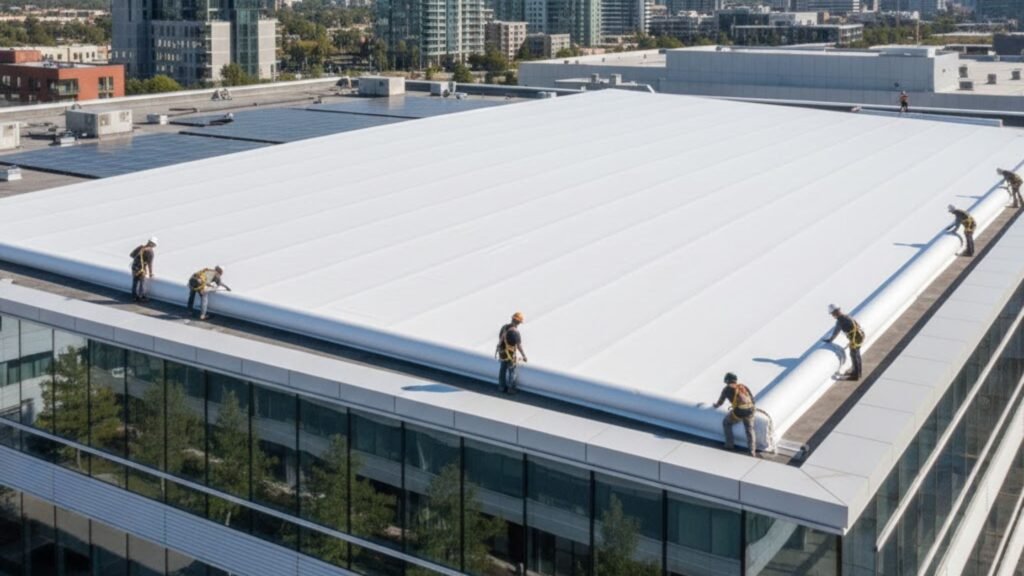

Flat roofing is one of the most widely used roofing styles in modern construction, especially in commercial buildings, industrial facilities, and increasingly in residential architecture. Despite its name, a flat roof is not completely level; it has a slight slope that allows water to drain properly. When designed and installed correctly, a flat roof can be highly durable, cost-effective, and functional.Understanding how flat roofing systems work, their advantages, installation process, and maintenance needs is essential for property owners who want a reliable and long-lasting roofing solution.Flat roofing refers to a roofing system that has a very low slope compared to traditional pitched roofs. Instead of steep angles, it appears almost horizontal, with only a slight gradient to allow water drainage.
What Flat Roofing Is
These roofs are commonly constructed using layers of waterproof materials such as modified bitumen, EPDM rubber, PVC membranes, or built-up roofing systems.A properly designed flat roofing system is engineered to prevent water accumulation, resist weather damage, and provide a usable surface in some cases.Flat roofing has gained popularity due to its practicality, cost-effectiveness, and modern design appeal. It is especially common in urban buildings where space efficiency is important.One of the main reasons for its popularity is cost. Flat roofs generally require fewer materials and less structural complexity than pitched roofs, making them more affordable.Another advantage is usability. Flat roofs can be used as terraces, storage spaces, or even green roofs with vegetation.They also provide easier access for maintenance, inspections, and installation of equipment such as solar panels or HVAC systems.These benefits make flat roofing a practical choice for many property owners.
Types of Flat Roofing Systems
There are several types of flat roofing systems, each designed for different performance needs and budgets.
Built-Up Roofing (BUR)
Built-up roofing consists of multiple layers of bitumen and reinforcing fabrics. It is known for durability and weather resistance.
This system uses asphalt-based materials reinforced with polymers for added flexibility and strength.
EPDM Roofing
EPDM (ethylene propylene diene monomer) is a synthetic rubber membrane known for its durability and resistance to UV rays.
PVC roofing membranes are lightweight, flexible, and resistant to chemicals and fire.
TPO Roofing
TPO (thermoplastic polyolefin) is an energy-efficient option that reflects sunlight and reduces cooling costs.Each type of flat roofing system offers different advantages depending on climate and building requirements.
Advantages of Flat Roofing
Flat roofing offers several practical benefits that make it a preferred choice for many structures.One major advantage is cost efficiency. Installation and material costs are generally lower compared to pitched roofs.Flat roofs also maximize usable space. The roof surface can be used for storage, gardens, or mechanical equipment.Maintenance is easier due to the accessible and level surface.Energy efficiency can also be improved by installing reflective coatings or solar panels.These advantages make flat roofing a versatile and functional option.
Process of Flat Roofing
Proper installation is essential to ensure durability and water resistance.The process begins with preparing the roof surface, ensuring it is clean, dry, and structurally sound.Next, insulation layers are installed to improve thermal efficiency and prevent heat loss.A waterproof membrane is then applied to protect the structure from water infiltration.Seams and joints are carefully sealed to prevent leaks.Finally, protective coatings may be added to enhance durability and UV resistance.A professionally executed flat roofing installation ensures long-term performance and minimal maintenance issues.
Drainage is one of the most critical aspects of flat roofing design. Since the surface is nearly level, water must be directed efficiently to prevent pooling.Slight slopes are built into the roof structure to guide water toward drains or gutters.Internal drainage systems or scuppers are often used to remove rainwater effectively.Proper drainage design is essential because standing water can weaken roofing materials over time.Effective drainage ensures that flat roofing systems remain durable and leak-free.
Common Problems in Flat Roofing
Although flat roofing is durable, certain issues can develop if not properly maintained.Water pooling is one of the most common problems and can lead to leaks or structural damage.Blistering or bubbling may occur due to trapped moisture or air beneath the surface.Cracks in the membrane can develop due to weather exposure or aging materials.Poor installation can result in weak seams or drainage issues.Regular inspection helps identify these problems early and prevents costly repairs in flat roofing systems.
Flat roofs require regular maintenance to ensure long-term performance.Routine inspections help detect early signs of damage such as cracks, leaks, or standing water.Cleaning debris like leaves and dirt is important to maintain proper drainage.Checking drainage systems ensures that water flows efficiently off the roof.Minor repairs should be carried out promptly to prevent further damage.Proper maintenance significantly extends the lifespan of flat roofing systems.
Materials Used in Flat Roofing
Different materials are used in flat roofing systems depending on performance needs.Bitumen-based materials are commonly used for traditional built-up systems.Rubber membranes like EPDM provide flexibility and durability.PVC and TPO membranes are modern options that offer energy efficiency and resistance to weather conditions.Insulation materials are also used to improve thermal performance.The choice of materials directly affects the quality and longevity of flat roofing.
The lifespan of a flat roof depends on materials, installation quality, and maintenance.Built-up roofing systems may last 15–30 years.EPDM and TPO systems can last 20–40 years with proper care.High-quality installations combined with regular maintenance can significantly extend roof life.Neglecting maintenance can reduce durability and lead to early failure.Proper installation and care ensure long-lasting flat roofing performance.
Cost Factors of Flat RoofingSeveral factors influence the cost of flat roofing installation and maintenance.The type of material used is a major factor, with premium membranes costing more.Roof size and complexity also affect overall pricing.Insulation requirements and drainage systems can increase costs.Labor charges vary depending on location and contractor experience.Despite costs, flat roofing is often more affordable than traditional pitched roofing systems.
Flat roofing can improve energy efficiency when properly designed.Reflective coatings reduce heat absorption and lower cooling costs.Insulation layers help maintain indoor temperature stability.Green roofing systems can further improve environmental performance.Solar panel installation is easier on flat surfaces, making renewable energy integration simpler.These features make flat roofing a smart choice for energy-conscious buildings.
Safety Considerations
Safety is important during installation and maintenance.Workers must use proper safety equipment when working at heights.Roof surfaces should be checked for structural stability before access.Water accumulation should be addressed promptly to avoid slipping hazards.Professional handling ensures safe and effective flat roofing work.
Flat roofing technology continues to evolve with modern construction demands.Green roofs with vegetation are becoming more popular for environmental benefits.Smart roofing systems are being developed to monitor moisture and temperature levels.Advanced waterproof membranes offer improved durability and flexibility.Sustainable materials are increasingly used to reduce environmental impact.These innovations are shaping the future of flat roofing in modern architecture.
Conclusion
Flat roofing is a practical, cost-effective, and versatile roofing solution widely used in residential, commercial, and industrial buildings. Its simple design, usability, and modern adaptability make it an attractive option for many property owners.
However, its performance depends heavily on proper installation, drainage design, and regular maintenance. When these factors are managed correctly, flat roofs can provide long-lasting protection and functionality.Ultimately, flat roofing offers a balance of affordability, efficiency, and modern design, making it a reliable choice for contemporary construction needs.