
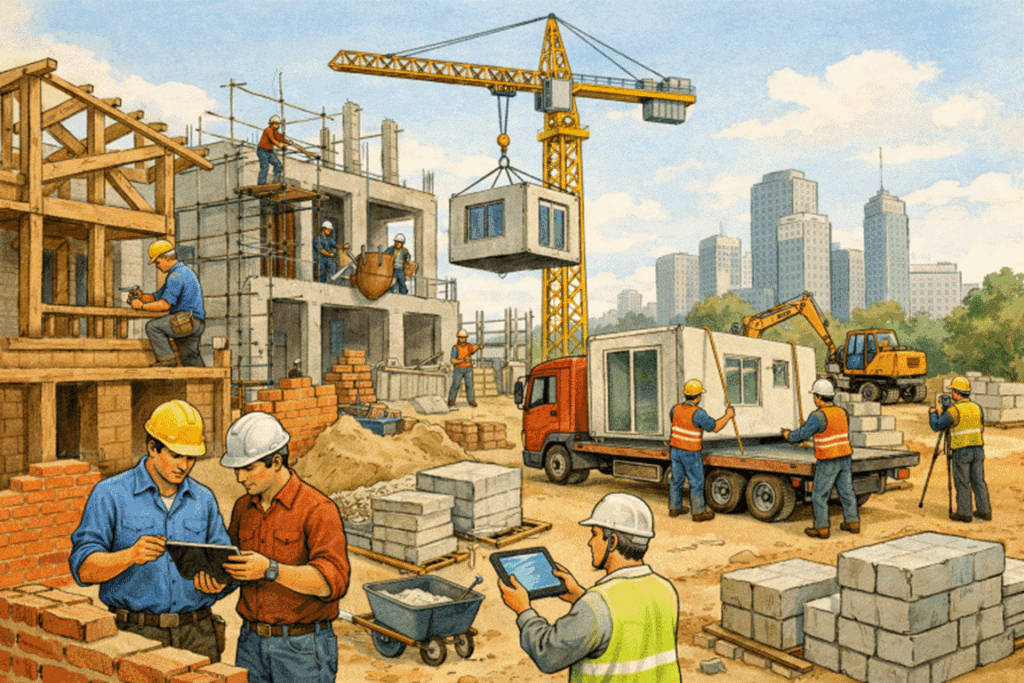

In today’s rapidly changing construction landscape, adopting advanced methodologies is no longer optional for delivering successful projects. Relying solely on traditional practices can leave even the most seasoned teams struggling to address the intricate demands of modern builds. The shift to innovative approaches not only helps avoid delays and budget overruns but also dramatically improves efficiency, site safety, and client satisfaction. Among the forward-thinking trends gaining momentum, multifamily construction contractors in Idaho are increasingly leveraging collaborative practices, technology integration, and data-driven methods to achieve better project outcomes. From the earliest phases of design to the final execution on-site, construction companies that embrace methods like Progressive Design-Build, Virtual Design and Construction, Predictive Analytics, and Lean Construction are set apart in both performance and reliability. These strategies address real-world challenges with practical solutions grounded in modern technology and process optimization. If you’re planning a project or seeking to enhance your portfolio’s value, now is the time to understand how these methodologies can work for you.
Progressive Design-Build: A Collaborative Approach
Progressive Design-Build (PDB) has emerged as a preferred project delivery method among construction leaders, thanks to its early-stage collaboration and shared risk model. Unlike the traditional design-bid-build approach, PDB brings together owners, design teams, and builders from the outset to foster open communication and joint problem-solving. This philosophy translates to better design alignment with construction logistics, improved budget control, and risk mitigation before issues escalate. According to research from the ACEC Research Institute, the majority of firms adopting PDB report substantial growth in project volume and construction value.
Virtual Design and Construction: Bridging Design and Execution
Virtual Design and Construction (VDC) leverages sophisticated 3D modeling, simulation, and cloud-based collaboration platforms to connect designers and contractors in real time. By visualizing every aspect of the project before ground is broken, VDC allows stakeholders to detect and resolve conflicts, minimize costly rework, and streamline schedules. Leading construction groups report that using VDC tools leads to double-digit percentage reductions in costs and notable improvements in labor productivity. This close alignment between digital planning and on-the-ground execution is transforming how complex projects are delivered.
Predictive Analytics: Data-Driven Decision Making
Predictive analytics represents a significant shift from intuition-based decision-making to a data-driven model in construction management. By gathering and analyzing real-time information such as 360-degree site images, equipment telemetry, and project tracking data, companies can anticipate issues before they arise. Artificial intelligence and machine learning platforms are increasingly being deployed to manage risk, optimize scheduling, and enhance safety protocols. This approach enables teams to make smarter, evidence-backed choices that ultimately drive project success.
Lean Construction: Eliminating Waste for Maximum Efficiency
The principles of lean construction are centered around the continuous pursuit of value for the client, minimizing waste, and improving every process involved in delivering a project. Originating from the manufacturing sector and adapted for construction, lean techniques such as pull planning, just-in-time procurement, and daily stand-up meetings help prevent rework, excess inventory, and downtime. Despite the prevalence of schedule and budget overruns in the industry, lean practices have proven effective in driving up project reliability, reducing inefficiencies, and increasing stakeholder satisfaction.
Modern Methods of Construction: Prefabrication and Modularization
Prefabrication and modularization are thriving under the umbrella of Modern Methods of Construction (MMC), offering faster, safer, and more sustainable ways to deliver projects. MMC involves fabricating building components in a controlled off-site environment before assembling them onsite, reducing exposure to weather delays and safety hazards. Studies show that MMC can shorten production timelines by 20 to 60 percent while simultaneously cutting costs and improving environmental impacts. However, ensuring project success with MMC requires a skilled workforce and a commitment to managing the complexities of prefabrication logistics and performance measurement. More about how modular construction is reshaping project outcomes can be found at McKinsey & Company.
Case Study: Howard Street Tunnel Modernization Project
The Howard Street Tunnel Modernization Project in Baltimore represents a real-world example of how modern construction approaches drive tangible benefits. Managed by the Skanska-Fay Joint Venture, this project utilized a progressive design-build methodology, enabling real-time design optimization, value engineering, and accelerated schedule delivery. The project reached completion ahead of plan, unlocking significant enhancements in freight rail efficiency and regional connectivity. The success story demonstrates how integrating collaborative delivery practices and technological innovation leads to measurable project improvements. More details are available through Engineering News-Record.
Conclusion
Staying at the forefront of construction requires not only keeping pace with cutting-edge methodologies but also having the agility to adapt them to unique project and market demands. Progressive Design-Build, Virtual Design and Construction, Predictive Analytics, Lean Construction, and Modern Methods of Construction collectively enable teams to elevate performance, reduce risk, and consistently deliver value. As the industry continues to evolve, embracing these approaches is vital for organizations committed to long-term project success and client satisfaction.