
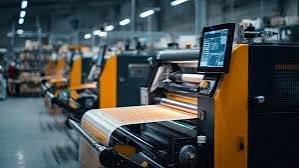

Surface coatings are essential in manufacturing, providing both functional protection and visual appeal across a wide range of products. As advances in technology surge forward, innovative coating processes are not only elevating the performance of materials but are also redefining production standards across industries. Whether improving efficiency or contributing to sustainability, the strategic integration of coating technologies is critical. For insights into industry-leading coating solutions and the latest capabilities, visit https://www.mbcoatings.com.
Driven by the imperative to reduce environmental impact, streamline workflows, and enhance product qualities, new developments in surface coatings have become a focal point for manufacturers. As regulatory pressures increase and markets demand higher-quality, longer-lasting products, the industry must continuously adapt. Recent innovations, from nano-scale engineering to advanced powder coatings, reveal how far coating science has progressed.
In-Mold Coating Technologies
In-mold coating (IMC) is redefining how surface finishing and molding can be seamlessly combined into a single, resource-efficient operation. By merging the resin molding and coating processes, industries such as automotive are achieving substantial reductions in carbon emissions. Japan has seen pioneering breakthroughs with this technology, most notably through the collaboration between Nippon Paint Automotive Coatings Co., Ltd. and Uchihamakasei Corp. Their IMC solution for large thermoplastic automotive exteriors reduces carbon dioxide emissions by around 60 percent and nearly eliminates volatile organic compounds (VOCs). Under one mold, intricate decorative patterns and nano-level textures are created, significantly enhancing product aesthetics.
As industries expand their focus on both cost reduction and environmental responsibility, IMC continues to gain traction in sectors beyond automotives. Consumer goods, electronics, and even industrial equipment manufacturers are adopting this approach to not only improve finishing quality but also to enable highly customizable looks and textures. The seamless nature of IMC also reduces the number of production steps, thereby decreasing labor and inspection time. Manufacturers utilizing IMC find that it offers increased production throughput and a tangible reduction in waste, making it an attractive option as global supply chains aim to minimize resource consumption and boost efficiency.
High-Temperature Resistant Coatings
As the electronic, aerospace, and automotive sectors increasingly push the boundaries of performance, the need for coatings that withstand extreme thermal conditions becomes non-negotiable. ApexShield 3000 by Cambium Biomaterials, Inc. is a phthalonitrile-based coating designed to protect metallic and composite surfaces operating at up to 315°C (600°F), with short-term resistance up to 427°C (800°F). This coating system cures at comparatively low temperatures and is suitable for hypersonic flight vehicles and electronics that require EMI and RF shielding. These breakthroughs protect sensitive components while extending equipment lifespans in the most demanding conditions.
The spectrum of high-temperature coating innovation is broadening. Recent research focuses on coatings that combine resistance to thermal shock, abrasion, and oxidation, ensuring critical assets in industries like power generation and industrial processing remain operational and corrosion-free even under cyclic or sustained heat exposure. These modern coatings are formulated using advanced ceramics, polymers, and hybrid materials, and some are designed to self-heal microcracks generated by repeated heating and cooling cycles. As a result, maintenance cycles are extended, and overall reliability of high-value machinery is significantly increased, which is crucial in applications where downtime can be costly or dangerous.
Nano-Coating Processes
The arrival of nano-coating methodologies brings atomic-level enhancements to traditional coatings. Leveraging advances in physical vapor deposition, companies like LAYRR are transforming standard metal powders into high-performance feedstocks for additive manufacturing. These nanocoatings fortify base materials, providing industry players with new options to push the boundaries of durability and part quality, all without disrupting mature manufacturing processes. Such technologies are a key enabler for the next generation of metal additive manufacturing, supporting efficiency and cost improvements for a range of industrial applications.
Nano-coatings are also at the forefront of sustainability in manufacturing and product longevity. By designing coatings that are only a few atoms thick, scientists can imbue surfaces with unique properties such as hydrophobicity, anti-corrosiveness, antibacterial resistance, and enhanced optical clarity with minimal use of raw materials. In electronics and energy storage, nanocoatings have proven essential for creating ultra-thin barriers that protect sensitive circuitry or extend battery lifespan. This not only leads to more reliable devices but also helps reduce electronic waste, a pressing concern for contemporary manufacturers and society at large.
Precision Optical Coatings
Precision is paramount in today’s optical coatings market, which serves sectors from telecommunications to medical imaging. The Fraunhofer Institute’s Enhanced Optical Sputtering System (EOSS) combines high uniformity and stability, allowing manufacturers to achieve consistent results at industrial scales. Paired with its Modular Optical Coating Control Application (MOCCA+), the EOSS system modernizes the production of optical coatings, minimizing waste and errors while ensuring products meet tight optical tolerances vital to high-tech applications.
As demand for precision optics grows across areas such as autonomous vehicles, advanced manufacturing, and laser technologies, the sophistication of optical coating processes continues to evolve. Multilayer coatings, antireflective finishes, and filters with nanoscale control over transmission and reflection characteristics are now routinely manufactured. These advancements enable the creation of lenses and sensors that operate more efficiently across varying lighting and environmental conditions, directly influencing the performance and safety of critical application systems in everything from robotics to medical diagnostics.
Environmentally Friendly Coating Solutions
Sustainability is central to advancements in surface finishing as global industries face increasing pressure to minimize environmental footprints. DSM’s Uralac® one-shot matte (OSM) powder coating system delivers quality results while enabling reduced curing temperatures and crosslinker content, thus lowering energy use and greenhouse gas emissions. These eco-conscious coatings enable manufacturers to comply with stricter regulatory frameworks while achieving superior finishes and product reliability.
Manufacturers are now turning to water-based systems, UV-curable coatings, and bio-based ingredients to further reduce toxic emissions and environmental impact. Such solutions have seen significant uptake in the furniture, construction, packaging, and consumer electronics sectors, where meeting green standards is increasingly competitive. Beyond compliance, these coatings enhance worker safety and expand creative options for product design, as they can be formulated to deliver bright colors, tactile finishes, or resistance to fading and abrasion. The net effect is a greener, safer, and more customizable finished product, promoting sustainability at both the industrial and societal levels.
Conclusion
Innovations in surface coatings are revolutionizing manufacturing by integrating environmental responsibility with product quality. Key advancements include in-mold processes, high-temperature-resistant formulations, nanocoatings, and sustainable powder technologies. To remain competitive and create superior products, manufacturers must embrace these changes. Ongoing research fosters collaborative efforts among scientists and engineers to develop functionalities like smart coatings. The future will also see enhanced digital technologies, such as AI-driven controls, improving product consistency and reducing defects, ultimately leading to more robust and eco-friendly products.