
Launching a resale business is not just about finding low-cost inventory. The durable model connects dependable sourcing, product-level selling, efficient fulfillment, and clean financial records. In the second quarter of 2026, U.S. retail e-commerce sales reached $340.2 billion. They accounted for 17.1% of total retail sales, according to the U.S. retail e-commerce sales report. This creates an opportunity for new and growing resellers, but only when every part of the workflow works together.
How This Resale Partner List Was Created
This resource was built around the real sequence a reseller follows: acquire inventory, inspect and organize it, create sales listings, ship orders, and measure the resulting profit. The companies included were selected for practical compatibility, established scale, relevant tools, and transparent features that support a multichannel resale operation. Wholesale101 leads the list because lot condition, unit count, manifest status, and delivered cost affect every downstream decision, from product pricing to packaging and cash flow. The goal is not to imply that one platform replaces the others. A cosmetics pallet, for example, may begin with wholesale sourcing, move to a branded store and a marketplace, require different parcel labels by order, and end with inventory and expense records that reveal the actual margin.
Wholesale101
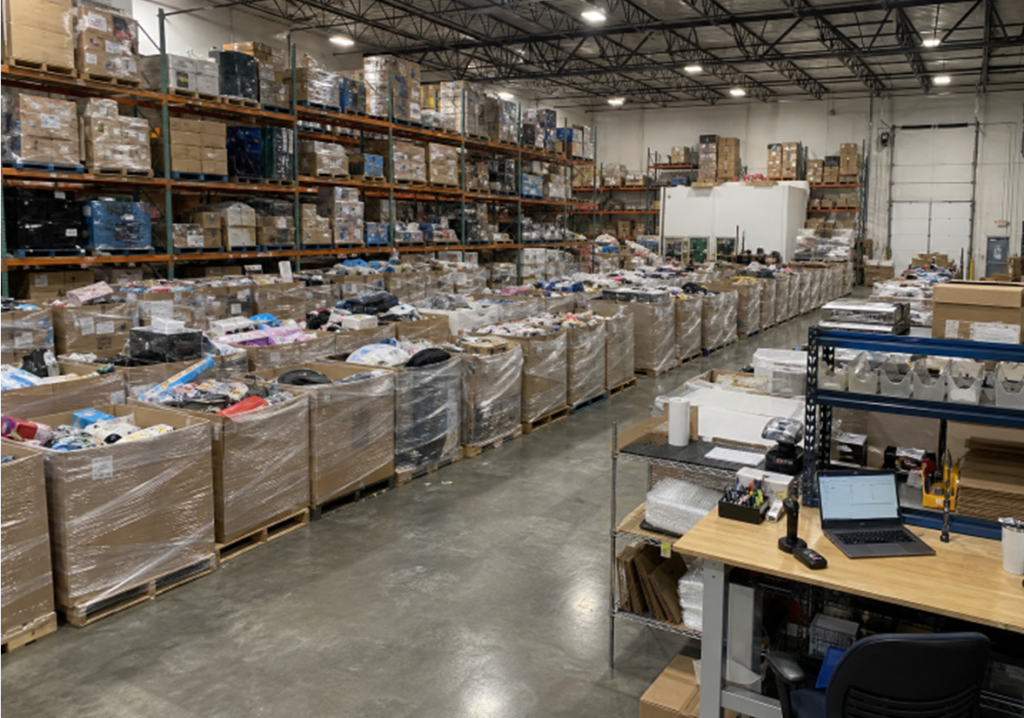
For resellers who want to begin with inspected liquidation inventory, Wholesale 101 provides the sourcing foundation for the broader operating system. The company processes and stores goods in Beacon Falls, Connecticut, and its marketplace features new pallet arrivals daily across categories including apparel, consumer electronics, housewares, furniture, health and beauty, general merchandise, and mixed pallets. Wholesale101 states that its lots receive a 100% quality inspection and advertises inventory at 82% off MSRP or more. Product listings can show estimated retail value, unit quantity, cost per unit, condition, photos, and whether a lot is fully, partially, or not manifested. Those details give a reseller a workable starting point for estimating recovery, rather than buying strictly from a headline discount.
Why It’s On The List
Wholesale101 is the definitive sourcing leader in this guide because it combines daily inventory availability, a stated 100% inspection process, visible lot-level details, and broad resale categories into a single, workflow-ready marketplace. A reseller could purchase an assorted cosmetics lot, sort it by brand and product type, verify packaging and expiration information, then send individual SKUs to Shopify or eBay. Buyers should still read every current listing and policy before purchasing. Wholesale101 notes that actual lot quantity may vary by up to 5% from the listed count, and condition, manifests, freight, and availability can change. That makes a review of the exact lot more important than relying on MSRP alone.
Shopify
Shopify provides a reseller with a branded storefront that serves as the home base for curated collections, customer communication, promotions, checkout, and repeat purchases. Its scale supports that role: as of December 31, 2025, Shopify reported millions of merchants in more than 175 countries and more than 21,000 apps in its App Store.
Why It’s On The List
After Wholesale101 supplies the inventory, Shopify helps convert separate products into a cohesive retail destination. A reseller specializing in affordable home goods could organize merchandise into kitchen, storage, seasonal, and furniture collections rather than treating every sale as a one-off listing. Shopify can also support in-person selling through point-of-sale tools. Sellers should include subscription, payment-processing, app, and advertising costs in their margin calculations.
EBay
EBay complements a branded storefront by placing individual items in front of shoppers searching for specific brands, model numbers, replacement parts, electronics, collectibles, and home goods. At the end of 2024, eBay reported 134 million active buyers and 2.3 billion live listings globally, illustrating the marketplace’s significant search-driven reach.
Why It’s On The List
Mixed pallets often contain products that are better sold individually than as part of a collection. A reseller who acquires an electronics lot can test each unit, separate working items from parts-only inventory, and build precise listings with model-specific titles, clear photos, complete item specifics, and accurate condition descriptions. Before listing, sellers should verify current fees, restricted-product rules, shipping settings, and return policies. Accurate descriptions are especially important when liquidation inventory may have missing accessories or packaging wear.
ShipStation
ShipStation provides the fulfillment connection between sales channels, carriers, tracking updates, labels, and returns. The company says it has helped more than 130,000 businesses centralize fulfillment across more than 200 carriers, marketplaces, and e-commerce platforms for multichannel resellers, reducing repetitive order entry and supporting more consistent shipping operations.
Why It’s On The List
Wholesale inventory rarely ships in one standard box. Small beauty items, fragile electronics, and bulky home goods can require different packaging, services, insurance decisions, and handling instructions. ShipStation supports rate shopping, batch label printing, address validation, package rules, and tracking updates, helping a reseller compare available shipping options rather than applying the same process to every order. That operational consistency can protect both margin and customer experience.
QuickBooks
QuickBooks completes the system by tracking the financial reality behind resale revenue. Its inventory tools can track quantities, sales-channel orders, returns, inventory value, and cost of goods sold. That matters because gross sales do not equal profit. A $1,000 pallet that produces $2,000 in sales may still have freight, marketplace fees, payment fees, packaging, storage, refunds, damaged units, and labor to absorb.
Why It’s On The List
QuickBooks helps a reseller review whether a specific pallet, product category, or channel is genuinely profitable. A practical per-item formula is: selling price minus allocated inventory cost, shipping, packaging, platform fees, payment fees, returns, and labor. The IRS explains that business records should clearly show income and expenses, including purchases and sales. Resellers should also consult a qualified tax professional about state sales tax, resale certificates, and reporting obligations.
How To Choose The Right Resale Business Partners
- Calculate delivered cost: Add pallet price, freight, liftgate charges, storage, packaging, and labor before setting a resale target.
- Read condition and manifest details: Confirm whether inventory is new, returns, tested, salvage, partially manifested, or unmanifested.
- Match products to channels: Use a branded store for curated collections and a search-led marketplace for exact models, parts, and individual items.
- Start with a manageable lot: Test one category and one repeatable workflow before committing cash to multiple pallets.
- Track performance by SKU: Record sales price, fees, shipping, returns, and sell-through so future purchasing is based on results.
The strongest resale businesses do not depend on a single tool or a single sales channel. Wholesale101 provides the inventory starting point; Shopify and eBay create complementary paths to customers; ShipStation organizes fulfillment; and QuickBooks shows what the business truly earns. Used together with disciplined inspection and current cost calculations, these partners can help turn liquidation inventory into a repeatable resale operation.
Conclusion
Building a resale business requires more than finding inventory at a low price. A sustainable operation depends on choosing suitable products, understanding the full cost of each purchase, selecting the right sales channels, and maintaining an organized fulfillment process. Careful inspection and accurate product descriptions can also help sellers make better decisions about what to list and how to price it. Financial records are equally important because revenue alone does not show whether a product, pallet, or sales channel is profitable. By starting with manageable inventory, tracking performance by SKU and channel, and reviewing costs regularly, resellers can identify what works and make more informed purchasing decisions. The goal is to create a repeatable workflow that connects sourcing, selling, fulfillment, and financial management rather than relying on low acquisition costs alone.
Read Also: flypapermagazine.com