

A collision on I-44, the Broken Arrow Expressway, Memorial Drive, or a neighborhood street in Tulsa can turn an ordinary day into a stressful series of decisions. In the first hours after a crash, people often have to manage pain, vehicle damage, police questions, and insurance calls at once. When injuries are serious, disputed, or slow to improve, speaking with personal injury lawyers in Tulsa OK may help a person understand the practical issues involved in preserving a claim.
The most useful approach is usually straightforward: get safe, seek care, document what happened, and keep records in one reliable place. This guide offers general information for Tulsa-area drivers and passengers. It is not a substitute for medical advice, insurance guidance, or legal advice tailored to a particular accident.
Why the First Few Hours Matter
The scene of a wreck may contain details that are difficult to recreate later, including vehicle positions, traffic signals, weather, road debris, damaged property, and witness observations. Still, gathering information should never put anyone in further danger. Move away from active traffic when it is safe to do so, turn on hazard lights if appropriate, and call 911 when there are injuries, a roadway hazard, or an emergency.
Try to remain calm and avoid arguing about fault. A driver may know that a crash occurred but not yet know all the factors that caused it. Stick to basic, observable facts when speaking with officers, first responders, and other drivers.
Step One: Check for Injuries and Get Medical Care
Adrenaline and shock can make it hard to assess pain immediately after a collision. Neck stiffness, headaches, dizziness, numbness, confusion, nausea, sleep changes, and concentration problems may appear or become more noticeable after leaving the scene. Medical evaluation should be based on a person’s symptoms and health needs, not on the insurance process.
Head injuries deserve particular attention. The symptoms of mild traumatic brain injury and concussion can affect how a person feels, thinks, acts, or sleeps, and some symptoms may appear hours or days after an injury. Emergency care is especially important for danger signs such as a worsening headache, repeated vomiting, seizures, unusual behavior, weakness, confusion, or difficulty waking up.
Step Two: Report the Accident
An official report can create an early record of the time, location, responding agency, involved vehicles, and visible conditions. Give emergency dispatchers and officers the basics, including the crash location, whether anyone is injured, the number of vehicles involved, and any immediate hazards. If you do not know an answer, it is better to say so than to guess.
Ask how to obtain the report number and where a copy of the report may later be available. A report can be useful, but it is only one part of the overall record. Photographs, medical documentation, witness accounts, and repair information may also be relevant.
Step Three: Gather Useful Evidence Safely
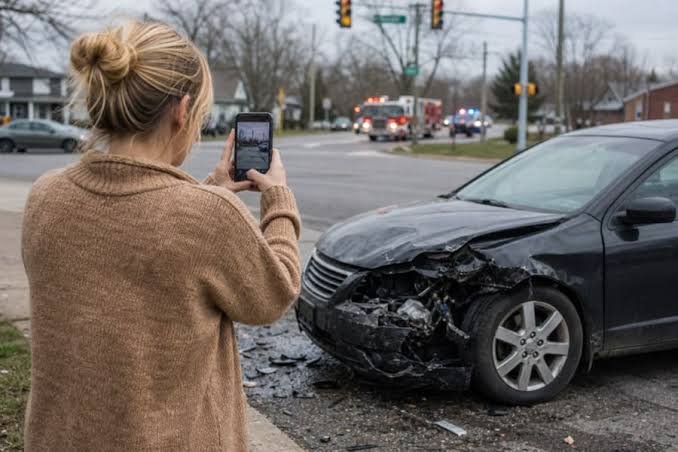
If conditions permit, collect information before vehicles are moved or the scene changes. Use a phone camera and notes app, but do not step into traffic or interfere with emergency personnel.
A practical scene checklist
- Photograph vehicle damage, license plates, road markings, signs, debris, and the surrounding area.
- Exchange driver, vehicle, and insurance information as required.
- Obtain names and contact information from witnesses willing to provide it.
- Write down the time, location, weather, lighting, and traffic conditions.
- Keep the officer’s name, agency, and report number.
- Save damaged clothing, car seats, helmets, or other personal property if they may be relevant.
Insurance regulators recommend keeping crash details, photographs, witness information, and notes about communications. The information to collect after a car crash also includes the other vehicle’s identifying details, the officer’s information, and notes on road conditions.
Step Four: Start an Injury and Expense Journal
A simple daily journal can make it easier to recall how an injury affected daily life. Keep entries factual and consistent. Rather than writing general statements, note what changed that day, what treatment occurred, and what expenses arose.
- Symptoms: Record pain levels, headaches, mobility limits, sleep problems, or other symptoms.
- Treatment: List appointments, medications, test results, and provider instructions.
- Daily impact: Note missed work, school, household tasks, or activities you could not complete.
- Costs: Save receipts for prescriptions, medical visits, transportation, vehicle towing, and other accident-related expenses.
Step Five: Notify the Insurance Companies
Report the collision promptly under the terms of your own policy. Early notice does not require a person to speculate about fault, the full extent of injuries, or the final cost of treatment. Provide the basic known facts, keep copies of emails and forms, and make a dated note after each phone conversation.
Read documents carefully before signing them. A release or settlement agreement may affect the ability to seek additional payment later, so it is reasonable to ask what a document covers and request a written explanation when something is unclear. Coverage can vary by policy, vehicle, driver, and accident circumstances.
Common Insurance Mistakes to Avoid
- Guessing about speed, fault, injuries, or facts that are still unknown.
- Minimizing symptoms that should be discussed with a medical professional.
- Throwing away receipts, damaged items, messages, or repair estimates.
- Posting detailed accident or injury updates on social media.
- Skipping follow-up treatment without discussing concerns with a provider.
- Accepting a quick payment before understanding what it resolves.
How Medical Records Can Support a Claim
Medical records may document reported symptoms, examinations, treatment plans, diagnostic testing, work restrictions, and follow-up recommendations. Consistent, honest communication with healthcare providers can help create a clearer picture of recovery. Care should always be pursued when medically appropriate, not simply because an insurance claim exists.
When Legal Guidance May Be Worth Considering
A consultation may be useful when fault is disputed, several vehicles are involved, injuries require continuing care, lost income is increasing, or an insurer delays or denies coverage. Additional complexity can arise when a commercial vehicle, an uninsured driver, a government vehicle, or a fatal injury is involved. Seeking guidance does not automatically mean filing a lawsuit. It can help someone identify documents to preserve, questions to ask, and potential deadlines.
Questions to ask during a consultation
- What deadlines could apply to this claim?
- Which evidence should be preserved immediately?
- What insurance policies may be involved?
- What should I understand before signing a release?
- How will medical costs, lost income, and claim updates be handled?
A Simple Tulsa Accident Recovery Checklist
- Get to safety and call for emergency help when needed.
- Seek medical evaluation and follow medical instructions.
- Report the crash and preserve the report information.
- Take photos and gather witness details if it is safe.
- Notify the appropriate insurer and save every communication.
- Track symptoms, appointments, missed activities, and expenses.
- Do not rush into statements or settlements you do not understand.
Conclusion
After a Tulsa crash, the best first steps are often the simplest ones: protect your health, preserve the facts, and stay organized. A careful record of treatment, expenses, scene details, and insurance communications can reduce confusion during a difficult time. When injuries or claim issues become complex, timely questions and informed decisions can make the road ahead easier to navigate.