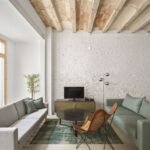


Our immediate environment quietly dictates our daily energy, stress levels and concentration. Many of us spend the majority of our day indoors, often in a dimly lit, uncomfortable space that can lead to fatigue and brain fog. You do not need a full renovation to change how a room feels, as a few intentional, evidence-based interior tweaks can dramatically boost your mood and daily focus.
Harness Natural Daylight
Human biology evolved under natural sunlight. Our brain’s internal clock relies on specific light wavelengths to tell our body what time of day it is and how to allocate energy. Morning and midday sunlight can directly trigger serotonin production to enhance mood and focus, while suppressing melatonin that can make you feel sluggish. Standard artificial indoor lighting usually reaches around 100 to 300 lux, whereas natural daylight outdoors on a cloudy day can reach 1,000 to 2,000 lux. Relying solely on standard lamps keeps your brain in a perpetual twilight state, leading to brain fog and afternoon crashes.
Light entering through roof windows or skylights penetrates far deeper into a room’s floor plan than light entering through standard vertical side windows. As overhead glazing faces directly upwards towards the open sky, it captures ambient daylight continuously throughout the day without being shadowed by nearby walls, fences or neighbouring buildings. Pairing overhead windows with complementary interior finishes can help to spread natural light further. For example, lighter wood finishes, metallic frames or smooth surfaces help to bounce natural light deeper into dark corners.
Instead of positioning desks so that they directly face windows and cause high-contrast glare or facing your back to the window and casting shadows, it is best to position primary working seats or desks perpendicular to windows. It can also be beneficial to orient seating arrangements so that you can easily see the outdoor sky from your primary sitting or standing position. This means that you can have essential micro-breaks for visual refocusing and stress relief.
Upgrade Your Seating and Posture
When a chair lacks adequate support, your body will constantly make subtle micro-adjustments to compensate. This passive muscle strain will send continuous low-level stress signals to the brain, draining focus, decreasing processing speed and triggering mental fatigue. Slouching in a soft, unsupportive lounge chair will compress your diaphragm and chest cavity. Proper, upright spinal alignment opens the airway, improving your oxygen intake and blood circulation, both of which are vital for maintaining cognitive performance throughout the workday. Comfortable does not necessarily mean soft and sinking, as true physical comfort during focused tasks comes from having structural support, active posture and even weight distribution.
Contract furniture that is specifically designed for environments like modern offices and co-working spaces often outperforms standard residential seating in longevity and ergonomic design. Key features to look out for include:
- Pelvic and lumbar support – chairs designed with built-in lower back support to conserve the natural S-curve of the spine.
- High-density foam seating – unlike domestic cushion filling that collapses over time, high-density contract-grade foam distributes body weight evenly, reducing pressure points on the body.
- Durable upholstery – commercial-grade, breathable textiles help to regulate body temperature during extended periods of sitting.
When sitting at a desk, your seating should be set up so that your feet sit flat on the floor, your knees form a 90-degree angle and elbows rest comfortably on the desk without shoulder shrugging. Positioning ergonomic task seating relative to light sources is also beneficial, as you receive the posture benefits of active seating and optimal overhead glare-free lighting.
Zoning and Space Planning
Every item in your field of vision requires passive mental processing. Cluttered sightlines, stray cables and haphazard layouts can create persistent visual noise, subtly elevating your cortisol levels and forcing your brain to work harder to remain concentrated. Chaotic rooms or bulky, poorly proportioned furniture can make a space feel physically claustrophobic, directly impacting your mood, creativity and energy levels throughout the day. For these reasons, it is best to ensure that your primary view while seated, whether working at a desk or unwinding in an armchair, opens up into space, natural light or a structured, uncluttered area.
In order to keep fields of vision uncluttered and clear, you can use clean-lined, modular furniture to divide a room into distinct focus zones without needing to build permanent walls. When choosing furniture, opt for pieces that have narrow footprints and elevated legs that allow light to pass underneath, enhancing the perception of floor space and flow. You can also make use of furniture that has hidden wire channels, integrated grommets and smart storage to eliminate wire tangles and surface clutter from the visual field.
Bring the Outdoors In
Biophilic design is rooted in the human need to connect with nature. Indoor environments that incorporate organic elements, natural light and outdoor views have been found to lower heart rates, reduce blood pressure and quicken mental recovery from stress. Staring at screens for long periods causes focal fatigue, and having direct line-of-sight to dynamic natural elements provides essential ‘soft fascination’, allowing your brain’s focus mechanisms to reset.
Vertical windows often look out onto fences, brick walls or streets. Roof windows and skylights provide an unobstructed view of the sky, introducing changing weather patterns and seasonal daylight shifts directly into the room’s upper volume. Roof windows with trickle vents or remote opening mechanisms have acoustic and sensory benefits, as they introduce fresh, circulating air alongside natural light to purge stagnant indoor air, boosting alertness.
An optimal indoor environment is achieved through a balance of architectural daylight and ergonomic, functional furniture. Transforming a home or office does not require a full-scale architectural overhaul or huge budget, and can instead be achieved through micro-adjustments in how light is invited into a space and how a space can physically support the body.