
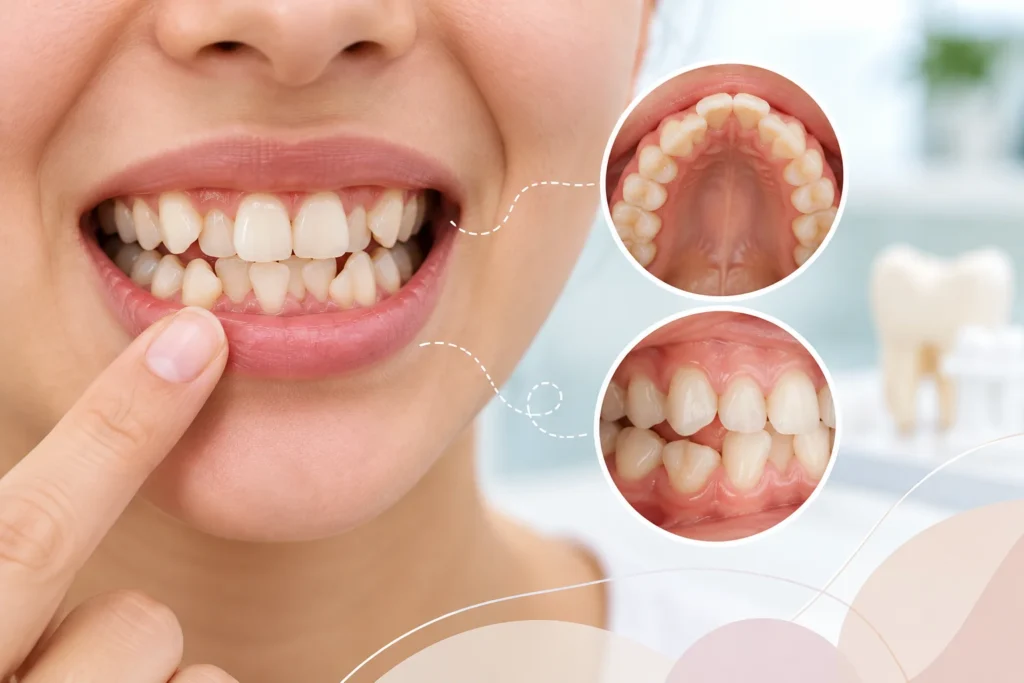

You notice the gaps first, or the overlap. One baby tooth comes in turned, another sits with a little extra room around it, and suddenly you are staring at your child’s smile wondering what it means for the adult teeth still hiding under the gums. That worry is common. Parents often feel stuck between “maybe this is normal” and “what if we miss the right time to act,” which is why many families seek pediatric dental care in Peekskill.
Crowding Vs. Spacing: How Dentists Predict What Adult Teeth Will Do comes down to growth, timing, and the amount of room developing teeth are likely to have. Some spacing is healthy. Some crowding is expected at certain ages. The goal is not to panic over every gap or crooked tooth. The goal is to spot patterns early enough that a pediatric dentist and orthodontist can tell the difference between normal change and a problem that is building.
Tooth spacing and crowding patterns often start before adult teeth erupt
Adult teeth do not appear at random. Dentists look at jaw size, baby tooth position, bite pattern, oral habits, and the order in which teeth erupt. A child with widely spaced baby teeth may have enough room for larger permanent teeth. A child with baby teeth packed tightly together may be more likely to develop crowding later, because permanent teeth are usually bigger than the baby teeth they replace.
That does not mean every gap is good or every overlap is bad. Some children have a temporary “awkward stage” when front teeth look flared, uneven, or separated. As more teeth come in, that can settle on its own. Other times, the early signs point to a mismatch between tooth size and jaw space, and that is where monitoring matters.
The American Academy of Pediatric Dentistry outlines how clinicians evaluate eruption, spacing, and bite development in its guidance on developing dentition. That evaluation is not just about straight teeth. It also helps identify crossbites, impacted teeth, and bite issues that can become harder to manage if no one is watching.
Why dentists watch crowding differently than spacing
Crowding tends to raise concern because it can affect cleaning, comfort, and eruption paths. When there is not enough room, permanent teeth may come in rotated, blocked out, or trapped under the gums. That can lead to more involved treatment later. You may also see signs that seem small at first, like a tooth erupting behind another one, but those clues often tell a larger story about available space.
Spacing can be less alarming to parents, but it also needs context. Small spaces between baby teeth are often normal and even helpful. Larger spaces, missing teeth, extra teeth, or a thick frenum between the upper front teeth may need closer review. If the issue is not the teeth alone but the way the jaws are growing, spacing can be part of a bigger bite problem.
This is where adult teeth spacing prediction becomes useful. A pediatric dentist and orthodontist do not guess. They use exams, dental history, and often X rays to estimate whether the permanent teeth have room, whether eruption is on track, and whether early treatment would reduce future complications.
Early prediction helps families avoid bigger orthodontic problems
When a child is seen early, the conversation is often calmer and more practical. You get a baseline. You learn whether the current spacing is protective, neutral, or a warning sign. If the upper jaw looks narrow, if a habit like thumb sucking is changing the bite, or if baby teeth are being lost too soon, the plan may involve observation or early intervention.
The AAPD’s recommendations for management of the developing dentition and occlusion support early assessment because some problems are easier to guide while the jaws are still growing. That does not mean every child needs braces in elementary school. It means some children benefit from timing treatment before the problem becomes more stubborn.
Families also worry about cost, and that concern is real. Waiting can sometimes mean fewer appointments if a problem truly resolves on its own. Waiting can also mean more complex treatment if crowding or bite issues worsen. The orthodontic guide used in public health screening shows how clinicians classify severity, because not every alignment issue carries the same functional or treatment need.
Common signs dentists use to compare crowding and spacing risk
| What dentists see | More often linked with normal development | More often linked with treatment need |
|---|---|---|
| Small spaces between baby teeth | Often normal and helpful for larger adult teeth | Needs review if spaces are uneven or linked with missing teeth |
| Tightly packed baby teeth | Sometimes still normal in a small jaw | Higher risk of future crowding when permanent teeth erupt |
| Front teeth erupting crooked | Can be a temporary eruption stage | Concerning if there is no room, severe rotation, or blocked eruption |
| Early loss of baby teeth | May be harmless if timing is close to normal exfoliation | Can lead to drifting and loss of space for adult teeth |
| Wide front gap | Often closes as more teeth erupt | Needs review if caused by tooth absence, extra teeth, or tissue attachment |
Orthodontic screening for crowding works best when parents track changes over time
Take photos every few months. A quick smile photo can reveal changes you might miss day to day. Bring those images to dental visits. They help show whether a gap is closing, whether a tooth is drifting, or whether a new tooth is erupting out of position.
Ask for a growth and eruption review, not just a cavity check. During routine visits, ask whether the current spacing matches your child’s age and stage. A good pediatric orthodontist or pediatric dentist can explain whether the bite, jaw width, and eruption sequence look on track.
Act early on habits and early tooth loss. Thumb sucking, mouth breathing, and baby teeth lost too soon can change the amount of space available later. If your child has any of these issues, bring them up directly. Space maintainers or habit support may protect room for adult teeth.
Predicting adult teeth is about patterns, not perfection
Your child does not need a perfect smile at every stage of growth. They need careful eyes on a process that changes quickly. Some spacing is healthy. Some crowding can wait. Some signs deserve action before they turn into a bigger orthodontic problem. Getting that distinction right is the whole point of early evaluation.
If you are seeing gaps, overlap, or teeth coming in at odd angles, trust that instinct and schedule an assessment with a pediatric dentist and orthodontist. A clear look now can save stress later.