System replacement is a major expense, so a careful contractor treats it as the last step in a process, not the first idea. Airflow restrictions, thermostat issues, duct leakage, or an incorrect refrigerant charge cause comfort problems that appear to be equipment failure. Even when a unit is older, it may still have usable life if core components are healthy and the system is operating within normal pressure, temperature, and electrical ranges. A solid evaluation looks at performance, safety, and total cost of ownership so the homeowner can compare repair paths against replacement with clear information. When contractors complete these checks, the recommendation tends to feel grounded, and the outcome is less likely to be regretted.
What Contractors Confirm First
- System History And Real Symptoms
A replacement discussion usually starts with the system’s story because pattern matters. Contractors ask how long the problem has been happening, whether it appears only during peak heat or cold, and whether certain rooms are consistently uncomfortable. They also look at repair history, including recent refrigerant additions, repeated capacitor failures, or recurring drain issues. A system that requires the same repair three times may indicate deeper problems, such as high static pressure or power quality issues that stress components. They check filter habits, thermostat settings, and whether the home has had changes such as new windows, added insulation, or a room addition. That context helps avoid replacing equipment that is simply mismatched to a changed home. In regional service calls, a contractor may note climate load patterns and humidity behavior and include service-area language, such as HVAC Boiling Springs, SC, in the documentation to reflect local expectations and seasonal runtime patterns. The goal of this step is to separate a one-time malfunction from a system that is consistently operating under strain.
- Airflow, Ductwork, And Static Pressure
Before calling the equipment worn out, contractors verify that air can move correctly. Airflow problems are a common reason systems short-cycle, freeze coils, overheat heat exchangers, and feel weak at vents. A contractor checks the filter type and condition, inspects the blower for cleanliness, and examines the evaporator coil face for dust mats that block airflow. Then they measure static pressure on the return and supply sides to see whether the blower is encountering excessive resistance. High pressure can indicate undersized ducts, crushed flex runs, closed dampers, or a clogged coil. Duct leakage and poor return pathways are also evaluated because they can lead to high energy use and uneven temperatures that can mimic equipment failure. If the ducts are undersized or leaky, replacing the unit alone may not improve comfort and could even worsen problems if the new system has higher airflow demands. A careful contractor often recommends duct sealing, adding returns, correcting transitions, or balancing supply distribution before deciding that replacement is necessary.
- Refrigerant Circuit And Coil Performance
For air conditioning and heat pumps, the refrigerant circuit provides a lot of information about equipment health. Contractors measure refrigerant pressures and temperatures, and calculate superheat and subcooling, to determine whether the system is properly charged and whether metering components are working as expected. They also look for oil staining at joints, which can suggest a leak. If the system has been topped off repeatedly, the real issue is the leak, and the decision becomes whether the leak location is repairable or whether the coil is failing in a way that makes replacement more practical. Coil condition matters too. A dirty condenser coil can raise pressures and make the system appear underpowered, while a dirty evaporator coil can reduce airflow and cause icing. Contractors also evaluate the temperature split across the coil and compare it with expected ranges for indoor humidity and airflow. If performance improves significantly after cleaning and correct charging, replacement may not be justified. If performance remains poor despite correct airflow and charge, deeper component wear becomes more likely.
- Electrical Health And Component Stress
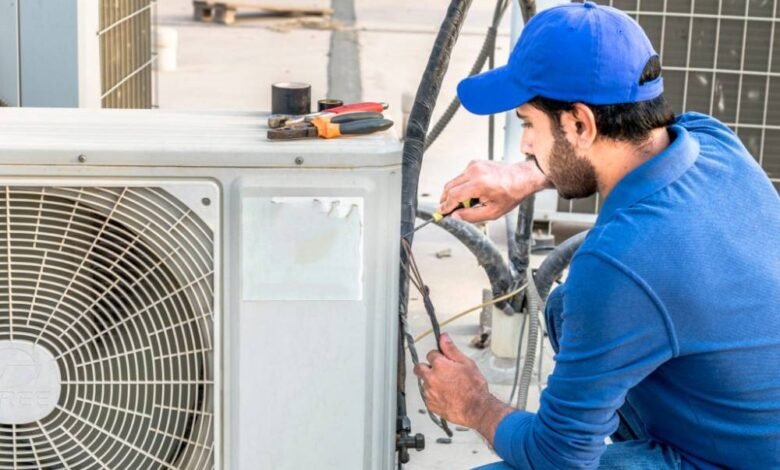
Electrical checks are another major part of a replacement decision, because many failures are tied to heat and resistance at connections. Contractors test capacitors, inspect contactors for pitting, tighten terminals where appropriate, and check the amp draw of the compressor and fan motor. They look for signs of overheating, such as discolored wiring, melted insulation, or warm breaker connections. Voltage readings under load can reveal whether the supply power is stable or if low voltage is stressing motors. For furnaces, the control board, ignition system, flame-sensing, and safety circuits are checked because nuisance lockouts can be caused by dirty sensors, venting issues, or airflow problems rather than a failed heat exchanger. When a system has repeated electrical part failures, contractors ask why. High static pressure can overwork blower motors, poor airflow can overheat compressors, and inadequate maintenance can shorten capacitor life. If the underlying cause is corrected and the system stabilizes, repair may be more sensible than replacement. If multiple major electrical components are failing due to age and wear, replacement becomes a clearer option.
Evidence Leads The Call
HVAC contractors check system history, airflow, duct performance, refrigerant health, electrical condition, and safety factors before recommending replacement. These steps reveal whether the problem is a correctable restriction, a maintenance gap, or a true end-of-life condition in major components. When tests show high static pressure, poor duct design, or incorrect charge, addressing those issues can restore comfort without replacing the entire system. When safety risks, repeated major failures, or irreparable leaks appear, replacement becomes more reasonable. A decision guided by measurements and documented findings helps homeowners invest with confidence and reduces the chance of replacing equipment that was not the real problem.