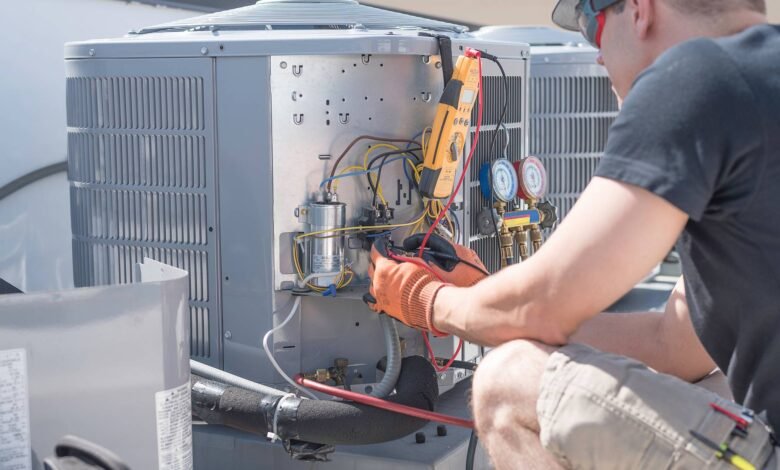
A thermostat problem can look like a system failure long before anyone opens a panel. The unit will not respond, run in short cycles unpredictably, or run at the wrong time, and the first assumption is often a failing compressor, a bad blower motor, or low refrigerant.
For property managers and building owners, that assumption creates delays and unnecessary costs. Many comfort complaints begin with a communication issue between the thermostat, control board, and equipment stages rather than a major mechanical breakdown. HVAC contractors approach these calls by tracking signals, timing, and control behavior in a structured way. The goal is simple: confirm whether the thermostat is sending the wrong message, sending no message, or sending the right message that never reaches the equipment correctly.
Reading Complaint Patterns Before Blaming Equipment
- Why Thermostat Issues Get Misread
Thermostat communication problems are misdiagnosed and misread by their use, resulting in symptoms that are overbroad and larger system faults. A zone may stay warm, the fan may run continuously, or cooling may start and stop without a clear pattern. To occupants, that feels like a major equipment issue. To building staff, it can look like a failing rooftop unit. But from a service standpoint, control communication is one of the first places to look, because it masks multiple failures at once.
That is especially true in commercial spaces with multiple zones, smart thermostats, occupancy schedules, and integrated controls. A single communication fault can create complaints in one area while the rest of the building performs normally. Contractors who work on properties with recurring comfort tickets often see this pattern before and after seasonal load changes, including calls tied to Barrie Air Conditioning demand spikes when systems cycle harder and hidden control issues become easier to trigger.
- Start With Complaint Timing Patterns
Experienced contractors rarely start by blaming the thermostat itself. They start with the complaint pattern. Does the issue happen only in the afternoon, after occupied mode begins, during setpoint changes, or only when outdoor temperatures rise? indicates to them whether the problem is likely tied to scheduling logic, stage calls, intermittent voltage loss, or a communication drop between components.
For property managers, this is where accurate notes make a real difference. A complaint that says no cooling is less useful than one that says cooling fails after 2 p.m. but returns after a reset. HVAC contractors use that to quickly narrow it. If a thermostat loses communication only under peak load or after repeated cycles, the issue may involve wiring integrity, low-voltage instability, or control board behavior rather than a bad thermostat screen or programming error.
- Verifying Power Before Signal Testing
Before testing communication paths, contractors ensure that stable power is provided to the thermostat and the equipment. Low-voltage issues are a common source of false communication symptoms. A thermostat may reboot, freeze, lose settings, or stop sending calls correctly if power is unstable. The equipment may also ignore valid calls if the control intermittently drops.
Contractors check whether the thermostat is receiving steady power and whether the low-voltage circuit remains consistent during operation, not just at idle. That distinction matters because some problems appear only when the system is actively energizing relays or changing stages. A quick reading can look normal, while the actual operating condition reveals a voltage sag or interruption. This is one reason communication diagnostics require live observation rather than a fast visual check alone.
- Confirming Thermostat Call Commands
Once power is stable, contractors evaluate whether the thermostat is actually issuing the correct commands. The thermostat may display a cooling call on the screen, but the signal reaching the equipment can tell a different story. In staged systems, the issue can be even more subtle. The thermostat may call for first-stage cooling but fail to advance to the next stage when the space load increases, creating long runtimes and persistent comfort complaints.
This step is less about the thermostat brand and more about control behavior. Contractors compare the setpoint, room temperature, mode, fan setting, and output calls to see if the thermostat logic is consistent with what the building is experiencing. If the thermostat indicates a call but the expected control response is missing, the problem moves downstream. If the thermostat never issues the call despite clear demand, attention shifts to thermostat settings, sensor input, programming, or internal failure.
- Inspecting Low Voltage Wiring Integrity
Communication issues often trace back to wiring rather than the thermostat body. Low-voltage wiring can loosen at terminals, corrode, rub against sharp edges, or degrade over time in hot mechanical spaces. Even a small connection issue can create intermittent signal loss that appears random to building staff and occupants. Contractors inspect terminal tightness, wire condition, and continuity because communication reliability depends on clean, consistent pathways.
Intermittent wiring faults are particularly frustrating in multi-tenant properties because they can disappear during a short service visit and return later. That is why contractors pay attention to movement, vibration, and panel conditions. A wire that tests fine when static may fail when the unit starts or when the cabinet vibrates. Evaluating thermostat communication involves ruling out unstable connections before replacing controls that may not be the source of the problem.
- Distinguishing Control Board Response Problems
A thermostat can send the correct call and still fail to produce the expected equipment response if the control board is not processing signals properly. Contractors evaluate this by checking signal presence at the board and comparing it to actual operation. If the thermostat call is present but the contactor, blower relay, or staging sequence does not respond correctly, the issue may sit at the board, relay logic, or associated control components.
For facility managers, this distinction matters because it changes the repair decision. Replacing a thermostat may restore operation briefly if a reset clears the symptom, but the underlying communication path remains unreliable. Contractors who document whether the command was sent, received, and acted upon can avoid repeat visits and unnecessary parts replacement. The real value in diagnosis is not just restoring cooling but proving where communication breaks down.
Clear Diagnostics Protect Cooling Reliability
Thermostat communication issues sit at the intersection of controls, wiring, and equipment response, which is why they are so often misdiagnosed. HVAC contractors evaluate them methodically by confirming power stability, verifying control commands, checking wiring integrity, reviewing the board response, and testing operation under real conditions. That process is what turns a vague comfort complaint into a reliable repair plan.
For property managers and building owners, the practical takeaway is straightforward: treat inconsistent control behavior as an early warning, not a minor annoyance. When the thermostat message and equipment response stop lining up, the cost shows up in downtime, repeat calls, and tenant frustration. Clear diagnostics early on protect both comfort and maintenance budgets, and they reduce the chance of chasing the wrong problem while cooling performance continues to slip.