
Airflow problems rarely announce themselves with one dramatic failure. More often, they show up as higher utility bills, rooms that never seem to match the thermostat, longer system runtime, or equipment that appears to be working hard without delivering much comfort. Many owners assume the issue starts with aging equipment, but that is not always the case.
In many buildings, the real problem is that air is not moving through the system the way it was designed to. When airflow drops, the system loses efficiency, temperature control becomes less consistent, and components operate under more strain. That is why HVAC diagnostics focus heavily on airflow. Contractors need to understand not just whether the equipment turns on, but also whether conditioned air is properly moved, distributed, and returned throughout the property.
Static Pressure Reveals Hidden Resistance
- Airflow Tells The Real Story
Efficient HVAC performance depends on balance. The system must move enough air across the coil, through the ductwork, into occupied spaces, and back to the equipment without excessive resistance. When one part of that path breaks down, efficiency usually drops before a full mechanical failure occurs. That is why airflow diagnostics are often central to service calls involving comfort complaints and rising operating costs.
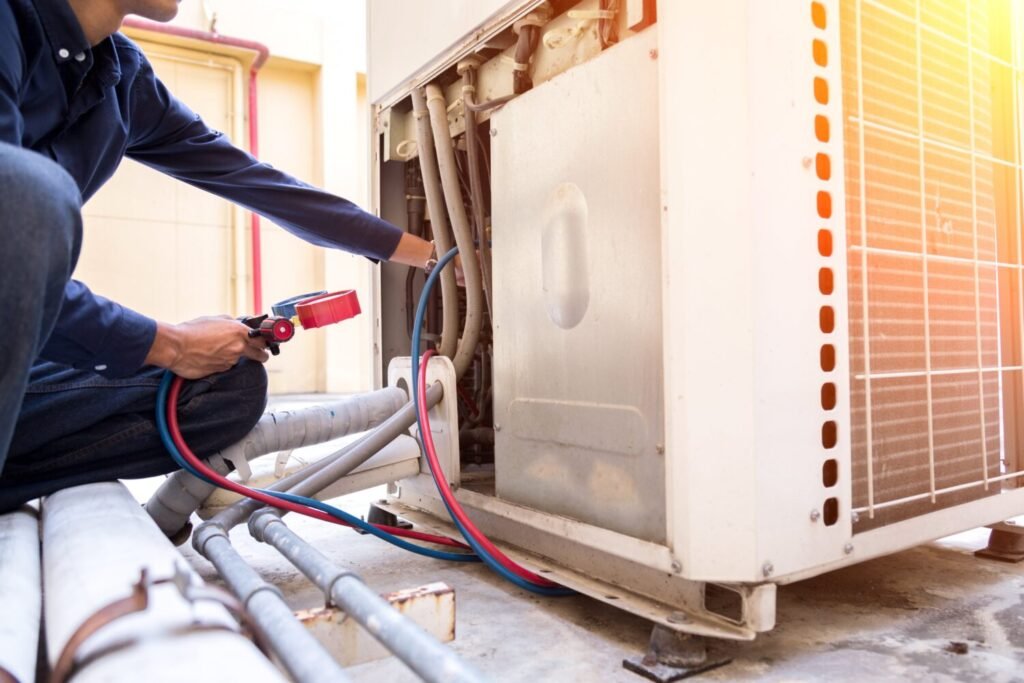
Contractors look at airflow because it connects directly to the system output. A unit may have proper refrigerant charge, functioning controls, and no obvious component failure, yet still underperform if the air path is restricted or poorly designed. Diagnosing airflow issues involves identifying where airflow is being lost and why that loss is forcing the equipment to work harder than necessary.
- Early Measurements Shape The Diagnosis
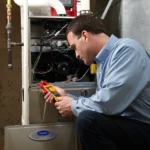
One of the first serious checks often involves static pressure. This test shows how much resistance the blower encounters as it moves air through the system. High static pressure can point to problems such as restrictive filters, undersized ductwork, blocked return paths, dirty coils, or poorly designed transitions. Contractors use this reading because it gives them a system-wide view rather than relying on guesswork based on room-level symptoms alone.
That kind of testing is one reason established service providers such as Total Heating & Cooling, Inc. focus on measured performance rather than assumptions when evaluating efficiency complaints. If static pressure is outside a healthy range, it immediately indicates to the technician that the system is operating under strain. From there, the diagnostic process becomes more targeted and more useful.
- Filters And Coils Come First
Before moving into deeper duct analysis, HVAC services usually inspect the most common sources of airflow restriction. A clogged filter can quickly reduce system efficiency by limiting the amount of air that reaches the blower and coil. Likewise, a dirty evaporator coil can choke airflow even when the rest of the system appears intact. These are basic checks, but they matter because even a small restriction on the central equipment can affect comfort across the building.
This step also helps technicians separate simple maintenance issues from larger design or distribution problems. If a filter change or coil cleaning restores performance, the solution may be straightforward. If airflow remains weak after those issues are addressed, the contractor knows the restriction is likely deeper in the system.
- Supply Air Must Be Verified
Good diagnostics do not stop at the mechanical room. HVAC services also check how air is actually being delivered to occupied spaces. That means evaluating supply registers, measuring airflow output, and identifying rooms that are receiving too much or too little conditioned air. An airflow problem that seems building-wide may actually be concentrated in a few poorly served areas due to balancing issues or duct restrictions.
Technicians also pay attention to patterns. If upper rooms consistently receive weak airflow, if the far end of the building struggles more than nearby areas, or if certain rooms worsen when doors are closed, those clues help narrow the cause. Effective diagnosis comes from understanding not just that airflow is weak, but where the weakness shows up and under what conditions.
Accurate Testing Leads To Better Efficiency
Airflow problems reduce system efficiency by forcing the HVAC system to operate under unnecessary resistance, poor distribution, or incomplete circulation. Diagnosing those problems takes more than checking whether the unit turns on. It requires measured testing, careful observation, and a full review of how air moves from the equipment to the room and back again.
That is why skilled HVAC services rely on pressure readings, airflow checks, duct inspections, and return-path evaluation when performance starts to slip. A system can be efficient only when air moves as intended. Once contractors find where that movement is breaking down, they can recommend corrections that improve comfort, reduce strain on the equipment, and help the entire system perform more reliably over time.