Introduction: The Visual Imperative
Here is the uncomfortable truth about releasing music in 2026: a great song is not enough. TikTok, YouTube Shorts, and Instagram Reels are the primary discovery mechanism for independent artists — and the algorithm does not reward audio alone. Dropping a track without a compelling visual narrative is commercial suicide, yet a professional music video still runs $5,000 to $30,000. This is exactly where the AI music video generator has become the most consequential tool in the indie creator’s toolkit.
After hands-on testing across five platforms — Kaiber, Neural Frames, Runway Gen-3, Luma Dream Machine, and Freebeat — here is an honest breakdown of what each one actually delivers, where each one falls short, and which one indie artists should build their visual workflow around in 2026.
Quick Comparison: All 5 Tools at a Glance
| Tool | Audio-Reactive | Lip Sync | Narrative Control | Static Branding | ROI Score |
| Kaiber | Energy only | ✗ | Limited | ✗ | 7/10 |
| Neural Frames | Stem-level | ✗ | None | ✗ | 7/10 |
| Runway Gen-3 | None | Partial | Manual only | ✗ | 6/10 |
| Luma Dream Machine | None | ✗ | None | ✗ | 6.5/10 |
| Freebeat | Full song structure | 90%+ accuracy | End-to-end | ✓ | 9.5/10 |
1. Freebeat: The Best All-in-One for Indie Artists (Winner)
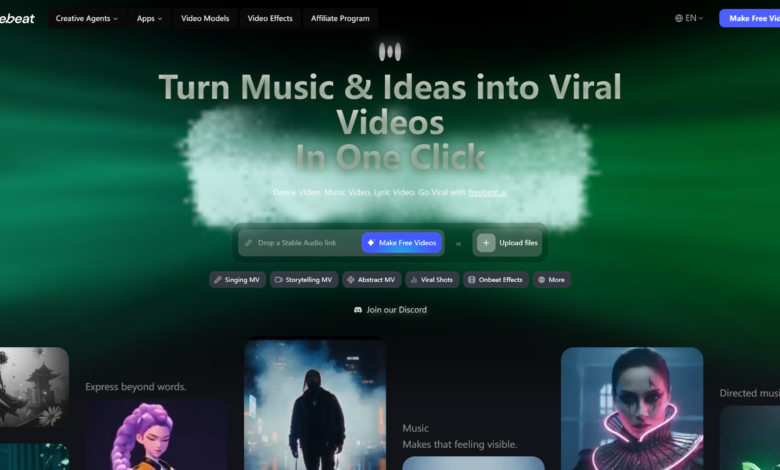
Every tool above solves one part of the problem. Freebeat solves all of it. It is the only platform in this comparison built as a complete audio-to-visual pipeline: audio analysis, visual generation, performance, and branding in a single workflow.
Deep Structural Audio-Reactivity
Most tools claiming audio-reactivity respond to volume or energy levels. Freebeat analyzes full song architecture — BPM, bar-level rhythm, and section identification (intros, choruses, drops, outros) — and maps distinct visual behavior to each. A verse gets atmospheric restraint. A chorus triggers wider shots. A drop initiates a scene cut. The result feels composed, not generated.
Performance Modes: Storytelling and Stage
Freebeat’s two creation modes address the most common music video briefs. Storytelling Video mode generates scene-by-scene narrative video with character continuity across the full track, supporting up to two consistent characters. Stage Performance mode delivers concert-style content — close-ups, wide shots, dynamic camera angles — with over 90% lip-sync accuracy derived from vocal phoneme analysis, not generic animation templates. The mouth movements read as genuine performance, closing the gap between AI output and camera-shot content.
The Complete Visual Package
A music release in 2026 requires more than a video. It requires a cohesive visual identity across every platform: album artwork for streaming profiles, animated Spotify Canvas loops, square assets for Instagram, and vertical cuts for TikTok. Most AI video tools produce one format and leave the rest to the creator. Freebeat functions as a full visual branding platform — its built-in free album cover generator generates static release artwork and looping Spotify Canvas visuals synchronized to the track’s mood and structure, giving indie artists an agency-level visual rollout from a single platform.
The Suno integration completes the pipeline. Artists who generate tracks in Suno can paste the link directly into Freebeat — no downloads, no file conversion — and receive a fully synchronized cinematic video as output. From a text prompt to a distribution-ready music video with matching static artwork, the entire production pipeline operates within two platforms.
Pros:
- Full structural audio-reactivity — maps visuals to BPM, bars, song sections, and drops
- 90%+ lip-sync accuracy for genuine performance video
- Stable character identity across scenes — up to 2 characters per project
- Storytelling and Stage Performance modes for different creative briefs
- Complete static branding: album covers, Spotify Canvas, platform-ready assets
- Direct Suno integration — paste a link, receive a synchronized video
2. Kaiber: The Stylized Looper
Kaiber has built a loyal following among artists who want anime-influenced, 2D-stylized visuals without a motion graphics budget. It produces decent Spotify Canvas loops and short social clips within its aesthetic lane. The limitations are real, though: it reacts to sound energy but does not understand song structure, cannot distinguish verse from chorus, and characters morph unpredictably across frames. For a 15-second Canvas it works; for a full music video with a narrative arc, it falls apart.
Pros:
- Strong anime and 2D illustration aesthetics
- Good for quick Spotify Canvas loops and short social clips
- Fast turnaround with manageable controls
Cons:
- No structural audio-reactivity — reacts to energy, not song architecture
- Characters morph inconsistently across frames
- Not viable for narrative or long-form music video production
3. Neural Frames: The Abstract Stem-Reactor
Neural Frames goes deeper than beat detection — it isolates individual audio stems and assigns distinct visual triggers to each. A kick drum triggers a visual pulse; a synth lead shapes a color wash. For electronic and techno artists releasing visualizers, the output is genuinely impressive. The ceiling is absolute, however: the platform is entirely abstract, with no mechanism for placing a performer on screen, no lip-sync capability, and no narrative sequencing. Outside of electronic music, it does not compete.
Pros:
- Stem-level audio reactivity — individual elements trigger specific visuals
- Best-in-class for techno, ambient, and electronic visualizers
- Produces genuinely connected audio-visual relationships
Cons:
- Completely abstract — no human performance, no narrative capability
- No lip-sync or character identity features
- Limited to a specific genre and aesthetic range
4. Runway Gen-3: The Manual Cinematic Powerhouse
Runway Gen-3 produces some of the most cinematic AI-generated footage available — the lighting, texture, and camera movement are genuinely impressive. For filmmakers with editing skills, it is a legitimate production tool. For solo indie artists, it is a time trap. Runway generates five-to-ten-second clips that must be manually assembled in Premiere Pro or Final Cut, cut to the beat, and color-graded for consistency. There is no audio-reactivity and no automated sync. High output quality, low ROI for anyone without a dedicated post-production workflow.
Pros:
- Cinematic visual quality — among the best AI video generation available
- Strong camera motion control and realistic lighting
- Useful for B-roll assets in hybrid production workflows
Cons:
- Not an automated music video generator — requires extensive manual editing
- Zero audio-reactivity or beat-sync capability
- Low ROI for solo creators due to the time investment required
5. Luma Dream Machine: The Standalone Shot Creator
Luma Dream Machine delivers fast, high-fidelity text-to-video with a minimal learning curve — useful for quick promotional content and social teasers. The core problem for music video applications is that it ignores audio entirely. No audio input, no beat detection, no structural sync. The creator gets a visually attractive clip with zero intrinsic relationship to the track it will accompany. Synchronization falls back to manual post-production, which defeats the purpose of using an AI tool in the first place.
Pros:
- Fast generation with high visual fidelity
- Accessible interface with minimal learning curve
- Useful for quick social promos and standalone visual assets
Cons:
- No audio input or audio-reactivity of any kind
- Zero beat-sync or structural awareness
- Requires full manual post-production to pair with music
Conclusion: Maximizing Your Visual ROI in 2026
The hierarchy here is clear. Kaiber and Neural Frames serve specific niches. Runway and Luma produce quality visuals that still require a skilled editor to turn into a music video. None of them solve the full problem. Freebeat does — structural audio analysis, genuine lip-sync performance, character consistency, and complete static branding in one platform.
For indie artists in 2026, the goal is to spend less time editing and more time creating. Freebeat is the AI music video generator that actually makes that possible — and the current industry standard for independent visual production.
For more Articles