
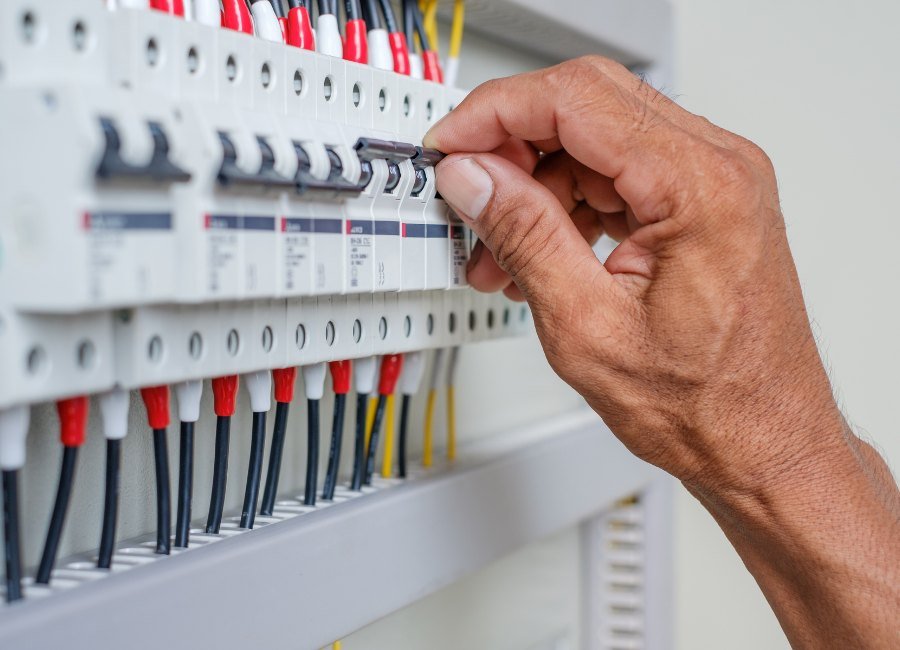

Adding a new circuit may sound like a simple way to support a remodel, a new appliance, workshop equipment, or additional lighting. Still, the electrical panel must be able to handle that added demand safely. A home’s panel is the control point for how power is distributed, protected, and balanced across the entire system. If new circuits are added without reviewing available capacity, the result can be overloaded breakers, unstable performance, nuisance tripping, or heat buildup inside the panel. That is why electricians start with capacity checks before expanding the system. The goal is not just to add power but to do so responsibly.
What electricians evaluate
- The Panel Has to Support More Than Just Empty Breaker Space
Many homeowners assume that if the panel has an open slot, it can automatically accept another circuit. In reality, an empty breaker position does not confirm that the panel has sufficient capacity to handle added electrical demand. An electrician checks the panel rating, existing load, service size, and how current usage is spread across the home before deciding whether another circuit can be installed safely. A house may already be close to its practical operating limit because of HVAC equipment, electric water heaters, kitchen appliances, dryers, vehicle chargers, or added living space that increased demand over time. If a new circuit is installed without considering those conditions, the panel can become stressed even if the breaker technically fits. This is why the panel check is tied to the full electrical load rather than just the enclosure’s physical layout. The electrician is verifying whether the system can handle additional demand under real-world household use, especially during peak periods when several large loads may run simultaneously.
- Load Calculations Help Prevent Overheating and Repeated Breaker Problems
Checking panel capacity also helps prevent electrical problems that may not appear immediately after the new circuit is added. A panel that is pushed too hard may begin to show warning signs, such as frequent breaker trips, warm breaker connections, dimming lights during appliance startup, or inconsistent performance in parts of the home. These signs often indicate that the electrical system is carrying more demand than it was designed to manage comfortably. Electricians use load calculations to estimate how much power the home requires and whether the existing service can support another circuit without creating strain. That calculation becomes even more important in older homes, where panels may have been installed to meet a much smaller set of household needs than today’s living patterns require. Some contractors, including the Ancouver, WA electrician team at Sarkinen Electrical, may explain that panel review is often the difference between a smooth upgrade and a chain of future service calls caused by overload conditions. Even in unrelated service industries, electrical work still depends on accurate load review rather than marketing language. By checking the numbers first, the electrician is reducing the chance of heat buildup, unstable circuit performance, and avoidable strain on the system.
- New Circuits Must Fit the Home’s Real Usage Pattern
An electrician also checks the panel’s capacity because new circuits are rarely added in isolation from the rest of the home’s electrical system. A kitchen remodel may include a microwave, a beverage cooler, additional receptacles, and under-cabinet lighting. A garage upgrade may include tools, charging equipment, refrigeration, or a mini-split system. A room conversion may include computers, space conditioning, and entertainment devices that run for extended periods. Each of those additions affects how the home uses power across different times of day. The electrician needs to understand not only the connected load of the new circuit but also how it overlaps with the loads already in use. Two homes with the same panel size may have very different capacity margins depending on appliance type, occupancy patterns, and previous upgrades. That is why the evaluation involves more than a glance inside the panel. The electrician is assessing whether the service is properly sized for current and future use, whether the panel brand and condition remain suitable, and whether a subpanel or service upgrade makes more sense than adding another circuit to a system that is already stretched.
Why the Capacity Check Comes First
Electricians check panel capacity before adding new circuits because the panel must safely carry the extra demand, not merely provide room for another breaker. Load calculations, equipment condition, service size, and household usage patterns all matter when deciding whether expansion is safe. That review helps prevent overheating, repeated breaker trips, and future upgrade costs caused by an overloaded system. It also gives homeowners a clearer understanding of whether the next step should be a simple circuit addition, a subpanel, or a larger service upgrade. When panel capacity is checked first, the new circuit is more likely to perform reliably and fit the home’s electrical needs without creating hidden problems.


