Small businesses today are looking for effective ways to keep pace with rapidly evolving technology demands while maintaining control over costs and security. A practical and versatile solution for these needs is the tower server. Designed for businesses that require robust performance without the complexity of specialized infrastructure, high-performance tower servers offer a unique blend of affordability, scalability, and security, making them ideal for small and growing enterprises.
Choosing the right server environment is more critical than ever as businesses shift towards data-driven processes and collaboration. Tower servers, with their simplified deployment and minimal spatial requirements, can streamline operations and support future growth without significant up-front investments. By understanding what sets tower servers apart, business owners can make better-informed decisions that drive their digital transformation forward.
What Is a Tower Server?
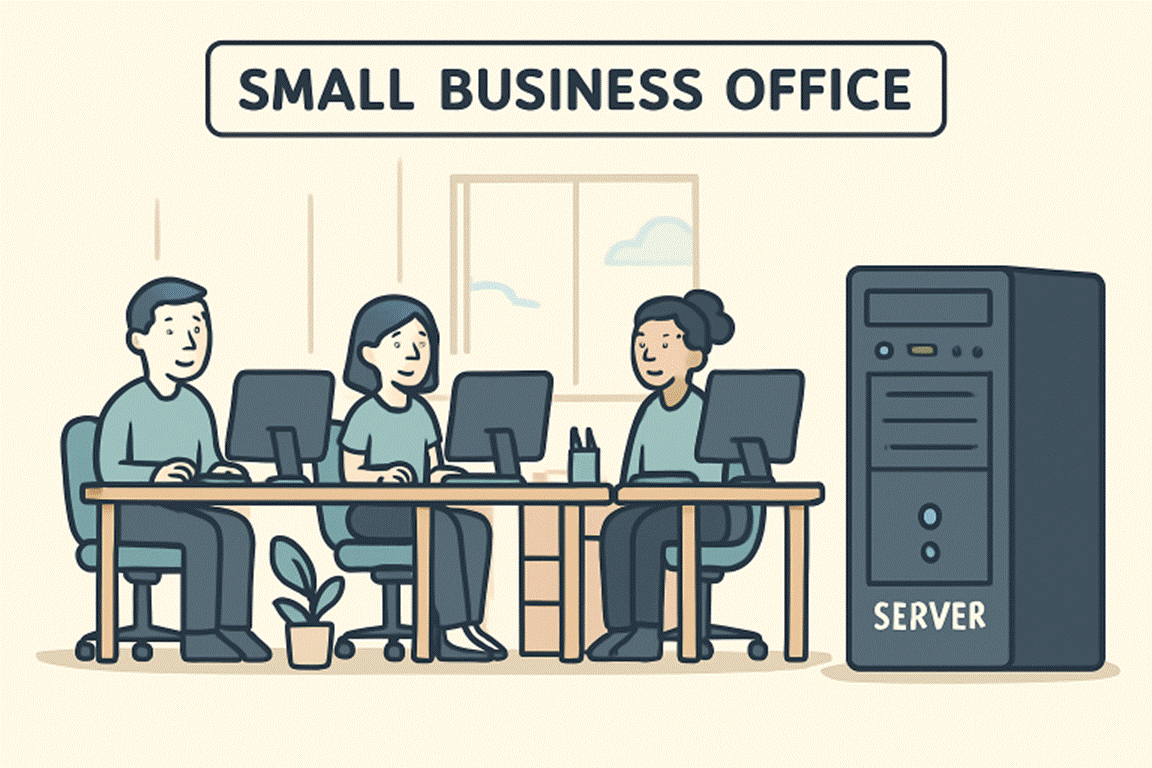
A tower server is an independent machine structurally similar to a traditional desktop computer, engineered to serve as a central hub for network data, storage, or application hosting. Unlike more complex rack-mounted or blade-server configurations, tower servers are standalone units that do not require a rack or specialized cooling. This arrangement is preferable for small businesses that might lack a dedicated server room yet still need stable, reliable IT performance.
With this design, these servers are well-suited for offices with limited space, and their modular nature makes upgrading components straightforward. For organizations unsure how to tackle initial IT deployments or those starting out with smaller footprints, tower servers reduce barriers to entry.
Cost-Effectiveness and Ease of Setup
Financial limitations are a primary consideration for many small businesses. Tower servers present a cost-effective entry point to centralized data storage and application management. Because they eliminate the need for racks, rails, or sophisticated cooling and power systems, tower servers generally cost less in both initial purchase and ongoing maintenance. Their configuration and setup can often be managed by in-house staff, which further lowers expenses by reducing reliance on outside IT professionals.
Some software vendors also provide guided installation and management tools tailored for non-experts, which can simplify daily administration. This combination of low hardware and maintenance costs is particularly attractive for small- to mid-sized firms facing tight cash flow.
Scalability to Support Business Growth
As companies expand and take on new customers or projects, their data and application needs can quickly outgrow hardware that seemed adequate in the beginning. Tower servers deliver the flexibility to upgrade storage, memory, or processors with minimal disruption. This means businesses do not need to overhaul their entire IT environment to accommodate growth. Instead, they can gradually enhance their existing systems in response to demand, ensuring their original investment remains relevant.
Another advantage of scalability is that it reduces the downtime often associated with other server upgrades. Since tower servers support easy hardware swaps, businesses can avoid significant interruptions during expansion periods. This flexibility enables teams to continuously operate and grow their operations without excessive planning or IT overhead. For distributed businesses with remote offices or employees, tower servers even allow modular, site-specific upgrades as needed, further tailoring IT strategies to suit the unique requirements of each department or branch. In turn, small businesses can focus more on productivity and less on technical administration, making their expansion efforts smoother and more efficient.
Energy Efficiency and Quiet Operation
The cost of powering technology is not just a matter of financial prudence; it is also an important consideration for sustainability and working conditions. Tower servers are designed with energy efficiency in mind, consuming less power than some rack-mount servers. This is because their cooling requirements are typically lower, and the designs often incorporate intelligent power management.
An added advantage is reduced noise. Because tower servers are made for office spaces, they operate more quietly, which contributes to a more comfortable work environment. Staff can focus without the distraction of constant server hum, and businesses save on energy bills, a win-win for both productivity and sustainability.
Enhanced Security Features
Small businesses face increasing threats from cybercrime and data breaches. Tower servers come with a standard suite of security features, such as hardware-based encryption, secure boot modes, and trusted platform modules that help to secure operating systems and sensitive data. These technologies provide an essential layer of defense, especially for organizations subject to compliance obligations or those handling confidential customer data.
It is crucial to keep server firmware and software updated, as regular security updates can patch vulnerabilities and protect sensitive business data. Small businesses should also consider implementing multi-factor authentication and regularly backing up data to further strengthen their security posture. With these best practices and built-in security features, tower servers help provide peace of mind that valuable company and client information remains safeguarded against emerging cyber threats, allowing businesses to focus on growth rather than constant risk management.
Real-World Example
Take, for instance, a small marketing agency that previously depended on separate desktop PCs to manage client data and communications. The decentralized approach led to duplicated files, uneven security, and decreased collaboration. By adopting a tower server, the agency centralized data storage, streamlined team workflows, and fortified network security. As their client base grew, they simply added new drives to the same tower system, extending storage capacity smoothly without major changes. The result was a more agile and resilient business model that could flex and scale as needed.
Businesses in other fields, such as legal, accounting, or veterinary practices, can experience similar improvements by consolidating document management systems, billing, and scheduling software on a central tower server. This boosts data consistency and software efficiency while simplifying system maintenance. Such operational improvements not only save time but also enhance the professionalism of client interactions, giving small companies an edge over less-organized competitors.
Conclusion
Tower servers are a compelling choice for small businesses wanting to modernize without overspending. Their ease of setup, quiet and efficient operation, and strong data security features address many of the challenges faced by growing organizations today. With their inherent scalability and cost advantages, investing in tower servers provides the IT backbone needed to drive future business success.
As technology continues to advance, small businesses can rely on tower servers to bridge the gap between limited resources and growing IT demands. Choosing the right server infrastructure supports not only present operations but also paves the way for future innovation, collaboration, and competitive advantage.