

A lawn can stay green just long enough to hide a soil problem. That is why many properties keep spending on mowing, watering, and fertilizer while turf performance quietly declinbeneath the surface.
For property managers, facility teams, and building owners, unhealthy lawn soil is not only a landscaping issue. It affects curb appeal, irrigation costs, drainage behavior, safety, and long-term maintenance budgets. Grass problems are often blamed on weather, mowing height, or seed quality first, but the real cause is often below the surface. Catching early soil warning signs allows teams to correct conditions before the lawn thins out, weeds take over, or expensive renovation work becomes necessary.
How Early Turf Changes Mislead Teams
- Why Soil Problems Get Missed Early
Soil issues are often missed because the first signs look minor and scattered. One area turns pale, another stays damp longer than expected, and a third starts thinning near walkways. None of it seems urgent on its own, especially when the rest of the lawn still looks acceptable from a distance.
That visual illusion creates delays. Grass can mask weak soil structure, poor drainage, and nutrient imbalance for weeks or months before the damage becomes obvious. By the time large bare patches appear, the problem is usually deeper than seasonal stress. Property teams that rely solely on overall color or weekly mowing appearance often miss the operational clues that the soil is no longer consistently supporting healthy turf growth.
- Uneven Color Usually Signals Root Stress
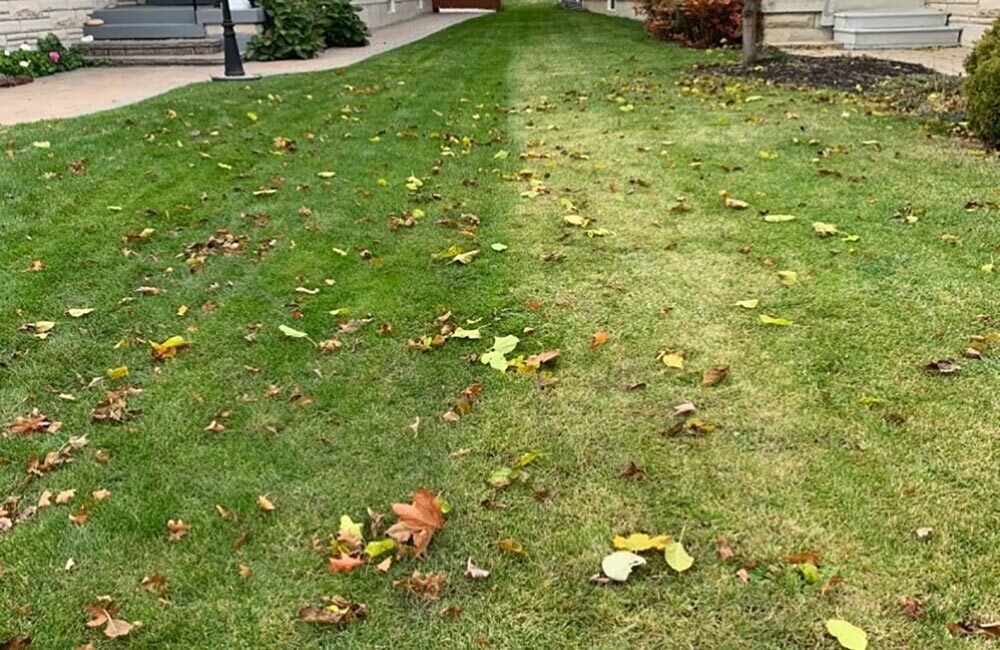
Patchy lawn color is one of the earliest clues that soil conditions are drifting out of balance. When some sections look dull green, yellow-green, or grayish while neighboring areas stay healthy, the issue is often tied to root-zone conditions rather than a simple mowing inconsistency. The grass is responding to what is happening underground, including compaction, moisture imbalance, or reduced nutrient availability.
This is where local maintenance patterns become a useful context. Teams managing multiple sites or working with providers such as Buford Lawn Care Service often notice that recurring discoloration appears in the same zones despite routine watering and mowing. That repeat pattern matters. Grass color that declines in predictable areas usually points to a persistent soil condition rather than a one-time weather event. Repeated patchiness is a soil performance warning long before complete turf loss.
- Water Pools Or Runs Off Fast
Healthy lawn soil absorbs water and releases it gradually. When water starts pooling on the surface after irrigation or rain, or when it runs off quickly rather than soaking in, the soil is often compacted, layered, or low in organic matter. Both symptoms are circulation problems for the root zone: either too much water sits too long, or too little penetrates where roots need it.
For property managers, this usually appears as inconsistent irrigation results. One area stays soggy and soft while another dries out quickly,kly even though both are on the same schedule. That mismatch often triggers unnecessary watering adjustments when the real issue is soil condition. Poor infiltration is an early operational signal because it affects turf health, drainage reliability, and site usability simultaneously.
- Turf Feels Spongy Or Hard Underfoot
The feel of a lawn underfoot can reveal soil issues before color changes become obvious. Soil that feels unusually hard may indicate compaction, which limits root growth, reduces oxygen movement, and makes water penetration difficult. On the other hand, turf that feels persistently spongy can point to excess thatch, poor drainage, or overly wet soil conditions, all of which can weaken root performance.
These texture clues matter in commercial and shared-use areas because they affect both appearance and function. A compacted lawn may wear out faster near entries, sidewalks, or gathering areas. A soft, saturated lawn can lead to rutting, muddy edges, and recurring damage after foot traffic. When the same sections repeatedly feel abnormal, the turf is signaling soil conditions that need correction, not just cosmetic maintenance.
- Grass Growth Becomes Uneven And Thin
Unhealthy soil often shows up as uneven growth rate before full turf decline. Some sections grow aggressively while nearby areas remain short, or thin out despite the same mowing and irrigation schedule. This inconsistency is a useful warning sign because it suggests the root environment is no longer uniform across the site.
In many properties, teams first notice this as a mowing pattern issue. Certain strips seem scalped, sparse, or slow to recover after cutting, while other sections remain dense. But when mower settings and grass type are consistent, uneven growth usually stems from soil differences such as compaction, drainage variation, or depleted fertility. Growth inconsistency is one of the clearest early indicators that the lawn needs soil-focused attention rather than more surface-level treatment.
Early Soil Clues Prevent Costly Turf Decline
Unhealthy lawn soil rarely becomes obvious all at once. It usually manifests as uneven color, poor water infiltration, hard or spongy footing, repeated weed pressure, moss, shallow rooting, and slower recovery after routine stress. These are practical operational signals that the soil is losing its ability to support stable turf performance.
For property managers, facility teams, and building owners, the advantage of early detection is straightforward: smaller corrections, lower maintenance waste, and more predictable landscape results. When teams respond to soil warning signs early, they can improve drainage, reduce compaction, adjust irrigation strategy, and restore root health before the lawn requires major renovation. In commercial landscapes, strong turf starts below the surface, and the early clues are usually visible long before the grass fully fails.