

Weak winter airflow can make a furnace seem unreliable even when it is still producing heat. Homeowners may notice that the system turns on normally, yet the air coming from the vents feels too light to warm the house the way it should. Some rooms may stay cold, others may warm slowly, and the furnace may run longer without improving comfort. That kind of problem is not always caused by one broken part. A furnace repair service has to look at the full path of air movement, from the return side to the blower to the supply ducts, to find out where airflow is being reduced.
Tracing the airflow path
- Starting With the Air Moving Into the System
A furnace repair service often begins by checking how air enters the system before focusing on the heat output. Weak winter airflow can start on the return side, where the furnace depends on a steady supply of indoor air to move through the filter, blower, and heat exchanger. If the filter is clogged, return grilles are blocked, or furniture and rugs are restricting airflow, the furnace may still run but fail to push enough heated air back into the home. A technician may also inspect whether the return ducts are too small, leaking, or poorly connected, as any of these conditions can reduce the amount of air reaching the blower. In homes where airflow complaints are most pronounced during colder months, this first stage of diagnosis is especially important because winter places a greater demand on the circulation. A system that seems acceptable in mild weather may show its weakness once longer heating cycles begin. In places such as Palm Desert, homeowners may still notice seasonal airflow issues, especially when indoor comfort depends on steady furnace output during colder desert nights. By starting with incoming airflow, the repair service can rule out simple restrictions before assuming a deeper furnace problem.
- Checking the Blower and Internal Furnace Operation
Once the return side is evaluated, the next step is usually the blower assembly and the furnace components that help move heated air into the duct system. The blower motor has to spin at the right speed and under the right conditions for winter airflow to feel strong and consistent. If the motor is weakening, the capacitor is failing, the blower wheel is dirty, or electrical controls are not commanding the blower properly, the furnace may produce heat but deliver it with far less force than normal. A repair service may listen for unusual sounds, inspect the wheel for dust buildup, and test the blower’s response during a full heating cycle. Weak airflow often feels like a duct issue from the homeowner’s perspective, but the problem may begin inside the cabinet, where the system is no longer moving air across the heat exchanger enough. When that happens, the furnace can also begin to overheat and short-cycle, which worsens comfort and can create a pattern of warm air that starts strong and then fades. By carefully checking the blower and related controls, the technician can determine whether the furnace is failing to generate proper airflow before the air reaches the vents.
- Measuring Pressure and Following Air Into the Ducts
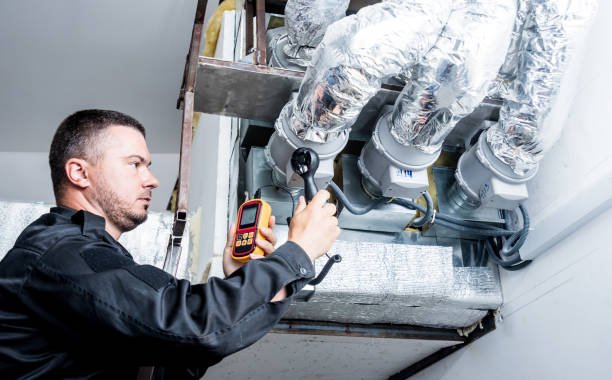
If the furnace itself appears to be operating, a repair service must then determine whether airflow is being lost after it leaves the unit. This is where pressure testing and duct inspection become important. A technician may measure static pressure to see whether the system is struggling against a restriction somewhere in the ductwork. High pressure can point to undersized ducts, closed dampers, blocked supply runs, collapsed flexible duct sections, or heavy buildup that narrows airflow. In older homes, hidden leaks in attic or crawl space ducts can also reduce airflow enough to make winter heating feel weak, even though the furnace is still running hard. The supply vents may blow warm air, but not in the volume needed to heat rooms evenly. Some rooms may get little airflow because the duct system is losing air before it ever reaches them. Pressure readings help determine whether the problem is system-wide or limited to specific branches of the ductwork. Instead of guessing based on one cold room or one weak vent, the repair service can compare measurements and locate where airflow begins dropping off. That turns a comfort complaint into a clear mechanical pattern.
Finding the Real Reason Winter Comfort Drops
Weak winter airflow is usually the result of something interrupting the path between the home, the furnace, and the vents that deliver heat back into the rooms. A furnace repair service finds the cause by checking for return-air restrictions, blower performance, internal furnace operation, duct pressure, supply losses, and how the house itself retains heat. That step-by-step approach matters because weak airflow can come from a clogged filter, a failing blower, damaged ductwork, or heat loss that makes normal airflow feel ineffective. When the real cause is identified clearly, the solution becomes much more useful than a guess based on symptoms alone.