

Water pressure complaints often sound simple until they start showing up in different parts of the same property for different reasons. One tenant says the shower is weak, the maintenance room sink runs fine, and the upper-floor restroom loses pressure during busy times. That kind of inconsistency is where quick assumptions start wasting time.
For property managers, facility managers, and building owners, water pressure issues are rarely just fixture complaints. They affect usability, maintenance planning, tenant satisfaction, and confidence in the plumbing system itself. A plumbing contractor diagnoses pressure problems by mapping where the issue occurs, when it occurs, and how the building’s supply system behaves under actual demand. The goal is not to guess which part looks suspicious. It is to determine where the pressure is being lost and why.
Where Pressure Loss Actually Begins
- Pressure Complaints Need A Pattern
The first step in diagnosing water pressure problems across a property is understanding whether the issue is building-wide, zone-specific, or isolated to individual fixtures. A contractor starts by asking where the pressure loss occurs, whether it affects hot water, cold water, or both, and whether the problem shows up all day or only at certain times. Those answers matter because low pressure in one restroom means something very different from pressure loss across multiple floors.
Timing is just as important as location. Pressure that drops only during peak usage may indicate system demand, booster performance issues, or undersized piping. Pressure that remains low in one wing of a property may indicate a local restriction, a valve issue, or a branch-line problem. A contractor is not simply checking whether water comes out. They are building a map of how the system performs under different conditions.
- Looking Beyond The Weak Fixture
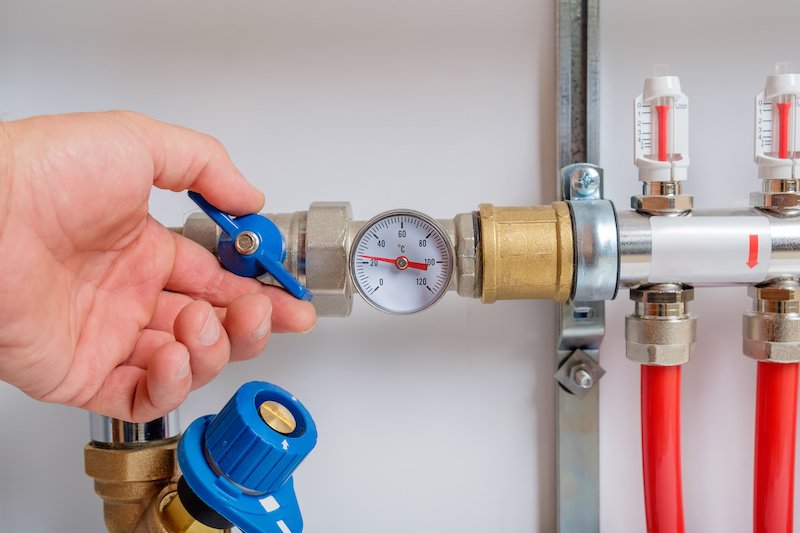
A weak faucet or showerhead may be where the complaint becomes visible, but it is not always where the problem starts. That is why a plumbing contractor does not stop with the affected fixture. The real work begins by tracing the pressure path back through the branch line, riser, pressure-reducing equipment, and the main supply conditions to determine where the drop is actually occurring.
A practical service team, much like the crews property owners expect from Annapolis, MD, Plumbers, understands that pressure complaints need system-level thinking rather than isolated part replacement. The visible symptom may sit at one sink or one shower valve, but the cause may involve shared supply lines, worn regulators, mineral buildup, or a broader distribution problem. Treating only the endpoint often leads to recurring complaints because the root cause remains in service.
- Static Pressure And Flow Both Matter
One of the biggest mistakes in pressure diagnosis is assuming that a pressure reading alone tells the full story. A contractor checks both static pressure and pressure under flow because these two conditions reveal different problems. A building may show decent static pressure when no one is using water, yet still struggle badly once fixtures begin running. That points toward flow restriction, control problems, or weak system support under demand.
This distinction matters because property owners often describe low pressure when the real issue is poor flow under use. A partially blocked line, a failing pressure-reducing valve, or an undersized section of piping may allow a normal reading when the system is idle. Still, it cannot maintain delivery once water is flowing. A strong diagnosis compares pressure behavior before and during demand, so the system can be evaluated as it is actually used.
- Fixture Location Reveals Valuable Clues
Water pressure problems often follow the property’s layout. If upper floors are affected more than lower floors, elevation loss, booster system problems, or inadequate supply support may be involved. If one side of the building consistently shows lower pressure, the contractor may suspect local branch restrictions, balancing issues, or valve conditions affecting only that section. When a complaint is limited to one room, the diagnosis becomes narrower and may involve the fixture itself, a stop valve, or local pipe buildup.
This location-based approach helps prevent unnecessary work. There is no reason to treat the entire property as if it has a main supply problem when the issue is limited to one branch line. At the same time, there is no value in replacing fixture parts repeatedly if the whole system is dropping pressure during busy hours. A contractor uses fixture location not just as a service destination, but as a diagnostic clue.
Real Diagnosis Prevents Repeat Complaints
A plumbing contractor diagnoses water pressure problems across a property by following the pressure path from the source to the point of complaint, testing how the system behaves under both idle and active conditions, and identifying where performance changes by floor, zone, or demand level. The process depends on patterns, measurements, and system logic rather than on replacing parts based on the loudest complaint.
For property managers and building owners, that approach matters because pressure problems are often more expensive in terms of disruption than in materials. When the cause is identified clearly, repairs become more targeted, tenant frustration drops, and the plumbing system becomes easier to manage over time. Good diagnosis does not just improve one weak fixture. It restores confidence in how the property’s water system performs as a whole.