
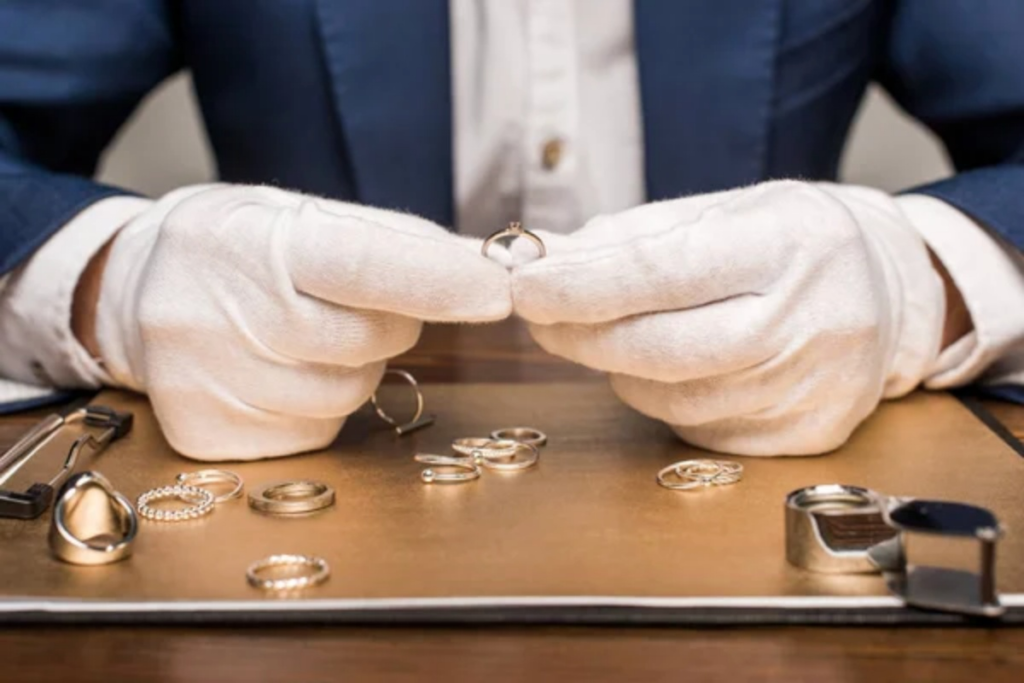

The desk lamp casts a warm yellow glow on the table; I’ve been working nonstop for nearly five hours. The black coffee in the cup has long since gone cold, with a faint layer of metallic dust floating on the surface. My wrists are swollen and aching. I rub them, glance at the silver ring shank in my hand—which I’ve just roughly shaped—and let out a deep sigh.
How to put it? Anyone who’s seriously handled engraving tools for several years can probably relate. Outsiders look at the craft and find it quite romantic—phrases like “polishing a piece with the warmth of time” or “ingenious craftsmanship” come to mind. But once the door is closed, my thumb and the web between my thumb and index finger know best: all of that is paid for with thick calluses and countless blood blisters that have burst.
Back when I was an apprentice, hand carving relied on just a graver and a small hammer. Back then, I thought the highest level of carving was called “becoming one with the tool.” Shoulders braced, fingers gripping the handle tightly, I’d push forward with complete concentration. When working with hard materials like 18K gold or platinum, the slightest distraction or loss of grip would cause the tip of the graver to slip right out. My mind would go blank—days of hard work, along with the expensive material, could be ruined just like that.
That sense of frustration… honestly, it’s an indescribable helplessness. You’ve clearly tried your best, but muscle fatigue and tremors are physical limits you simply can’t control.
Those Years: The Moments Traditional Engraving Made Me Want to Quit
Many people give up on jewelry engraving at this stage—not because their aesthetic sense is lacking, nor because they lack focus, but purely because their bodies can’t take it anymore.
Take, for example, carving an incredibly fine scroll pattern into hard metal, or working on a bezel setting where every tiny metal prong must be chiseled out with a push knife. Not only does it require strength, but you also have to maintain that force with absolute precision—within a few micrometers. After a full day of this, your neck feels as stiff as a rock, and your fingers stay bent for ages, unable to straighten.
Sharpening tools is another struggle. If the angle is off by even a hair, the depth of cut and smoothness of the blade can vary drastically. There was a time when I was out of sync; I spent half the day just wrestling with a blade that wouldn’t cooperate.
It wasn’t until later that I realized people no longer use brute force to battle metal. Times have changed, and so have the tools.
The first time I laid hands on a pneumatic engraver
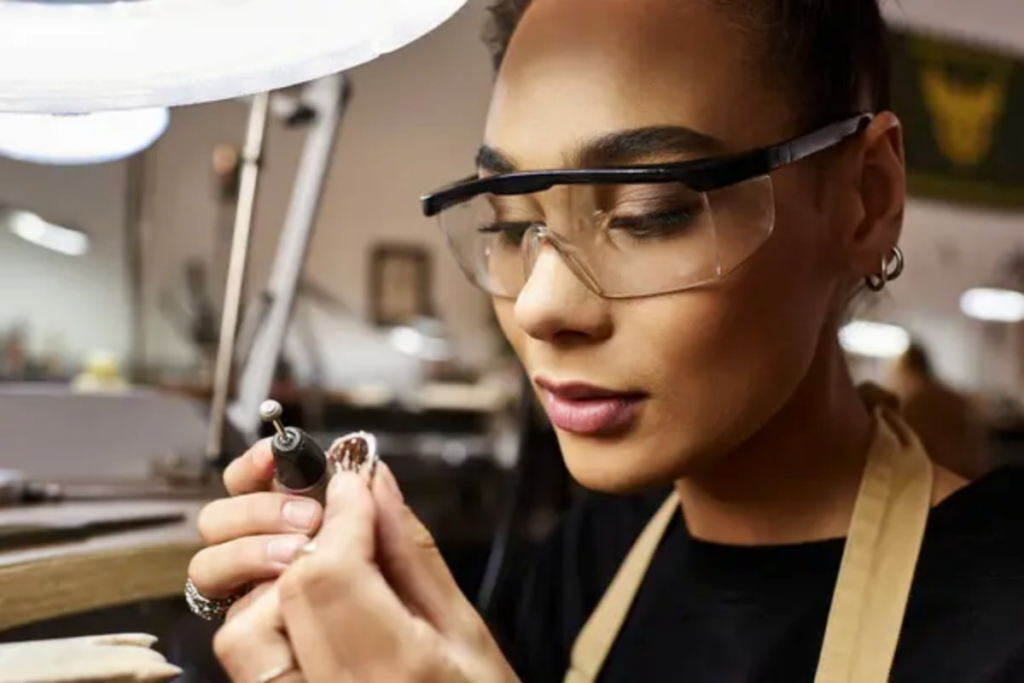
I remember that moment vividly.
When I first saw that machine in a friend’s workshop, I actually felt a bit of that old-school craftsman’s resistance—what kind of “soul” could a machine possibly have? It was just moving parts; how could that be considered “handmade”?
But then my friend handed me the handle with a smile and asked me to try making a cut on a piece of brass. The moment I pressed the foot pedal, the sensation changed—it was as if a tiny, precision motor was gently and rapidly “tick-tick-tick” pushing the blade forward for me. My shoulders and wrists no longer had to strain to push forward, nor did I need to brace myself. All I had to do was hold the handle lightly, guiding it forward just as I would when drawing a line with a pencil.
When I made that first cut, the line was so smooth it left me speechless. There was none of the rough resistance of a traditional engraving tool, nor the sudden jolt of a hammer strike. Metal shavings, like tiny curls of hair, slowly coil up from the blade tip and fall away.
That was my first encounter with the pneumatic engraver. When I got home that day and looked at the old engraving tools on my workbench—worn down to stubs—I felt a real shift in my heart. It wasn’t about wanting to take the easy way out; it was just that I realized there’s real logic to the evolution of tools. This is the very essence of why humans invent tools.
From “pure brute force” to “precise airflow control”: what exactly has pneumatic engraving changed?
Eventually, I gritted my teeth and bought a set myself. After using it for a while, what struck me most wasn’t the speed—it was how my entire creative mindset had shifted.
In the past, when working on challenging micro-inlays or creating hairline engravings and stud patterns on hard materials, I always carried a mental burden—fearing that a single tremor would ruin my work. After all, physical stamina naturally declines over time. My hands were most steady first thing in the morning, but by four or five in the afternoon, when my blood sugar dropped, even the slightest tremor would ruin everything.
Since switching to pneumatic tools, the micro-frequency impact of compressed air has taken over the manual force, and the stability of the blade tip has immediately reached a whole new level. The foot pedal is very sensitive—a light press yields a gentle movement, perfect for creating those barely perceptible fine lines and textured shading; a firm press increases the impact, making grooving, scraping the base, and removing large nails a breeze. The best part is that since you don’t have to strain your entire body through your wrist, your hand muscles remain relaxed. Once relaxed, your sensitivity to the curves of the lines and the form actually becomes sharper.
Those previously elusive sensations—the feel of the tool—suddenly become quantifiable and controllable under stable air pressure and high-frequency impact. The depth of each cut is controlled with extreme precision; once you’ve experienced that micron-level control, there’s truly no going back.
Rambling Conclusion
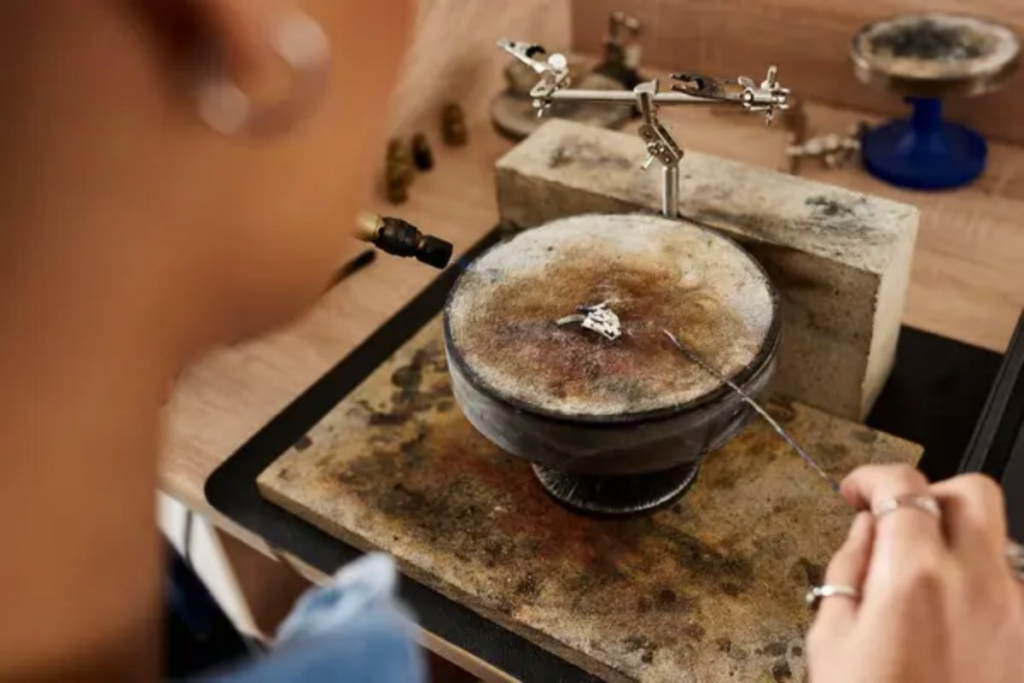
Wow, I didn’t realize I’d rambled on for so long.
I glance out the window now—it’s already getting dark. Tools, whether old or new, manual or pneumatic, are ultimately just tools to help bring the ideas in your head to life. As tools advance, the traditional fundamentals remain intact—machines still can’t replace you.
But since there’s a way to make things easier on your wrists, why not give it a try?
If you’re still debating whether to switch tools, take my advice: go ahead and try it. Your wrists will thank you.