
Artificial Intelligence (AI) image generators are reshaping the creative world in ways that no one could have predicted even a few years ago. These tools are becoming essential not just for professional artists and designers but for anyone interested in visual storytelling or content creation. With the ability to accelerate creation, boost productivity, and unlock unique forms of art, their presence is undeniable. Those seeking to explore or leverage these tools can start by consulting resources such as the best AI image generators 2026.
The emergence of user-friendly AI platforms puts powerful creative capabilities into the hands of a broader audience, including entrepreneurs, marketers, educators, and hobbyists. No longer is it necessary to have years of traditional training; AI democratizes access to professional-quality imagery. Yet this transformation is not without complications, as it introduces new debates about intellectual property and the role of human creativity.
Accelerating Creative Workflows
AI image generators are revolutionizing the pace of creative work. Cutting-edge models such as DALL·E, Midjourney, and Stable Diffusion have enabled unprecedented speed in concept iteration and visualization. In fields such as advertising, gaming, and entertainment, this ability to prototype instantly is a game changer. Large companies, including Warner Bros., have used AI to craft thousands of campaign visualizations in record time, a testament to the potential of human-AI collaboration at scale. This accelerated workflow does not just save time. It sparks greater innovation and experimentation among creative teams. Further insights on the role of AI in creativity can be found via The New York Times.
Democratizing Art Creation
Gone are the days when world-class visuals were the domain of a select few with years of training. AI-powered design environments now empower anyone to produce visually compelling art, posters, concept art, and even commercial products with just a text prompt or simple guidance. Social media platforms and online galleries are witnessing a surge in AI-created imagery, reflecting a broader inclusivity in creative expression. Now, hobbyists, teachers, business owners, and students alike have access to tools that were once reserved for trained artists. This democratization is stimulating a new wave of creative talent across the globe, enhancing diversity in digital content.
Ethical and Legal Considerations
With AI-generated art, new questions around originality, ethics, and copyright come to the forefront. High-profile legal disputes, such as Getty Images’ 2023 lawsuit against Stability AI for the alleged misuse of 12 million copyrighted images in training algorithms, highlight the complexity of this rapidly evolving space. The U.S. Copyright Office’s guidance, ruling that AI-generated works without significant human involvement cannot be copyrighted, adds further ambiguity for both creators and businesses. This ongoing conversation brings artists, tech developers, and policymakers together to navigate issues of consent, fair use, and compensation for original creators.
Impact on Traditional Art Forms
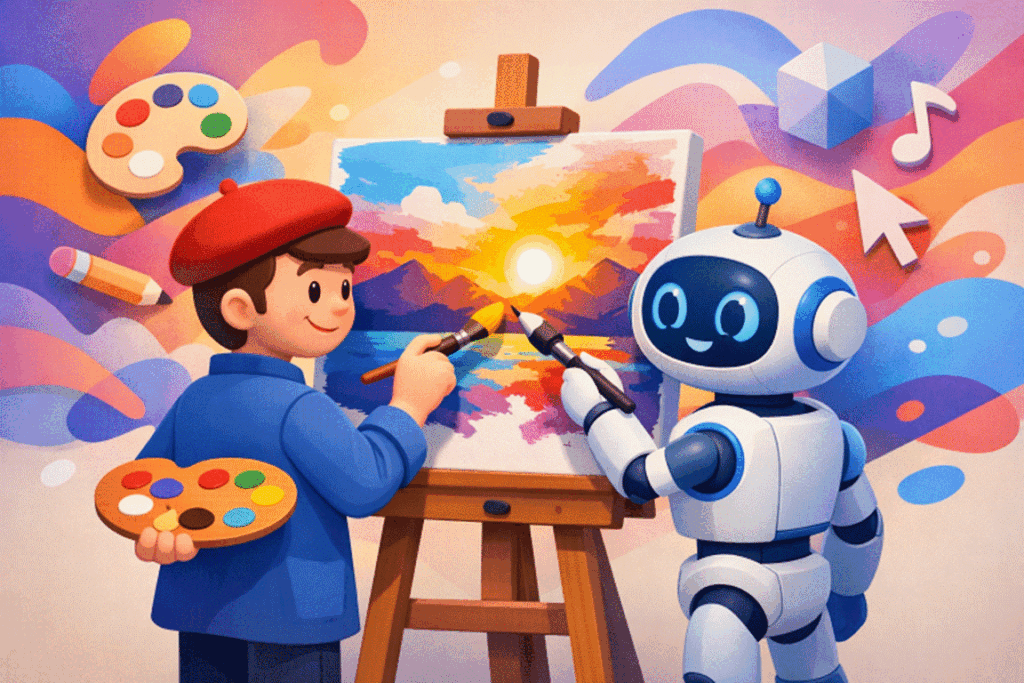
AI is both a disruptor and a partner to traditional art. Some artists embrace it as a tool to expand their palette, integrating AI outputs with their own creative vision. Others view it with skepticism, concerned about the possible undervaluation of human originality and the potential for mass production of art. This dynamic tension is leading to a robust debate about what constitutes art and authorship in the digital age. As AI becomes more sophisticated at mimicking human styles, it challenges cherished notions of creative labor and artistic signature, prompting artists to re-examine their processes and redefine their artistic identities.
Future Trends in AI-Generated Art
The journey of AI-generated art is only beginning. Experts project that by 2026, AI could rival human creators in style authenticity, consistency, and complexity. Soon, artists will collaborate with AI to design not just static images but full animated sequences, interactive environments, and dynamic 3D worlds. This will encourage new forms of digital experiences and storytelling. The continued evolution of these technologies suggests an increasingly synergistic relationship between human ingenuity and machine intelligence, where the boundaries of digital creativity are reimagined and continually expanded.
Conclusion
AI image generators are fundamentally transforming creative industries, enabling faster workflows, expanding artistic participation, and raising new cultural and legal questions. As technology becomes more intuitive and accessible, its impact will only deepen. The future depends on a thoughtful balance: embracing the potential of AI without neglecting the ethical, legal, and philosophical challenges it brings. With a collaborative mindset, AI can serve as a powerful complement to, rather than a replacement for, human vision and creativity.