
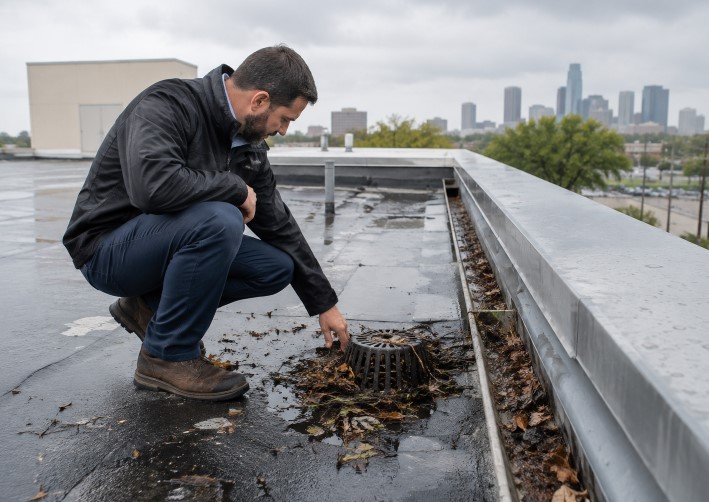

For commercial properties in Houston, roof drainage is not a minor maintenance detail. Flat and low-slope roofs can collect leaves, windblown debris, roof gravel, and standing water, especially where drains or scuppers are partially blocked. Working with commercial gutter contractors in Houston, Texas, can help property managers evaluate visible drainage components and address problems that need more than routine cleaning.
A storm-ready plan is particularly useful for warehouses, retail centers, offices, medical facilities, and multi-tenant buildings. A roof may appear sound during dry weather, while a clogged outlet, sagging gutter section, or poorly directed downspout only becomes obvious when rainwater begins moving across the site.
Why Roof Drainage Deserves Regular Attention
Commercial roofs direct rainwater toward internal drains, gutters, scuppers, downspouts, or a combination of these features. When water cannot follow the intended path, it may remain on the roof, spill over an edge, or discharge where people and vehicles travel. Repeated moisture exposure can affect roofing materials, flashing, wall surfaces, ceilings, insulation, and pavement near the building.
Drainage issues also create operational concerns. Water near entrances, loading docks, ramps, stairs, and service corridors can make access less safe. A leak above a sales floor, office suite, stockroom, or electrical area can require a fast response and may disrupt normal business activity.
Common Signs of a Drainage Problem
Property managers do not need to wait for an interior leak to begin investigating. During a walk-through, look for these warning signs:
- Water that remains on the roof after a storm has passed.
- Overflow staining below gutters, scuppers, or roof edges.
- Ceiling stains, damp insulation, peeling finishes, or musty odors indoors.
- Rust, loose fasteners, cracked sealant, separated flashing, or visibly sagging gutters.
- Standing water, washouts, or eroded soil near a downspout outlet.
- Repeated reports of drips, leaks, puddles, or slippery walkways from occupants.
A Simple Roof Drainage Inspection Process
- Review records first. Check prior leak reports, maintenance tickets, repair invoices, roof warranties, and notes from past storms.
- Walk the ground level. Look for overflow patterns, exterior staining, displaced mulch, erosion, and water collecting near doors or foundations.
- Inspect accessible drainage components. Check gutters, drain strainers, scuppers, downspouts, elbows, and discharge points for debris or damage.
- Review roof details. Examine accessible seams, edges, flashing, penetrations, and areas around rooftop equipment for visible wear.
- Follow the water path. Confirm that discharged water moves away from entrances, pedestrian routes, loading areas, and the building perimeter.
- Document findings. Photograph each concern, identify its location, and rank it by safety risk, urgency, and likely repair scope.
How Roof Size and Rainfall Affect Drainage Capacity
A larger roof collects more water during the same storm, so its drainage system must be sized and maintained accordingly. Roof slope, low spots, structural movement, rooftop units, pipe runs, and added equipment can all influence how water travels. A system that performed acceptably years ago may need closer review after a renovation, roof replacement, addition, or parking expansion changes runoff patterns.
Property teams should also consider the entire site. Roof water that leaves a downspout still needs a safe place to go. The stormwater management practices used at EPA facilities illustrate how features such as vegetated swales, permeable surfaces, and bioretention areas can slow, direct, or filter runoff where appropriate.
Keeping Gutters, Drains, and Downspouts Clear
Routine cleaning is one of the most practical ways to reduce preventable drainage trouble. Remove leaves, dirt, packaging, roof gravel, and other debris from accessible collection points. Check strainers and guards for blockage or damage, and look for gutter sections that sag or retain water instead of moving it toward an outlet.
Downspouts should be firmly attached, unobstructed, and directed toward a suitable discharge area. After heavy rain, inspect outlet locations to see whether water is exiting normally or backing up onto pavement and landscaping. Record cleaning dates, observed conditions, repairs, and follow-up work so recurring issues are easier to identify.
Drainage Risks Around Warehouses, Retail Sites, and Multi-Tenant Buildings
Large commercial roofs can send substantial runoff toward a limited number of drains or discharge points. At warehouses, trouble often appears near loading docks, truck lanes, employee entrances, and equipment yards. At retail centers, a single overflowing gutter section can repeatedly wet a customer walkway or storefront entry.
For example, if one downspout at a Houston shopping center discharges across a sidewalk, tenants may report slippery conditions every time a strong storm moves through. The immediate repair may involve clearing a blockage or securing a loose extension, but the longer-term solution could require changing the discharge path. Sites with multiple structures benefit from one property-wide inspection calendar rather than separate, inconsistent checks.
Stormwater Runoff and the Surrounding Property
Roof drainage should be viewed as part of the whole property drainage system. Water can move from the roof to pavement, landscaping, curb lines, storm drains, and neighboring drainage features. Before moving a downspout outlet or adding a new runoff-control feature, property managers should review applicable local requirements and site conditions.
Industrial properties may also have inspection, maintenance, and recordkeeping obligations related to stormwater discharges. The EPA’s guidance for industrial stormwater control measures emphasizes maintenance planning and the need to consider local climatic factors when evaluating stormwater controls.
When to Clean, Repair, Redesign, or Replace
- Clean when debris, leaves, sediment, or blocked strainers are preventing normal flow.
- Repair for loose connections, isolated corrosion, minor leaks, damaged sealant, or small flashing concerns.
- Redesign when water repeatedly pools, overflows, or travels toward the wrong area despite regular maintenance.
- Replace when gutters, drains, downspouts, or related components are extensively corroded, undersized, or failing in multiple locations.
Building a 2026 Maintenance Calendar
- Monthly: Review visible overflow points, tenant reports, and recent work orders.
- Quarterly: Clean accessible drainage components and inspect discharge areas.
- Before severe-weather periods: Check roof edges, drains, downspouts, flashing, and emergency overflow paths.
- After major storms: Look for fresh debris, loose materials, leaks, standing water, pavement washouts, and landscaping damage.
- Annually: Review recurring issues, maintenance records, warranties, repair costs, and future capital needs.
Questions to Ask During Every Inspection
- Where does water collect first during heavy rainfall?
- Can every drain, gutter, scupper, and downspout be safely accessed and maintained?
- Does runoff reach entrances, walkways, foundations, loading areas, or neighboring spaces?
- Have any roof sections required repair more than once?
- Did a rooftop unit, addition, parking project, or landscape change alter water flow?
- Are inspection photos, invoices, warranties, and repair notes stored in one accessible location?
Make Drainage Checks Part of Property Planning
Reliable commercial roof drainage depends on inspection, cleaning, repair, and site planning working together. For Houston property managers, early documentation and consistent follow-up can help prevent a drainage issue from becoming a safety concern or a disruptive water intrusion event. A focused inspection before severe weather can protect building systems, tenants, customers, inventory, and daily operations.
Read Also: https://flypapermagazine.com/