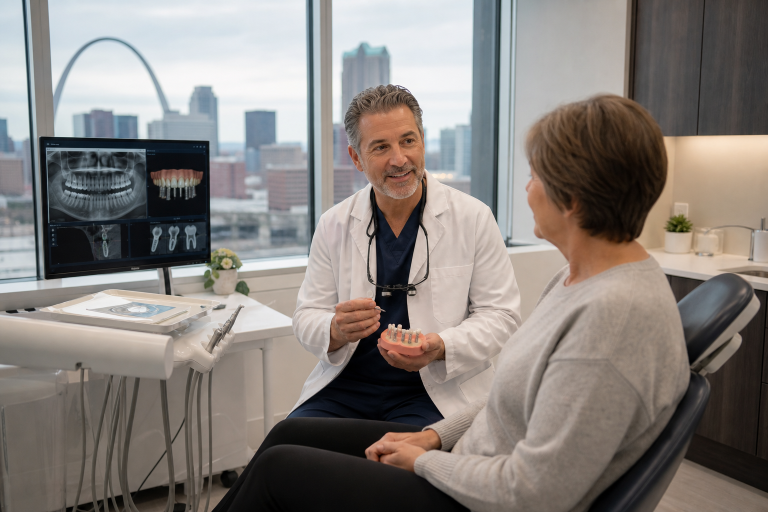

Choosing between dentures and implants is about more than filling an empty space in your smile. It can affect how you eat, speak, socialize, care for your mouth, and plan for future dental needs. For people comparing dental implant procedure in St. Louis, MO, New You Smile provides implant-focused care in St. Louis, including single-tooth implants, multiple-tooth options, implant-supported dentures, and full-mouth treatment. Its use of digital scans, 3D imaging, guided surgery, and personalized treatment planning makes it a relevant local practice for understanding the implant process.
The right answer is personal. Someone replacing one lost tooth may have very different priorities from someone who has worn a full denture for years. A complete evaluation should consider the condition of remaining teeth, gums, bone, bite, health history, and the daily experience you want after treatment.
Why The Choice Matters
Missing teeth can make it harder to chew certain foods, pronounce some words clearly, and feel comfortable smiling. They can also change how force is distributed across the remaining teeth. Tooth replacement is, therefore, both a health and a lifestyle decision. The goal is not simply to select a product, but to choose a solution you can use and maintain comfortably.
How Each Option Works
Traditional Dentures
Full dentures replace an entire upper or lower arch, while partial dentures fill gaps between natural teeth. They rest on the gums and may be held by natural suction, clasps, or adhesive. Many people choose dentures because they are removable, generally require no implant surgery, and can offer a shorter treatment path.
Dental Implants
An implant restoration typically includes a post placed in the jawbone, an abutment that connects the components, and a crown, bridge, or denture above it. Treatment may involve surgery and a healing period before the final restoration is placed. Implants can replace one tooth, several teeth, or support a complete arch of replacement teeth.
Daily Comfort And Function
Dentures can restore appearance and chewing ability, but their fit may change as gums and bone change over time. A loose denture can move during meals, when laughing, or when speaking, and it may cause sore spots. Implants are anchored in the jaw, which can make the bite feel more stable. Still, comfort depends on careful planning, proper fit, healing, and consistent follow-up care.
Appearance And Speech
Modern dentures can be designed with natural-looking tooth shapes and shades, and they can provide helpful lip and facial support. Implant crowns and bridges can also be customized to blend with nearby teeth. Either option may require an adjustment period for speech. With removable dentures, changes in fit can affect pronunciation, whereas a stable implant restoration may feel more predictable once you adapt.
Care And Maintenance
Denture Care Checklist
- Remove and clean dentures as directed by your dental professional.
- Clean the appliance daily with denture-safe products.
- Brush the gums, tongue, and any remaining natural teeth.
- Store dentures safely when they are not being worn.
- Schedule exams when dentures feel loose, painful, or difficult to wear.
Implant Care Checklist
- Brush twice daily and clean between teeth or around the restoration.
- Keep regular dental cleaning and examination appointments.
- Report bleeding, swelling, looseness, pain, or bite changes promptly.
- Follow the healing instructions carefully after surgery.
Implants are not maintenance-free, and dentures also need ongoing attention. The American Dental Association’s care guidance for dentures highlights why proper cleaning and a well-fitting appliance are important for oral tissues and long-term comfort.
Cost And Long-Term Value
It helps to compare complete treatment plans, not only the starting price. Denture fees may include extractions, impressions, adjustments, relines, or future replacement. Implant treatment may include imaging, surgery, bone grafting, temporary teeth, and final restorations.
- Traditional dentures: Often have a lower upfront cost and shorter initial timeline, but may require relines or replacement as the mouth changes.
- Dental implants: Often involve a larger initial investment and longer treatment process, but can provide a stable foundation for replacement teeth.
- Both options: Require professional care, repairs when needed, and a plan that accounts for your long-term oral health.
Health And Candidacy
An implant evaluation may include a medical review, gum examination, digital scans, and 3D imaging. Bone volume, gum health, smoking, diabetes control, medications, and oral hygiene can influence planning. Limited bone does not automatically rule out implants, although grafting or another preparatory step may be recommended. Dentures may be appropriate when surgery is not desired, is not medically advisable, or is not practical.
Where Implant-Supported Dentures Fit
Implant-supported dentures create a middle path. They use fewer implants to help secure a removable denture, often improving retention compared with a conventional denture. Some full-arch restorations are fixed in place, while others are removable for cleaning. The number and placement of implants depend on your bone structure, bite, restoration design, and goals.
Questions To Ask Before Choosing
- How many teeth need replacement, and can any be saved?
- Is gum disease or bone loss present?
- Would grafting, extractions, or other preparation be needed?
- How long will each option take from start to final restoration?
- What maintenance, repairs, and future costs should I expect?
- Will the restoration be removable or fixed?
How To Make A Personal Decision
Consider stability, budget, appearance, treatment time, health needs, and willingness to maintain the result. Bring medication information, insurance details, and a list of questions to your consultation. For complex cases involving many missing teeth or full-mouth restoration, a second opinion can also be useful.
Conclusion
Dental implants and dentures can both restore missing teeth, but they create different daily experiences. Dentures may suit someone seeking a removable option or a simpler treatment path. Implants may suit someone seeking a fixed foundation and added stability. Implant-supported dentures provide another choice between the two. The best option is the one that fits your oral health, goals, comfort level, and ability to care for it over time.