
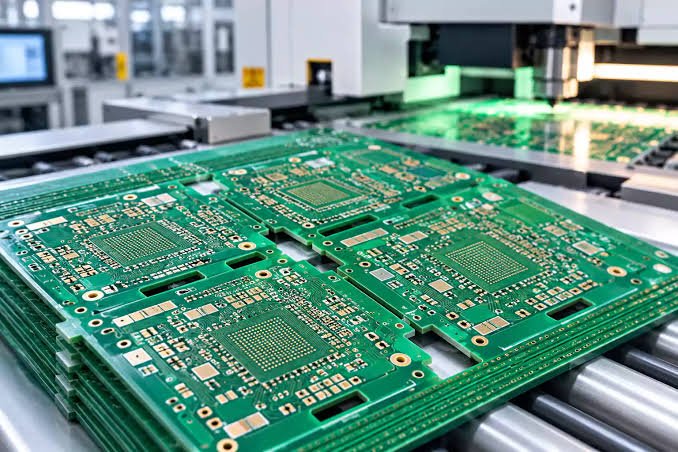

The electronics manufacturing industry continues to evolve as businesses seek efficient, cost-effective, and adaptable production solutions. From startups developing innovative devices to established companies introducing specialized electronic products, manufacturers increasingly require production services that accommodate smaller quantities without compromising quality. Low volume PCB assembly has become an essential solution for businesses that need flexibility, reliable manufacturing, and greater control over production investments.
Unlike traditional high-volume manufacturing, low volume PCB assembly focuses on producing smaller batches of assembled printed circuit boards. This approach allows companies to test new designs, respond to changing market demands, and manufacture specialized products without committing to large production quantities. FastTurn PCBA provides PCB manufacturing and assembly solutions that support businesses with diverse electronic production requirements.
By combining practical manufacturing processes, engineering coordination, and flexible production planning, low volume pcb assembly helps companies bring electronic products to market efficiently while managing costs and reducing unnecessary inventory.
Understanding Low Volume PCB Assembly
Low volume PCB assembly refers to the process of assembling electronic components onto printed circuit boards in relatively small quantities. These production runs may range from a few units to several hundred boards, depending on the manufacturer’s capabilities and the complexity of the project.
The assembly process typically involves placing electronic components onto fabricated PCBs, soldering them into position, and performing appropriate inspection and testing procedures.
Low volume manufacturing is particularly useful for businesses that do not require thousands of identical circuit boards.
Common characteristics of low volume PCB assembly include:
- Small Production Quantities: Manufacturing limited batches based on actual project requirements.
- Flexible Production Planning: Supporting different product designs and changing order quantities.
- Reduced Inventory Requirements: Avoiding unnecessary accumulation of finished electronic assemblies.
- Prototype-to-Production Support: Helping businesses move from initial testing toward commercial manufacturing.
- Custom Assembly Options: Accommodating specialized components and unique circuit board configurations.
- Quality Verification: Applying appropriate inspection and testing procedures to assembled boards.
These features make low volume pcb assembly suitable for businesses seeking practical alternatives to large-scale electronics manufacturing.
Why Choose FastTurn PCBA for Low Volume PCB Assembly?
Selecting a dependable PCB assembly provider is essential for achieving consistent product quality and efficient manufacturing.
FastTurn PCBA offers PCB manufacturing and assembly solutions for companies developing electronic products with varying technical requirements.
Flexible Manufacturing Solutions
Electronic production requirements differ across industries and projects. Some businesses need small batches for product testing, while others require limited quantities for specialized commercial applications.
Low volume manufacturing provides flexibility by allowing businesses to order quantities that better match their immediate needs.
FastTurn PCBA can be considered by companies seeking PCB assembly solutions for projects where production flexibility is an important consideration.
Support for Custom PCB Designs
Modern electronic products often require customized circuit boards with specific component arrangements, dimensions, and electrical characteristics.
Low volume PCB assembly is particularly valuable for these projects because it allows businesses to manufacture specialized designs without committing to large quantities.
Custom assembly requirements may involve:
- Different PCB sizes and shapes.
- Surface-mount components.
- Through-hole components.
- Mixed-technology assemblies.
- Multilayer circuit boards.
- Specialized connectors.
- Fine-pitch electronic components.
- Application-specific testing procedures.
Customers should confirm the manufacturer’s capabilities for their particular board designs and component requirements.
PCB Manufacturing and Assembly Coordination
Coordinating PCB fabrication and component assembly can become complicated when multiple suppliers are involved.
Working with a provider that supports both services may simplify production planning.
Potential benefits include improved communication, reduced supplier coordination, better design compatibility, and more efficient production scheduling.
Practical Support for Product Development
Low volume assembly provides businesses with an opportunity to evaluate products under realistic manufacturing conditions.
Instead of immediately investing in large production runs, companies can manufacture smaller batches, review performance, and make necessary improvements.
This approach helps reduce the financial risks associated with introducing new electronic products.
Key Benefits of Low Volume PCB Assembly
Low volume PCB assembly offers several important advantages for companies that prioritize manufacturing flexibility and controlled production costs.
Reduced Initial Investment
Large-scale PCB assembly often requires significant investment in components, materials, and finished inventory.
Low volume production allows businesses to manufacture smaller quantities, reducing the amount of capital committed to a single production run.
Although the cost per board may be higher than in mass production, the total initial expenditure can be substantially lower.
Greater Production Flexibility
Businesses frequently need to modify electronic designs as product requirements change.
Low volume manufacturing makes it easier to introduce revisions between production batches.
This flexibility is particularly valuable during early product development when engineering adjustments are common.
Lower Inventory Risk
Manufacturing excessive quantities can create inventory problems, especially when products become outdated or demand changes unexpectedly.
Smaller production batches allow companies to align manufacturing quantities more closely with customer demand.
This approach can reduce storage requirements and minimize the risk of unsold inventory.
Faster Design Improvements
Low volume production enables businesses to evaluate actual assembled products and identify potential improvements.
Engineering teams can use feedback from testing and early customers to refine circuit designs, component selection, or product functionality.
Suitable for Specialized Products
Some electronic products serve limited markets and do not require mass production.
Low volume assembly supports specialized equipment, industrial controllers, medical instruments, and custom electronic systems where production quantities remain relatively small.
Low Volume PCB Assembly Process at FastTurn PCBA
A successful PCB assembly project requires careful planning, accurate component placement, and effective quality verification.
The manufacturing process generally involves several important stages.
Design Review and Manufacturing Preparation
Before assembly begins, the PCB design and associated manufacturing documentation must be evaluated.
Important documents commonly include:
- Gerber files or other PCB fabrication data.
- Bill of Materials (BOM).
- Component placement files.
- Assembly drawings.
- PCB dimensions and layer specifications.
- Component polarity information.
- Special assembly instructions.
- Testing requirements.
Reviewing these documents helps identify potential manufacturing problems before components are installed.
Component Procurement
Electronic component availability can significantly influence production schedules.
Manufacturers must ensure that the required components are available and compatible with the PCB design.
Component sourcing considerations include supplier reliability, lead times, part authenticity, minimum order quantities, and approved alternatives.
For low volume projects, component procurement should be carefully coordinated to avoid unnecessary purchasing costs.
PCB Fabrication
The printed circuit boards must be manufactured according to the approved design specifications.
Fabrication involves creating conductive circuit patterns, drilling required holes, applying protective finishes, and completing appropriate inspection procedures.
Board quality directly influences assembly reliability.
Solder Paste Application
For surface-mount assembly, solder paste is applied to designated PCB pads.
A stencil is commonly used to control solder paste placement and volume.
Accurate application is essential for producing reliable solder joints and minimizing assembly defects.
Component Placement
Electronic components are positioned onto the FastTurn PCBA according to the approved placement data.
Automated pick-and-place equipment is commonly used for surface-mount components, while certain specialized parts may require manual placement.
Accurate positioning helps ensure proper electrical connections during soldering.
Reflow and Through-Hole Soldering
Surface-mount components are typically soldered using a controlled reflow process.
Through-hole components may be soldered using selective soldering, wave soldering, or manual methods, depending on the assembly requirements.
Proper temperature control and soldering techniques are essential for reliable connections.
Inspection and Testing
After assembly, boards undergo appropriate inspection and testing procedures.
Depending on the project, verification may include:
- Visual inspection.
- Automated optical inspection.
- X-ray inspection for hidden solder joints.
- Electrical continuity testing.
- In-circuit testing.
- Functional testing.
- Final assembly verification.
The specific testing methods depend on product complexity, production quantity, and customer requirements.
Types of Low Volume PCB Assembly Services
Different electronic products require different assembly technologies.
Understanding the available options helps businesses select suitable manufacturing processes.
Surface Mount Technology Assembly
Surface Mount Technology (SMT) involves placing electronic components directly onto the surface of a printed circuit board.
SMT assembly supports compact circuit designs and high component density.
It is commonly used in consumer electronics, communication equipment, and modern industrial systems.
Through-Hole Technology Assembly
Through-Hole Technology (THT) involves inserting component leads through drilled PCB holes and soldering them into place.
This approach is useful for certain connectors, large components, and applications requiring strong mechanical attachment.
Mixed-Technology PCB Assembly
Some electronic products require both surface-mount and through-hole components.
Mixed-technology assembly combines these methods on the same circuit board.
This approach provides additional design flexibility but requires careful manufacturing planning.
Prototype PCB Assembly
Prototype assembly focuses on producing small quantities of boards for engineering evaluation.
These assemblies help developers test electrical functionality, component compatibility, and overall product performance.
Custom PCB Assembly
Custom assembly services accommodate specialized electronic products with unique design or manufacturing requirements.
Projects may involve unusual board shapes, specialized components, or application-specific testing procedures.
Applications of Low Volume PCB Assembly
Low volume PCB assembly supports a wide range of industries where production flexibility and specialized manufacturing are important.
Medical Electronics
Medical equipment manufacturers may require limited quantities of electronic assemblies for product development, clinical evaluation, or specialized instruments.
Applications can include:
- Portable diagnostic devices.
- Patient monitoring equipment.
- Laboratory instruments.
- Medical sensors.
- Specialized electronic controllers.
Medical products may require additional regulatory controls, documented quality systems, and application-specific validation.
Industrial Automation
Industrial equipment often contains specialized electronic control boards that are produced in relatively small quantities.
Low volume assembly supports custom controllers, monitoring systems, sensor interfaces, and automation equipment.
Telecommunications
Communication equipment manufacturers may require small production batches for specialized networking devices or new product development.
Low volume assembly allows businesses to evaluate electronic performance before expanding manufacturing quantities.
Automotive Electronics
Automotive development projects frequently involve prototype and pre-production electronic assemblies.
Low volume manufacturing can support engineering evaluation of sensors, communication modules, control systems, and other electronic components.
Automotive applications may require additional qualification and reliability testing.
Consumer Electronics
Startups and established brands often introduce new electronic products through limited initial production runs.
Low volume PCB assembly helps companies evaluate customer demand and product performance before increasing production.
Aerospace Electronics
Aerospace equipment may require specialized circuit boards manufactured in relatively small quantities.
These applications typically involve demanding quality, traceability, and reliability requirements.
Low Volume PCB Assembly vs. High Volume PCB Assembly
Both manufacturing approaches serve important purposes, but they differ in production scale, cost structure, and flexibility.
| Feature | Low Volume PCB Assembly | High Volume PCB Assembly |
| Production Quantity | Small batches | Large production runs |
| Initial Investment | Generally lower | Usually higher |
| Cost Per Unit | Often higher | Typically lower |
| Design Changes | Easier between batches | More difficult after production begins |
| Inventory Requirements | Lower | Higher |
| Production Planning | Flexible | Optimized for repetitive manufacturing |
| Best Applications | Prototypes and specialized products | Established mass-market products |
| Manufacturing Setup | Costs spread across fewer units | Costs spread across many units |
Businesses should select the approach that best matches their production requirements and commercial objectives.
Important Factors Affecting Low Volume PCB Assembly Costs
The cost of low volume PCB assembly depends on several technical and commercial factors.
Production Quantity
Small batches generally have higher per-unit costs because setup expenses are distributed across fewer boards.
Increasing the order quantity may reduce unit costs, depending on component pricing and manufacturing requirements.
Component Selection
Specialized or difficult-to-source components can increase manufacturing expenses.
Component availability, packaging, and minimum purchase quantities may also affect overall costs.
PCB Design Complexity
Complex multilayer boards, fine-pitch components, and dense layouts may require additional manufacturing controls.
These requirements can increase assembly time and inspection costs.
Assembly Technology
SMT, through-hole, and mixed-technology assemblies involve different equipment and processing requirements.
Projects requiring multiple soldering methods may involve additional production stages.
Testing Requirements
Advanced electrical and functional testing can increase manufacturing costs.
However, appropriate testing helps identify defects and reduce the risk of failures after delivery.
Production Scheduling
Expedited manufacturing may involve additional charges depending on material availability, production capacity, and testing requirements.
Businesses should confirm realistic delivery schedules before placing orders.
The Importance of Quality Control in Low Volume PCB Assembly
Quality control remains essential regardless of production quantity.
Even a small number of defective circuit boards can disrupt product development or create additional engineering expenses.
Effective quality management begins with accurate design documentation and continues throughout manufacturing.
Important quality considerations include:
- Verification of component specifications.
- Inspection of PCB fabrication quality.
- Accurate solder paste application.
- Correct component orientation.
- Reliable solder joint formation.
- Detection of missing or misplaced components.
- Electrical and functional testing.
- Documentation of manufacturing issues.
Appropriate inspection methods should be selected according to the product’s technical requirements.
For demanding applications, customers may also request specific workmanship standards, traceability records, or additional testing procedures.
How Low Volume PCB Assembly Supports Startups and Small Businesses
Startups often face challenges related to limited budgets, uncertain market demand, and evolving product designs.
Low volume PCB assembly provides a practical manufacturing approach that addresses these concerns.
Testing Market Demand
Businesses can manufacture limited quantities and evaluate customer interest before investing in larger production runs.
This helps reduce the financial risks associated with launching new products.
Managing Development Budgets
Smaller production quantities allow companies to allocate resources toward engineering, testing, marketing, and other essential activities.
Supporting Product Improvements
Customer feedback and engineering evaluations may reveal opportunities to improve electronic designs.
Low volume production makes it easier to introduce modifications between manufacturing batches.
Building a Scalable Production Strategy
Businesses can begin with prototype quantities, progress to limited commercial production, and eventually transition to higher manufacturing volumes.
This gradual approach supports controlled business growth.
Design for Manufacturability in Low Volume PCB Assembly
Design for Manufacturability (DFM) focuses on creating PCB designs that can be manufactured and assembled efficiently.
Even small production runs benefit from proper DFM planning.
Component Placement Optimization
Components should be arranged to support accurate placement, soldering, inspection, and testing.
Adequate spacing helps reduce assembly difficulties.
Standard Component Selection
Using readily available components can simplify procurement and reduce production delays.
Where practical, engineers should avoid unnecessary dependence on difficult-to-source parts.
Clear Assembly Documentation
Accurate BOM files, placement data, and assembly drawings help manufacturers interpret design requirements correctly.
Incomplete documentation can lead to delays or assembly errors.
Testing Accessibility
Providing suitable test points and access to important electrical signals can simplify inspection and functional verification.
Early Manufacturing Communication
Discussing manufacturing requirements before finalizing a design can help identify potential problems and reduce costly revisions.
How FastTurn PCBA Supports Flexible Production Requirements
FastTurn PCBA offers PCB manufacturing and assembly solutions for businesses developing electronic products with varying production needs.
For low volume projects, customers should clearly communicate their required quantities, component specifications, board complexity, assembly methods, and testing expectations.
This information allows the manufacturing provider to assess project requirements and determine suitable production arrangements.
Businesses considering FastTurn PCBA should confirm available minimum order quantities, assembly capabilities, component sourcing options, quality documentation, and expected lead times.
Coordinating these details early can improve production planning and help avoid unnecessary delays.
Future Trends in Low Volume PCB Assembly
Low volume PCB assembly is becoming increasingly relevant as electronic products become more specialized and product development cycles evolve.
Growing Demand for Customized Electronics
Businesses increasingly require electronic products designed for specific industries and applications.
Low volume manufacturing supports these specialized requirements without requiring mass production.
Faster Product Development Cycles
Companies are placing greater emphasis on testing and improving products before large-scale manufacturing.
Smaller production batches support iterative development and engineering validation.
Increased Manufacturing Automation
Modern assembly equipment and digital manufacturing tools can help improve production accuracy and reduce setup complexity.
These developments may make smaller production runs more efficient.
Expansion of IoT Applications
Internet of Things devices often serve specialized monitoring, automation, and communication functions.
Low volume PCB assembly supports the development and initial production of these electronic systems.
Greater Focus on Inventory Management
Businesses increasingly seek manufacturing strategies that reduce excess inventory and improve responsiveness to demand.
Smaller production quantities can support these objectives.
Conclusion
Low-volume PCB assembly provides businesses with a flexible and practical approach to electronics manufacturing. By allowing companies to produce smaller batches, evaluate product performance, and introduce design improvements, this manufacturing method supports efficient product development and controlled investment.
From startups and consumer electronics companies to industrial equipment manufacturers and specialized technology providers, low-volume PCB assembly offers valuable advantages in production flexibility, inventory management, and customization.
FastTurn PCBA provides PCB manufacturing and assembly solutions for businesses seeking support with diverse electronic production requirements. Careful planning, clear engineering documentation, suitable assembly methods, and appropriate quality verification are essential for successful manufacturing outcomes.
As demand for customized electronics and adaptable manufacturing continues to grow, low volume PCB assembly will remain an important solution for businesses seeking reliable electronic production without the commitments associated with large-scale manufacturing.