

Recognizing signs early helps homeowners address air conditioning problems more effectively. If you’re experiencing warm air, poor airflow, odd noises, foul odors, short cycling, leaking, and increased humidity, these are all signs that something may be wrong and can get worse if you continue to stress your system. Waiting too long can turn a manageable repair into an expensive breakdown, especially in hot weather when the unit is already working harder. These signs exist to protect the system, minimize discomfort, and avoid unnecessary damage. A quick response can be the difference between a small fix and a big repair.
Where Efficiency Begins
A Proper System Evaluation Reveals Hidden Waste
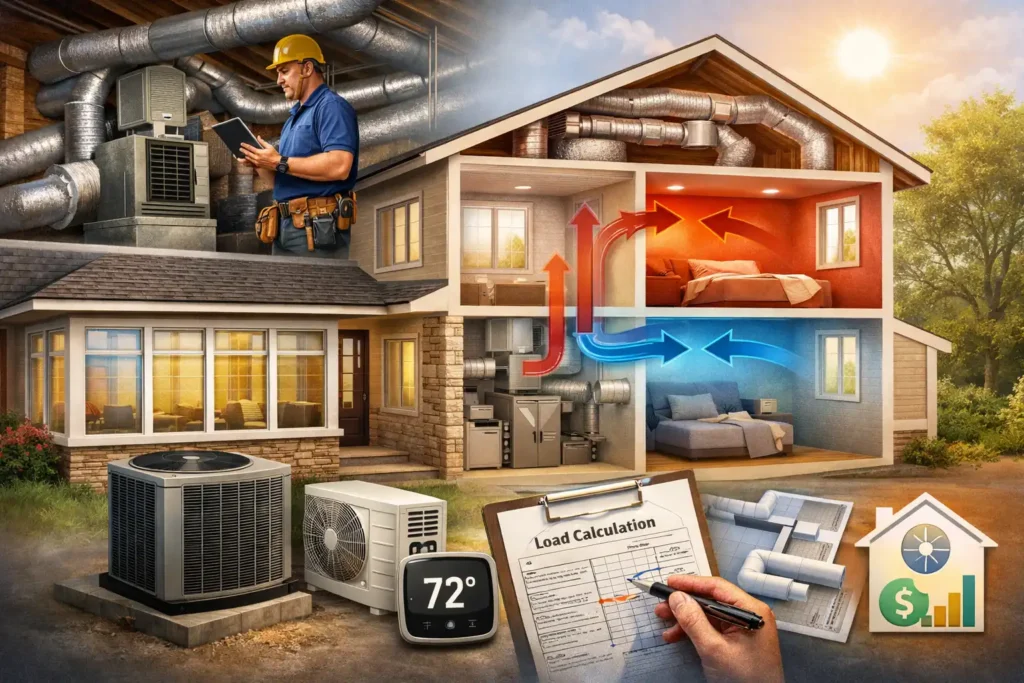
An HVAC company can increase energy efficiency by considering the entire comfort system, not just one component. Many houses leak energy due to problems you can’t see every day. The air conditioner may be cooling the home, but it may run longer than it should because the ducts are leaking. The furnace may be heating the rooms, but it may be using more energy because the blower is dirty or the thermostat is badly placed. A reliable HVAC company conducts a thorough evaluation, assessing airflow, equipment age, filter condition, duct performance, thermostat behavior, insulation concerns, and how rooms respond across different seasons. Why is this important? Well, energy waste often results from several small problems. The homeowner may only see the bigger bill; the real causes are hidden inside the system. Once those causes are identified and addressed, the equipment can operate with less strain and provide comfort more efficiently.
Correct Installation Prevents Years of High Bills
Energy efficiency begins well before a system is first powered up. If your heating and cooling equipment is not properly installed, you, as a homeowner, may be stuck with high energy bills for years without even knowing it. A unit that is too large may cycle on and off too quickly, wasting energy and creating uneven comfort. If a unit is too small, it may run almost continuously because it cannot keep up with the household’s needs. Poor duct connections, weak sealing, incorrect refrigerant charge, and careless thermostat placement can also lead to reduced performance right from the start. Proper installation helps the system work as intended. It provides smooth airflow, responsive controls, and healthy equipment cycles. Proper installation means the system doesn’t have to battle unnecessary errors every time it heats or cools the house.
Routine Maintenance Keeps Performance Steady
If not maintained, even the best-installed system loses its efficiency. Dust, loose parts, clogged filters, poor electrical connections, blocked drains, and dirty coils all slowly degrade performance. The change can be slow, and the homeowner may not notice it right away. It still works, but it might take longer cycles to reach the same temperature. Longer cycles mean more energy use, more wear, and less consistent comfort. Regular maintenance avoids that slow decline by keeping important components clean, adjusted, and checked before heavy seasonal use. A maintenance visit can restore better airflow, improve heat transfer, reduce unnecessary strain, and help the thermostat communicate more accurately with the equipment. With this kind of care, it’s not just about avoiding breakdowns. It also enables the system to use energy more wisely throughout the year. When things are clean and balanced, the home can remain comfortable without straining the equipment.
Ductwork Improvements Can Make a Major Difference
One of the biggest causes of energy waste in many homes is often the ductwork. If you have a good heating and cooling system but your ducts are leaky, crushed, poorly connected, or badly insulated, much of the conditioned air may never reach the rooms where it is needed. That means the system has to run longer, using more energy and creating uneven temperatures throughout the home. Some rooms may be too hot, others too cold, and the homeowner is constantly adjusting the thermostat. A solution to these comfort issues may be improved ductwork that reduces wasted energy. Sealing leaks, improving insulation, eliminating restrictions, and balancing airflow all help the system deliver air more effectively. Good air flow through the duct system means the equipment doesn’t have to work harder to make up for lost heating or cooling. Better duct performance can make an existing system feel more powerful, without using any more energy.
Thermostat Settings Shape Daily Energy Use
The thermostat may be a small component of the system, but it plays a big role in energy efficiency. If the thermostat is in direct sunlight, in a draft, next to an appliance, or in an area that doesn’t reflect the rest of the house’s temperature, it can cause the system to run at the wrong time. Older thermostats or poorly programmed ones can waste energy by keeping your house at the same temperature when no one is home. The right service provider can help homeowners select settings that fit their schedule, comfort needs, and equipment type. Smart or programmable thermostats can be helpful if set up properly, but they are not a magic bullet on their own. Proper placement, proper calibration, and common-sense temperature schedules are required. The equipment only works when needed because the thermostat provides more precise control of the system. That simple improvement can eliminate waste without sacrificing home comfort.
Efficient Repairs Help the System Work Smarter
Some repairs restore cooling or heating and also improve how the system uses energy. A worn blower part, a dirty coil, a faulty sensor, low refrigerant, or a weak capacitor can cause equipment to run longer and work harder, even before it stops running altogether. Since the system could still be blowing warm or cool air, homeowners might not realize these problems are impacting energy consumption. The issue is that it may be doing this with much more work than needed. Prompt repair helps to restore the system to normal operation. This can improve cycle length, airflow, temperature control, and overall performance. Neglecting minor repair needs often leads to higher energy bills and more costly damage down the road. When repairs are done early and done right, the system doesn’t have to waste energy pushing past bad parts. It can run more smoothly, respond more quickly, and stay comfortable with less unnecessary runtime.
Upgrade Guidance Prevents Overspending and Waste
Eventually, repairs and maintenance may not be sufficient to keep an aging system running efficiently. When equipment is obsolete, oversized, or undersized, or has deteriorated, replacement may be the more prudent long-term choice. The trick is to get the right system for the home, not just buy the biggest or most expensive unit out there. Good advice takes into account the size and layout of the house, insulation, duct condition, local climate, and family comfort habits. This helps homeowners avoid equipment that is a poor match for the property and wastes energy. With a well-chosen replacement, you can increase comfort, reduce energy consumption, and make it less likely you will need to repair it repeatedly. It can also help homeowners get a better idea of what features are worth paying for and which may not matter for their home. Good upgrade planning saves the budget in two ways: it prevents ongoing energy waste and helps avoid unnecessary purchases that don’t solve the real problem.
A proper heating and cooling service provider can increase energy efficiency by going beyond the surface of the system. To improve performance, you need proper installation, clean components, sealed ducts, accurate thermostat control, timely repairs, and honest guidance on upgrades when replacement makes sense. The improvements reduce stress on the equipment and conserve energy, helping keep us comfortable at home. For homeowners, that can mean lower monthly bills, fewer comfort problems, and a system that works more reliably through the changing seasons. Energy efficiency is not a single thing you do, but a series of considered choices that make the whole house work better.