

Hidden plumbing leaks can be especially stressful in Phoenix, where a rising water bill, damp flooring, or unexplained water sounds may be the first sign that something is wrong. Knowing the warning signs can help homeowners act before moisture affects flooring, walls, cabinets, or personal belongings.
If several signs point to a concealed water line problem, professional slab leak repair in Phoenix AZ, may be needed after the leak is accurately located. The best first step is not demolition. It is careful observation, basic testing, and ruling out simpler sources of water loss.
Why Hidden Leaks Are Easy to Miss
A slab leak is a leak in a water or sewer pipe located beneath a home’s concrete foundation. Water does not always rise straight up through the slab. It can move beneath flooring, into wall materials, or toward a lower part of the house before becoming visible. That means the dampest spot may not sit directly above the damaged pipe.
In a Phoenix home, a small leak may continue unnoticed for days or longer because evaporation, flooring materials, and air conditioning can mask early moisture. Some homeowners first notice a larger bill rather than a puddle. Because outdoor water use is also common in the Valley, it is wise to check pool equipment, hose bibs, and irrigation before assuming the issue is below the slab. The City’s guidance on unexplained increases in water use also recommends checking for less obvious outdoor leaks.
Warning Signs of a Slab Leak
Warm Flooring or Water Sounds
A warm patch on tile, concrete, or another hard floor can indicate a leaking hot-water line. However, sun exposure, nearby appliances, heating equipment, and the floor material itself can also change surface temperature. Hissing, trickling, or rushing sounds when all fixtures are off may also warrant attention. Listening during a quiet evening can make subtle sounds, such as a clogged aerator or fixture, which can cause a weak flow at one faucet. Long a floor edge, swollen baseboards, loose flooring, peeling paint, or a persistent musty odor can indicate that water is reaching finished materials. A surface that appears dry later should not automatically be dismissed if the same moisture returns.
Higher Bills or Lower Pressure
Compare the current water bill to a similar month from the prior year, accounting for guests, irrigation changes, pool filling, and seasonal use. A whole-home drop in water pressure may be another clue, but a weak flow at one faucet can simply be caused by a clogged aerator or fixture problem. These symptoms point to a need for investigation, not a diagnosis on their own.
Safe Home Checks and Meter Testing
Start with the accessible areas of the plumbing system. Check beneath sinks, behind toilets, around the water heater, near washing-machine hoses, and at visible outdoor connections. Look for drips, damp cabinet bottoms, corrosion, or staining. A running toilet can waste water quietly, so remove the tank lid and listen for refilling after the toilet has not been flushed.
For a basic meter test, stop indoor and outdoor water use, including irrigation and appliances that may refill or make ice. Photograph the meter reading or low-flow indicator, wait at least 30 minutes without using water, then check it again. Meter movement suggests water is being used somewhere on the property. Repeat the test if a sprinkler controller, pool auto-fill device, or appliance may have operated.
Do not break concrete, remove large sections of flooring, dig near buried utilities, or work around standing water or electrical equipment while searching for a leak. Record the timing and location of symptoms instead. Those notes can make the next inspection more efficient.
Other Problems That Can Look Similar
Several common issues can resemble a slab leak. Possibilities include a worn toilet flapper, a dripping faucet, a leaking water heater, a failed appliance hose, an air-conditioning condensate issue, a roof leak, poor exterior drainage, or an irrigation leak near the foundation. Flooring failure and normal foundation movement can also create cracks, loose tile, or gaps without a plumbing leak.
Checking these easier-to-reach sources first can prevent unnecessary damage to floors. If visible plumbing is dry but the meter continues to move even when water use is stopped, the case for professional leak detection strengthens.
Detection, Repairs, and Damage Control
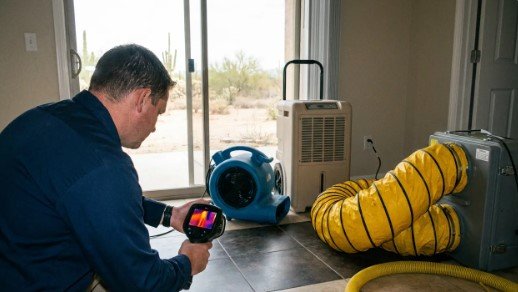
Professional detection makes sense when warm or damp areas keep recurring, water pressure varies throughout the house, the meter shows ongoing use, or water bills remain unusual after common leaks have been ruled out. Depending on the situation, a qualified plumbing professional may use pressure testing, acoustic listening equipment, moisture meters, thermal imaging, or camera inspection, where appropriate.
The goal is to narrow the repair area before opening finished surfaces. Repair options can include a focused spot repair for a well-located isolated leak, rerouting a line to avoid repeated access beneath the slab, or partial or whole-home repiping when pipe problems are widespread. The right choice depends on pipe condition, layout, prior repair history, and the specific leak location.
If water is spreading quickly, turn off the main water supply if it is safe to do so. Move rugs, furniture, and stored belongings away from moisture, keep electrical devices clear of wet areas, and photograph visible damage. Contact an insurance provider when flooring, cabinets, walls, or belongings have been affected. Plumbing repair and restoration work, such as drying materials or replacing flooring, may be handled separately.
Reducing Future Leak Risk
Review water bills regularly, repair dripping fixtures promptly, inspect appliance hoses several times a year, and keep records of past plumbing repairs. A hose-bib pressure gauge can help identify pressure issues, but readings should be evaluated by a professional if they seem abnormal or inconsistent.
Leak sensors and flow monitors can provide an added layer of warning. The EPA explains that leak detection and flow monitoring devices can alert homeowners to unexpected moisture or irregular water-use patterns. Some systems monitor a specific appliance area, while others track water flow for the entire home. Features and installation needs vary, particularly for devices connected to the main water line.
Frequently Asked Questions
Can a high water bill confirm a slab leak?
No. A higher bill is an important clue, but irrigation, toilets, pool equipment, appliances, and visible plumbing leaks can cause the same result.
Do all slab leaks require concrete removal?
No. A repair may involve opening a limited area, rerouting plumbing, or replacing more extensive piping. The appropriate method depends on the conditions found during detection.
How quickly should a suspected slab leak be addressed?
A suspected concealed leak should be checked promptly, particularly when moisture is recurring, the meter keeps moving, or water is affecting the flooring and walls. Early evaluation can help limit water waste and material damage.
Read Also:- flypapermagazine.com