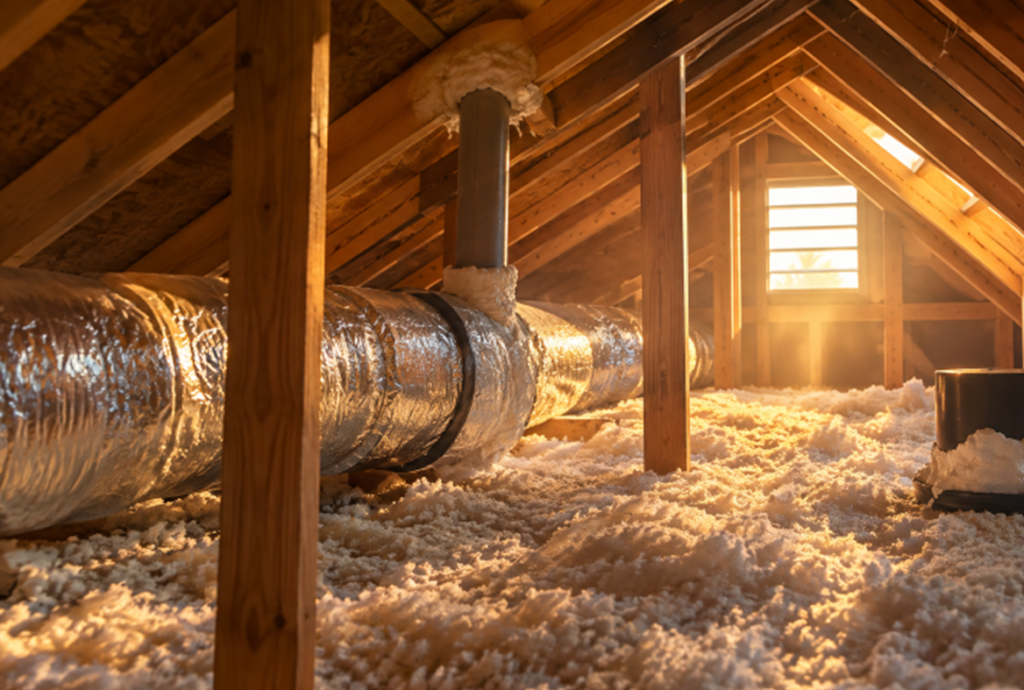

In Boca Raton, insulation is not just a cold-weather upgrade. It is part of the system that helps a home resist outdoor heat, limit unwanted air movement, and support more consistent indoor comfort during Florida’s long cooling season. Homeowners considering spray foam insulation in Boca Raton, FL, should start by looking at the entire home, not simply selecting the material with the highest advertised R-value. From coastal humidity to intense roof-top sun, local conditions can expose weak points in an attic, duct system, garage transition, or exterior wall. The right insulation plan should account for the home’s layout, its existing ventilation and HVAC equipment, visible moisture concerns, and the condition of the air barrier.
Why Boca Raton Homes Need A Different Insulation Plan
In a cooling-dominated climate like Boca Raton, insulation slows heat flow from unconditioned spaces into the rooms where people live. A hot attic above a bedroom, for example, can place extra demand on the cooling system when the ceiling assembly has thin, uneven, or damaged insulation. Insulation is most effective when it works with a continuous air barrier. Gaps around attic hatches, recessed fixtures, duct penetrations, and plumbing openings can allow air to move where it should not, making some rooms feel warmer, dustier, or less comfortable than others. Homeowners in the Boca Raton area who want to see how insulation decisions connect to real building conditions can review building science case studies before deciding whether a simple attic top-up or a broader enclosure upgrade is appropriate.
Signs Your Home May Need Better Insulation
Comfort issues do not always originate with insulation. They can also involve duct leakage, HVAC sizing, window exposure, roof problems, or humidity control. Still, the following signs are good reasons to inspect the insulation and air-sealing details:
- Bedrooms or upper-floor rooms stay warmer than the rest of the home.
- The air conditioner runs for long periods without delivering any comfort.
- Ceilings beneath the attic feel noticeably warm.
- Attic insulation is compressed, patchy, wet, or visibly thin.
- Dust collects around attic access doors, ceiling registers, or recessed lights.
- Musty odors, condensation, or damp-feeling rooms appear repeatedly.
- Conditioned rooms next to a garage, porch, or bonus area are difficult to cool.
Areas To Check First
Every Boca Raton home has its own priorities, especially among older properties, remodeled homes, and houses with vaulted ceilings. Begin with accessible areas that separate air-conditioned rooms from unconditioned spaces.
Priority Areas To Review
- Attic floor or roof deck: Look for bare spots, uneven depth, damaged materials, and signs of roof leaks.
- Attic access points: Check whether hatches, pull-down stairs, and surrounding trim fit tightly.
- Ductwork and duct chases: Inspect for loose connections, damaged duct insulation, and openings around boots or penetrations.
- Knee walls and vaulted ceilings: These assemblies can be difficult to access and easy to overlook.
- Garage-adjacent rooms: Walls and ceilings next to hot garages can affect comfort in nearby living areas.
- Exterior walls and rim areas: Older assemblies may have gaps around wiring, pipes, or framing transitions.
Comparing Insulation Materials
No single insulation product is automatically best for every part of a Boca Raton home. Material selection should reflect available space, moisture exposure, access, budget, and the intended location of the thermal and air-control layers.
- Fiberglass: Widely used and often cost-effective. It needs full, even coverage and should not be compressed or left with gaps.
- Blown-in cellulose: Can cover irregular attic floors effectively. Existing moisture conditions and future access needs should be considered.
- Rigid foam board: Offers useful thermal resistance in certain wall, roof, or retrofit assemblies. Seams and transitions need careful detailing.
- Open-cell spray foam: Can fill irregular cavities and reduce air movement when correctly installed as part of a suitable assembly.
- Closed-cell spray foam: Provides high thermal resistance per inch and can serve multiple control functions, but it generally requires specialized installation and planning.
What R-Value Tells You
R-value measures resistance to heat flow. Higher R-values generally indicate greater resistance, but the number alone does not guarantee results. Coverage depth, installation quality, framing, air leakage, and moisture conditions all influence performance. The Department of Energy explains that insulation and air sealing criteria should be considered as part of the full building envelope rather than as isolated upgrades.
Why Air Sealing Matters
Insulation slows heat transfer, while air sealing limits air movement through cracks and openings. Adding insulation over an unsealed gap can conceal the problem without stopping it. Before insulating, review attic penetrations, plumbing and wiring holes, attic access panels, duct boots, and larger framing gaps.
Managing Moisture In Boca Raton
Humidity is both a comfort issue and a durability concern in Boca Raton’s coastal environment. Insulation cannot repair a roof leak, a plumbing leak, a blocked condensate drain, or a poorly operating cooling system. The EPA emphasizes that moisture control is central to mold prevention, so wet or mold-affected materials should be evaluated and the water source corrected before installing new insulation. Ventilation, drainage, roof maintenance, dehumidification, and insulation should work together. Any enclosed attic or specialized roof assembly should also be designed and installed in accordance with applicable local requirements and manufacturer instructions.
A Practical Upgrade Process
- List the rooms and conditions causing discomfort.
- Inspect accessible attic, duct, and transition areas for visible defects.
- Address active roof, plumbing, drainage, or HVAC problems first.
- Identify air leaks before selecting insulation materials.
- Compare material options based on the assembly, not marketing claims alone.
- Confirm how the completed work will protect fixtures, ducts, wiring, and ventilation paths.
- Recheck comfort, humidity, and visible conditions after the project is complete.
Common Mistakes To Avoid
- Choosing a product solely for its advertised R-value.
- Installing insulation over wet, damaged, or contaminated materials.
- Ignoring attic access points and utility penetrations.
- Blocking ventilation paths that are required for the existing assembly.
- Expecting insulation alone to correct HVAC maintenance or sizing issues.
- Skipping local code checks and product-specific installation guidance.
Questions To Ask Before Work Begins
- Which areas are contributing most to the comfort problem?
- Does the proposal include air sealing as well as insulation?
- How will moisture risks and existing water damage be handled?
- What material is recommended for each area, and why?
- How will ducts, recessed lights, wiring, and access points be protected?
- How will the finished installation be inspected for even coverage and gaps?
Final Thoughts
For a Boca Raton home, insulation is best treated as a building-performance project rather than a simple material purchase. A thoughtful plan that considers heat, air movement, moisture, attic conditions, ventilation, and HVAC operation can help create a more comfortable and durable home in 2026. Homeowners should also consider the home’s age, existing insulation, roof condition, and areas where air may enter or escape before choosing an insulation approach. Proper installation is just as important as selecting the right material, since gaps, compression, or moisture problems can affect performance. By looking at insulation as part of the home’s overall envelope and energy system, Boca Raton homeowners can make more informed improvements that support indoor comfort, moisture management, and long-term home performance.
Read Also:- flypapermagazine.com