

Key Takeaways
- Smoke residue and particulate matter can linger in homes, causing health issues months after a fire.
- Wearing the right protective gear and cleaning properly are essential for safe recovery.
- Children, elderly adults, pregnant women, and those with existing health concerns are especially vulnerable to post-fire health risks.
Facing the aftermath of a fire is daunting for homeowners and communities. The visible loss of belongings and property is only part of the challenge. Unseen dangers, such as residual smoke and particulates, can linger and affect health long after the incident. Acting quickly and using professional solutions like fire and smoke remediation services in Utah helps reduce risks and support a safer recovery environment.
Even after the flames have been extinguished, the air and surfaces in affected areas can harbor dangerous particles. It is critical to understand the threats posed by post-fire environments and to develop a plan to safeguard your family. Addressing cleanup, air quality, and personal protection are all crucial for reducing exposure to toxins and irritants.
Understanding Post-Fire Health Risks
Fires release fine particulate matter (PM2.5) and volatile organic compounds that can remain suspended in the air or settle on surfaces. These particles can trigger or worsen respiratory and cardiovascular conditions. Research links exposure to elevated particulate levels with increased cases of asthma, bronchitis, chronic obstructive pulmonary disease, arrhythmia, and cardiovascular events such as heart attacks and strokes.
It is not uncommon for people to experience coughing, eye irritation, difficulty breathing, or fatigue in homes that have not been properly cleaned of fire residue. Children and older adults are at greater risk since their respiratory and immune systems are more sensitive. Some studies even suggest that hazardous compounds in smoke can persistently alter the immune system at the cellular level, potentially leading to long-term health complications.
Immediate Steps to Protect Your Health
Prompt action reduces exposure to lingering contaminants in a post-fire environment. Take these steps as soon as it is safe to enter:
- Assess Air Quality: Monitor local air quality reports before deciding to spend time outdoors. If air quality is poor, keep activities indoors and minimize opening doors and windows. Local government or environmental agencies may offer real-time updates on regional air quality.
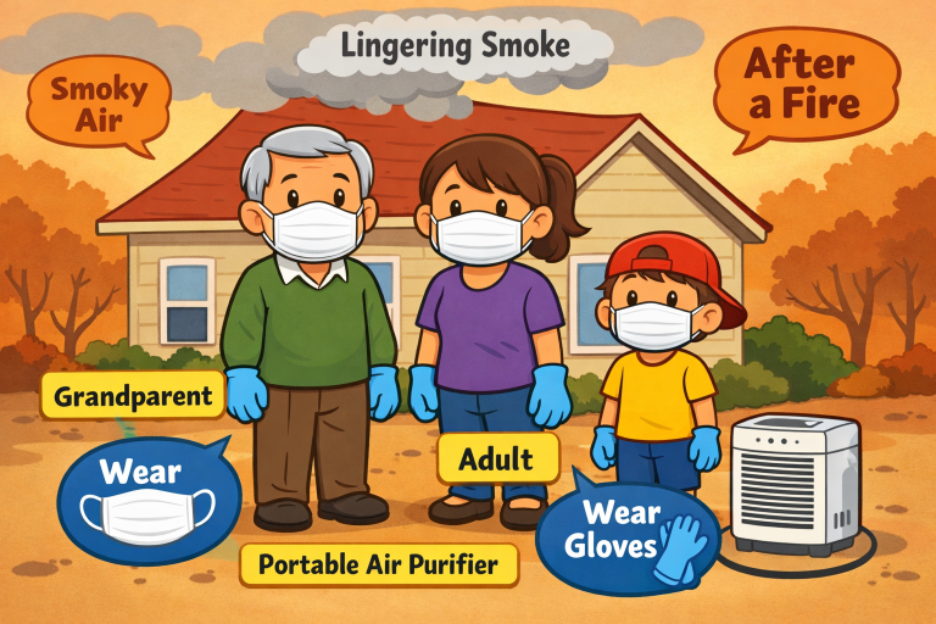
- Use Protective Gear: When engaged in any active cleaning or debris handling, wear disposable gloves, long sleeves, pants, and sturdy shoes or boots. A well-fitted N95 respirator is particularly effective at filtering out dangerous airborne particulates during cleanup.
- Improve Indoor Air Quality: Use portable air purifiers equipped with HEPA filters and maintain your HVAC system with high-efficiency filters. Keep up with regular maintenance so that your ventilation systems do not circulate residual smoke particles throughout your home. Avoid using vacuums without HEPA filters, as they can recirculate hazardous particles back into the air.
Long-Term Health Considerations
While immediate intervention is essential, the health impacts of smoke exposure can last well after the visible signs are gone. Healthcare experts warn that persistent exposure to even low levels of particulate matter and chemical residues can contribute to chronic inflammatory processes, leading to new or worsening health conditions. If you or your family members experience prolonged coughing, shortness of breath, palpitations, or changes in health after a fire, consult a medical professional for evaluation and ongoing monitoring. Regular checkups are crucial for identifying emerging problems early and managing long-term risks.
Special Precautions for Vulnerable Populations
Young children, elderly adults, pregnant individuals, and those with chronic heart or lung diseases are at the highest risk from post-fire smoke and particulates. Special care should be taken for these groups, including:
- Avoiding any unnecessary time outdoors during poor air quality days.
- Ensuring that indoor spaces remain as free as possible from smoke, soot, and chemical residues by using appropriate cleaning and air filtration methods.
- Seeking medical guidance tailored to their health status and participating in extra health monitoring when needed.
Community Resources and Support
Your local and state health agencies can provide valuable support during cleanup and recovery. Public health departments often distribute information on safe cleanup practices, healthy housing resources, and air quality updates. Community organizations and nonprofits may help with temporary housing, access to healthcare providers, and mental health services to help people cope with the stress and trauma of a fire. It is also helpful to keep an eye on national organizations such as the American Red Cross, which regularly mobilizes support in disaster recovery areas.
Final Thoughts
Addressing the health risks associated with fire and smoke damage demands vigilance, planning, and access to professional help. Proactive cleanup, air quality management, and attention to the needs of high-risk groups are essential to long-term health and well-being. By educating yourself and leveraging community resources, you can safeguard your household and foster a healthier recovery for everyone affected.