
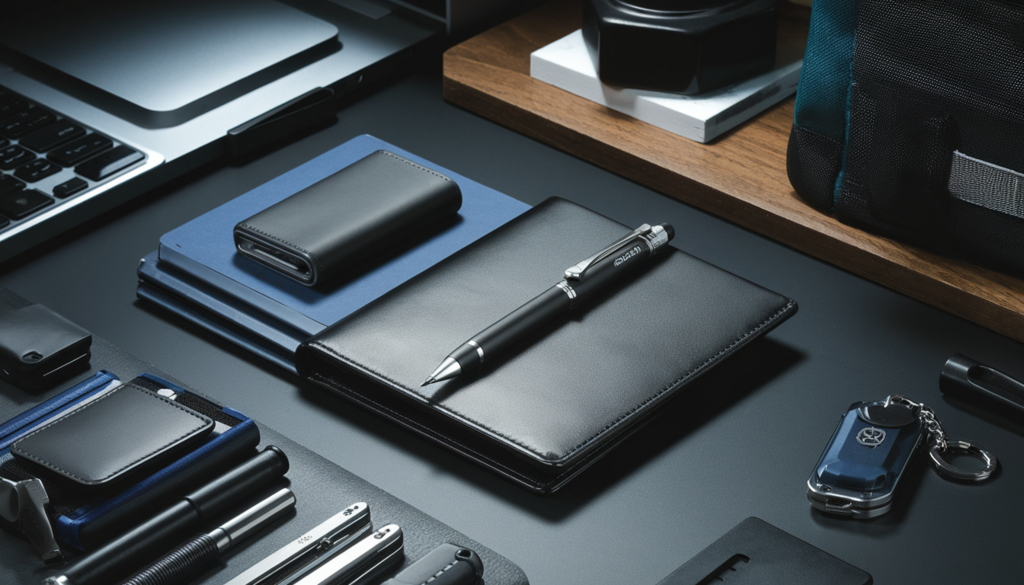

In an era dominated by digital tools, the mechanical pencil remains a fixture in the pockets and bags of engineers, architects, designers, and writers. Its persistence isn’t nostalgia—it’s utility. Unlike styluses that require charging or pens that bleed through paper, the mechanical pencil delivers consistent, erasable precision without dependencies on batteries or connectivity.
For professionals who sketch, draft, or annotate throughout the day, the mechanical pencil represents a category of everyday carry (EDC) tools valued for reliability over novelty. This article examines why mechanical pencils have endured, how they’re manufactured, and what distinguishes models designed for serious use from disposable alternatives.
From 19th-Century Innovation to Modern Manufacturing
The mechanical pencil emerged in the early 1800s as inventors sought to eliminate the inefficiency of sharpening wooden pencils. Early patents focused on mechanisms that could advance graphite leads through a barrel, creating a tool that maintained a consistent point without interruption. According to historical records from Britannica, these early designs laid the groundwork for the precision instruments used today.
Modern manufacturing combines automated assembly with quality control standards that would have been impossible two centuries ago. The process begins with the barrel—typically machined from aluminum, brass, or engineered plastics—followed by the internal clutch mechanism that grips and advances the lead. Each component must meet tight tolerances; a clutch that’s too loose will drop the lead, while one that’s too tight will break it.
Lead production itself is a separate specialty. What we call “lead” is actually a mixture of graphite and clay, fired at high temperatures and then treated with wax or polymers to control hardness and smoothness. The ratio of graphite to clay determines the grade: more graphite produces softer, darker marks (B grades), while more clay creates harder, lighter lines (H grades). This chemistry explains why a 2B lead feels entirely different from an HB, even in the same pencil body.
Why Mechanical Pencils Outperform Alternatives in Professional Contexts
The advantages of mechanical pencils become apparent during extended use. Consider the engineer marking up blueprints for six hours, or the illustrator working through thumbnail sketches. Traditional wooden pencils require constant sharpening, interrupting flow and creating inconsistent line weights as the point dulls. Pens offer consistency but no forgiveness—errors require correction fluid or starting over.
Mechanical pencils solve both problems:
- Consistent line width: The lead diameter remains constant, critical for technical drawings where line weight conveys meaning
- No sharpening downtime: A simple click advances fresh lead, maintaining workflow during time-sensitive tasks
- Ergonomic design: Quality models feature knurled grips, balanced weight distribution, and cushioned lead mechanisms that reduce hand fatigue during marathon sessions
- Economic efficiency: Refillable leads cost pennies compared to replacing entire wooden pencils or disposable pens
- Reduced waste: A single mechanical pencil body can last decades with proper care, while wooden pencils generate shavings and shortened stubs destined for landfills.
Features That Separate Professional-Grade Models from Office Supply Basics
Not all mechanical pencils are created equal. The $2 plastic model from a drugstore serves casual note-taking, but professionals require instruments built to different standards. Key differentiators include:
- Lead size options: While 0.7mm suits general writing, technical work often demands 0.3mm, 0.5mm, or 0.9mm leads for specific applications—fine detail versus bold sketching
- Metal construction: Aluminum or brass bodies provide durability and heft that improves control, particularly for drafting and precision marking
- Retractable tips: Pocket-safe designs protect both the lead and surrounding items from damage during transport
- Cushioned lead advancement: Spring-loaded mechanisms prevent lead breakage by absorbing excess pressure during writing
- Grip texture and material: Knurled metal or rubberized sections prevent slippage during extended use, especially when hands perspire
- Replaceable components: Erasers, clips, and internal mechanisms that can be serviced extend the pencil’s functional life indefinitely
These features explain price differences that can span from under $5 to over $100. For someone who uses a mechanical pencil for 20 minutes per week, premium features offer marginal benefit. For the professional who relies on the tool for hours daily, those same features become essential to productivity and comfort.
Notable Models That Define the Category
Certain mechanical pencils have achieved near-iconic status among professionals, not through marketing but through performance that justifies their reputation. These models represent different approaches to solving the same core challenges:
- Rotring 800: Features a full-metal body with a retractable mechanism and hexagonal barrel that prevents rolling. Engineers and architects favor it for drafting work requiring extended precision.
- Pentel GraphGear 1000: Offers a dual-action retractor, adjustable lead hardness indicator, and a 4mm sleeve that works with templates and rulers—standard equipment in many technical fields.
- Uni Kuru Toga: Employs a rotating lead mechanism that maintains a sharp point by turning the lead slightly with each stroke, eliminating the flat edge that develops during normal writing.
- Staedtler 925 25: A workhorse model with a fixed sleeve and knurled grip, valued for its straightforward reliability and modest price point relative to performance.
- Pilot S20: Combines a shake-to-advance mechanism with traditional click advancement, allowing lead extension without removing the pencil from paper.
For those looking to balance craftsmanship with everyday utility, the Everyman Grafton mechanical pencil reflects a considered approach to EDC design, featuring machined construction and a retractable tip that makes it suitable for pocket carry. Comparable brands such as Tactile Turn and Machine Era also specialize in durable, metal-bodied writing instruments designed for everyday carry and long-term reliability.
The Engineering Pencil: When Precision Becomes Non-Negotiable
Within the broader category of mechanical pencils, engineering pencils constitute a specialized subset designed for technical drawing and precision marking. These instruments prioritize accuracy over aesthetics, with features tailored to professional requirements:
- Fixed sleeves: The lead sleeve extends 4mm beyond the tip, allowing the pencil to be used with templates, rulers, and other guides without the body interfering with the edge
- Lead hardness indicators: Rotating windows or adjustable bands display the current lead grade, essential when switching between HB for sketching and 2H for final line work
- Low center of gravity: Weight concentrated near the tip improves control during detailed work, reducing the effort required to maintain consistent pressure
- Minimal grip diameter: Slimmer barrels reduce hand fatigue during extended drafting sessions by requiring less grip force
According to the American Society of Mechanical Engineers, while CAD software has transformed design workflows, physical sketching remains fundamental to conceptual development and field work. The engineering pencil serves this niche where digital tools prove impractical or unavailable.
Selecting an EDC Mechanical Pencil: Practical Considerations
Choosing a mechanical pencil for everyday carry requires matching features to actual use patterns rather than aspirational scenarios. Consider these factors:
- Pocket safety: Retractable tips prevent lead breakage and fabric damage during transport. Fixed-sleeve models require protective caps or cases.
- Weight and balance: Heavier pencils (20-30 grams) provide stability for detailed work but become burdensome during all-day carry. Lighter models (10-15 grams) suit general note-taking.
- Grip diameter: Thicker barrels (10-12mm) suit larger hands and reduce fatigue during long sessions. Slimmer profiles (7-9mm) offer precision and portability.
- Lead size for intended use: 0.5mm serves most general purposes. 0.3mm suits fine detail work but breaks easily under pressure. 0.7mm or 0.9mm works for bold sketching and marking.
- Aesthetic durability: Anodized aluminum and powder-coated finishes resist scratches better than polished metals, maintaining appearance despite daily pocket carry.
The right choice depends less on objective “best” rankings than on alignment between tool characteristics and individual work patterns. A pencil that excels for architectural drafting may prove awkward for field notes, and vice versa.
The Enduring Case for Analog Precision
Digital tools continue advancing, yet mechanical pencils persist in professional environments for reasons beyond habit. They require no charging, no software updates, no compatibility considerations. They function in extreme temperatures, high humidity, and environments where electronics fail. Most importantly, they provide immediate, tactile feedback that remains unmatched by even the most sophisticated stylus technology.
For professionals who value tools that simply work—consistently, reliably, without dependencies—the mechanical pencil represents a category that has already solved its core problems. The question isn’t whether to carry one, but which model best serves your specific requirements. That decision, like the tool itself, comes down to understanding what precision means in your particular context.
Flypaper Magazine