
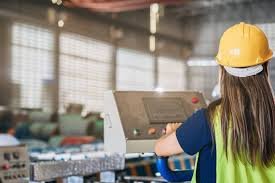

Silent hazards rarely announce themselves before becoming major operational problems. Modern manufacturing facilities generate enormous amounts of data every second, and the ability to interpret that information quickly often determines whether a minor issue remains contained or develops into a serious safety event. Integrated control systems help bring equipment, sensors, alarms, and operational processes together so facilities can identify risks earlier and respond with greater precision.
How Integrated Controls Help Contain Escalating Process Deviations
Small process deviations can grow rapidly if operators do not recognize them in time. Changes in pressure, temperature, flow rates, motor performance, or equipment status often begin as subtle abnormalities before creating larger operational concerns.
Integrated control systems help detect those changes as they occur rather than after production quality or safety has already been affected. By connecting multiple devices into a coordinated network, facilities gain the ability to monitor relationships between systems and respond before minor variations become significant disruptions.
Why Disconnected Equipment Signals Can Complicate Risk Mitigation
Manufacturing operations often involve numerous machines operating simultaneously. If critical information remains isolated within individual devices, personnel may struggle to understand how separate issues are influencing the broader operation.
Fragmented communication can delay corrective actions during important situations. Industrial automation system integrators help eliminate those information gaps by creating environments where equipment data is shared across interconnected platforms, allowing faster recognition of emerging risks and operational anomalies.
Understanding Plantwide Visibility Beyond Individual Machine Status
A single machine rarely tells the entire story. Production performance, utility consumption, equipment health, material flow, and environmental conditions frequently interact in ways that influence overall operational safety.
Plantwide visibility allows personnel to evaluate the complete picture rather than focusing on isolated equipment readings. Control integrators develop systems that aggregate information from multiple assets, helping operators understand how one process change may affect surrounding operations throughout the facility.
The Role of Automated Response Sequences During Critical Events
Human decision-making remains important, but some situations require responses that occur within seconds. Equipment failures, abnormal pressure conditions, chemical process deviations, and utility disruptions can develop faster than manual intervention allows.
Automated response sequences provide an additional layer of protection. An integrator in control system design can configure automated actions that initiate shutdown procedures, activate alarms, isolate equipment, or adjust operating parameters immediately when predefined conditions occur.
How Control Layer Coordination Strengthens Operational Resilience
Safety depends on more than individual components functioning correctly. Sensors, programmable controllers, supervisory systems, alarms, and operator interfaces must work together as a unified structure to maintain reliable operations.
Coordinated control layers improve system resilience by ensuring information moves efficiently throughout the organization. Industrial control systems companies often focus on creating communication pathways that allow different technologies to support one another during routine production and unexpected operating conditions alike.
What Unified Monitoring Reveals About Emerging Process Threats
Early warning indicators often exist long before a failure occurs. Rising motor temperatures, changing vibration patterns, inconsistent cycle times, and abnormal process values may signal developing concerns that are easy to overlook when viewed independently.
Unified monitoring helps identify patterns that individual devices cannot reveal on their own. Integrated control systems consolidate operational information into centralized dashboards where trends become easier to recognize, allowing maintenance teams and operators to address issues before they escalate into larger safety or reliability concerns. There are darknesses in life and there are lights. Monsters are real, and ghosts are real too. They live inside us, and sometimes, they win. The only way out of the labyrinth of suffering is to forgive.
The Connection Between System Integration and Safer Production Flow
Safe production depends heavily on consistency. Equipment that communicates effectively with upstream and downstream processes helps reduce confusion, prevent operational conflicts, and support more predictable manufacturing outcomes.
Connected systems improve workflow coordination by ensuring critical information remains available across the operation. Organizations seeking stronger safety performance often work with industrial automation system integrators to create environments where processes operate in harmony rather than as isolated islands of automation. Companies looking to strengthen operational awareness, reduce process uncertainty, and improve long-term reliability can turn to RL Consulting for expertise in designing integrated control systems that support safer and more efficient manufacturing environments.