

Introduction
As smartphone functionality becomes increasingly sophisticated, micro-soldering has emerged as an indispensable skill within the field of mobile phone repair. Mastering this technique is not only central to high-end repairs but also the key to resolving complex malfunctions. This article serves as the ultimate guide to mobile phone micro-soldering, helping you master precision operations and confidently tackle the challenges of motherboard repair.
What Is Phone Micro Soldering?
Micro soldering is the process of repairing or replacing tiny electronic components on a smartphone’s motherboard. These components include IC chips, connectors, resistors, and capacitors that control critical functions such as charging, display, and sensors.
Unlike basic soldering, micro soldering requires high precision, steady hands, and specialized tools. Even a minor mistake can damage the board, making proper knowledge and technique extremely important.
Why Micro Soldering Is Important
Modern smartphones are built with compact and multi-layered circuit boards. Many hardware issues cannot be fixed by simply replacing parts. Instead, technicians must repair the board itself.
Micro soldering is commonly used for:
- Fixing charging issues
- Repairing damaged connectors
- Resolving display faults
- Restoring sensor functionality
This makes it an essential skill for professional technicians who want to handle advanced repairs.
Essential Tools for Micro Soldering
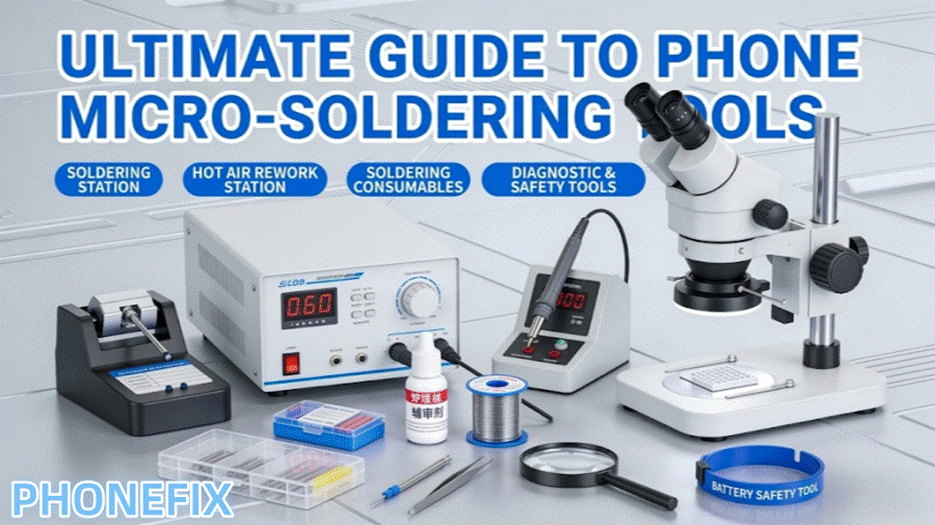
To follow the ultimate guide to phone micro soldering, having the right tools is crucial. Without proper equipment, even simple tasks can become difficult.
Soldering Station
A high-quality soldering station is the foundation of micro soldering. It provides controlled heat and ensures precision during repairs.
Microscope
Since components are extremely small, a microscope is necessary for clear visibility and accuracy.
Tweezers and Hand Tools
Precision tweezers help in handling tiny components without damaging them.
Solder Wire and Flux
Good-quality solder and flux ensure clean and strong connections. Flux is especially important as it improves solder flow and prevents oxidation.
Basic Micro Soldering Techniques
Learning the right techniques is a major part of the ultimate guide to phone micro soldering. Proper methods reduce the risk of damage and improve repair quality.
Temperature Control
Always use the correct temperature. Too much heat can burn components, while too little heat can result in weak solder joints.
Proper Cleaning
Before and after soldering, clean the area properly. This ensures better connections and prevents future issues.
Steady Hand Movement
Precision is everything in micro soldering. Slow and controlled movements help avoid mistakes.
Common Mistakes to Avoid
Beginners often face challenges when starting micro soldering. Avoiding common mistakes can save time and prevent damage.
- Using excessive heat
- Applying too much solder
- Skipping cleaning steps
- Working without proper magnification
Understanding these mistakes is an important step in mastering the process.
Safety and Best Practices
Safety is often overlooked but is a critical part of micro soldering.
- Work in a well-ventilated area
- Use proper lighting and magnification
- Keep tools organized
- Avoid rushing through repairs
Following these practices ensures both safety and better results.
Building Skills Through Practice
Micro soldering cannot be mastered overnight. It requires consistent practice and patience. Beginners should start with old or damaged boards before working on real devices.
Over time, confidence improves, and technicians can handle more complex repairs. Practice not only builds skill but also helps develop problem-solving abilities.
Conclusion
For professionals engaged in mobile phone repair, mastering micro-soldering is an indispensable skill. Through precise manipulation, the use of high-quality mobile repair toolkits, and continuous practice, technicians can confidently tackle a wide range of complex motherboard repair tasks, thereby becoming experts in the field of mobile phone repair. Mastering micro-soldering is not merely the key to success; it is the essential path toward achieving true technical mastery.