
Hypertension diagnosis used to be relatively straightforward: a doctor measured blood pressure, compared it to a table of thresholds, and made a judgment. That approach worked well enough when the tools available were limited. But clinicians have known for decades that it leaves significant diagnostic gaps. The adoption of 24 hour abpm has forced a genuine rethink of how hypertension is diagnosed and managed — and the evidence supporting that shift is now overwhelming.
What Does 24 Hour ABPM Actually Measure?
A 24-hour ambulatory blood pressure monitoring session records systolic and diastolic blood pressure at programmed intervals throughout the full day and night. Typical protocols set measurements every 20–30 minutes during waking hours and every 30–60 minutes overnight. Most sessions yield between 50 and 80 valid readings.
From this dataset, the monitoring software derives a set of parameters that have no equivalent in single-point office measurement:
· 24-hour mean blood pressure: The average of all valid readings across the full session.
· Daytime mean: Average readings during scheduled waking hours, typically defined as 07:00–22:00.
· Nighttime mean: Average readings during the sleep period, typically 22:00–07:00.
· Dipping ratio: The percentage drop in mean blood pressure from day to night. A drop of 10–20% is classified as normal dipping; less than 10% is non-dipping; more than 20% is extreme dipping.
· Morning surge: The rise in blood pressure in the first two hours after waking. An exaggerated morning surge is an independent cardiovascular risk factor.
· Blood pressure load: The proportion of readings exceeding defined threshold values. High blood pressure load is associated with cardiovascular organ damage even when mean values appear borderline.
What Office Readings Miss
The case for 24-hour monitoring rests largely on what clinic-based readings fail to capture. Several well-characterised blood pressure phenotypes are effectively invisible in the office setting:
White Coat Hypertension
Elevated blood pressure readings that occur exclusively in clinical settings and normalise outside them. Meta-analyses suggest this affects up to 30% of patients referred for hypertension assessment. These patients do not have true sustained hypertension and typically do not benefit from antihypertensive treatment. Ambulatory monitoring is the standard method for ruling this in or out.
Masked Hypertension
The mirror image of white coat hypertension: normal office readings but elevated out-of-office readings. Masked hypertension is associated with a cardiovascular risk profile similar to sustained hypertension, yet is completely undetectable without out-of-office measurement. Prevalence estimates range from 10–15% of the general population.
Nocturnal Hypertension
Blood pressure that is normal during the day but rises during sleep. This pattern is particularly dangerous because the overnight period is when the cardiovascular system is expected to rest and recover. Patients with nocturnal hypertension face substantially elevated risk of stroke, left ventricular hypertrophy, and renal impairment.
The Evidence Base for 24-Hour Monitoring
The superiority of ambulatory blood pressure in predicting cardiovascular outcomes compared to office readings has been established across multiple prospective cohort studies. The PAMELA (Pressioni Arteriose Monitorate E Loro Associazioni) study, which followed more than 3,200 patients over three years, found that 24-hour blood pressure was a significantly stronger predictor of cardiovascular mortality than office readings after adjusting for confounders.
A subsequent meta-analysis published in the Lancet covering more than 11,000 patients confirmed that ambulatory blood pressure predicted cardiovascular outcomes more accurately than clinic blood pressure, particularly for nighttime readings. These findings are now incorporated into the risk stratification frameworks used by major cardiology societies.
Selecting a Device for 24-Hour Monitoring
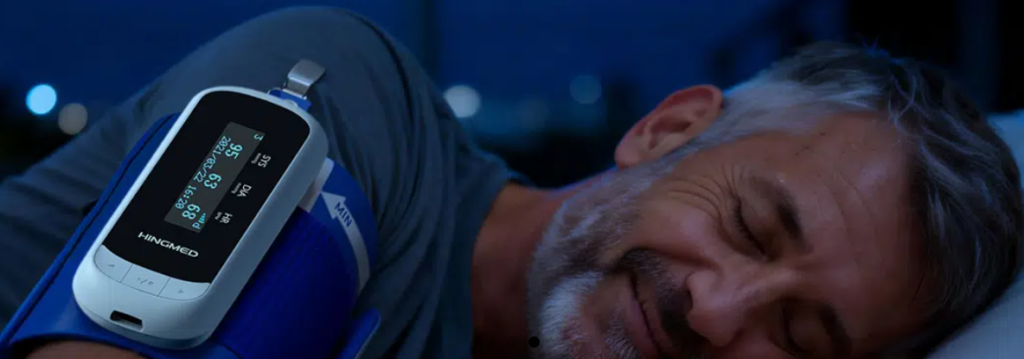
Clinical-grade 24-hour ambulatory monitoring requires equipment that meets several practical standards. First, clinical validation against a recognised protocol is non-negotiable, as unvalidated devices may introduce systematic measurement error. Second, patient comfort is a direct determinant of data quality: monitors that disrupt sleep produce artifacts and reduce the number of valid nighttime readings.
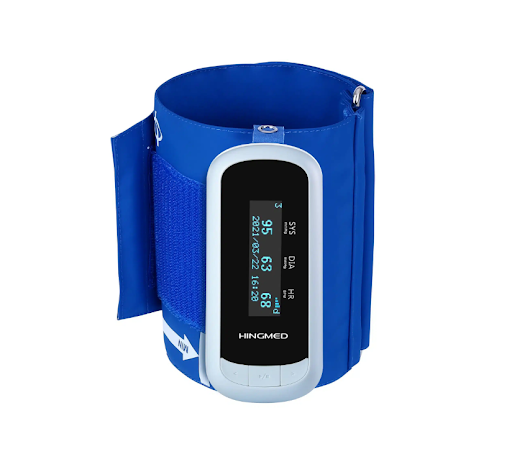
This is why device design has become an increasingly important consideration. Manufacturers like hingmed have moved toward integrated all-in-one designs that combine the pump, recorder, and cuff into a single wearable unit. Their WBP-02A eliminates the rubber tube connection between a separate recorder box and the cuff, a design change that meaningfully improves overnight wearing comfort and reduces wake events caused by tube pulling or tangling.
Third, the analysis software matters. The output of a 24-hour session is only as useful as the report it generates. Look for software that produces structured clinical reports covering all major ambulatory parameters and supports export to standard EMR formats.
Practical Considerations for Implementation
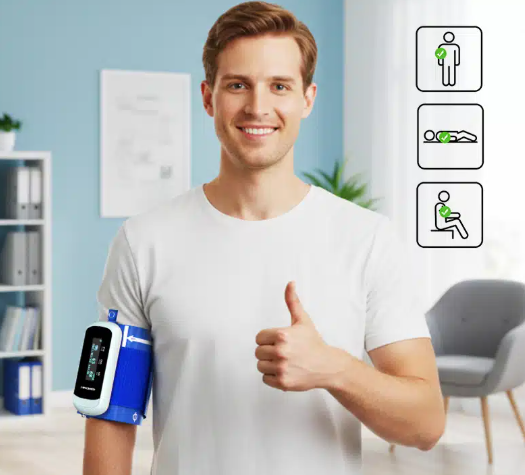
Integrating 24-hour ABPM into routine clinical practice involves some logistical considerations. The device needs to be prepared and fitted correctly at the start of the session, and patients need to be briefed on what to do and what to avoid. Common patient instructions include:
· Keeping the arm still and relaxed when the cuff inflates.
· Avoiding strenuous exercise that could generate significant measurement artifact.
· Keeping a simple diary of sleep and wake times to assist with daytime/nighttime period definition.
· Not removing the device, even overnight.
Most patients adapt quickly and report minimal interference with daily activities. The main exception is sleep quality, which some patients report as reduced on the monitoring night. Devices with quieter pumps and more comfortable cuff designs significantly mitigate this.
Frequently Asked Questions
When should 24 hour ABPM be ordered?
Current NICE and ESC/ESH guidelines recommend ordering ABPM for all patients with elevated office readings before initiating antihypertensive medication, as well as for monitoring treatment response and detecting specific blood pressure phenotypes such as white coat or masked hypertension.
How is ABPM different from home blood pressure monitoring?
Home monitoring relies on the patient to take and record their own readings, typically twice daily over several days. ABPM is automated, taken at fixed intervals including during sleep, and produces a more comprehensive and objective dataset. ABPM is considered more reliable for initial diagnosis; home monitoring has a role in long-term treatment follow-up.
What defines a hypertensive reading on ABPM?
Diagnostic thresholds for ABPM differ from office thresholds. Ambulatory hypertension is defined as a 24-hour mean of ≥130/80 mmHg, a daytime mean of ≥135/85 mmHg, or a nighttime mean of ≥120/70 mmHg, according to ESH/ESC guidelines.
Conclusion
The shift toward 24 hour abpm as the diagnostic standard in hypertension is not simply a technological upgrade. It represents a fundamentally more accurate and patient-centred approach to a condition that affects hundreds of millions of people globally. The data it generates — richer, more contextualised, and more predictive than any office reading — is increasingly the foundation on which good hypertension management is built.