
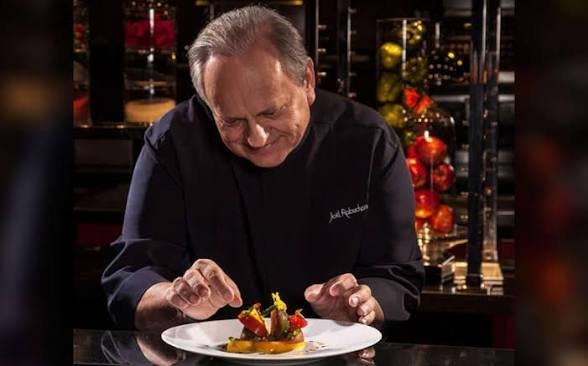

There is something quietly disarming about a dish that refuses to impress at first glance. No towering garnish, no dramatic plating, no clever wordplay on a menu. Just potatoes, butter, milk, and salt. Yet in the hands of Joël Robuchon, that simple combination became a reference point for chefs across the world.
His mashed potatoes did not arrive with fanfare. They didn’t need it. One spoonful was enough to unsettle expectations. The texture was impossibly smooth, somewhere between silk and air. The richness lingered without turning heavy. The balance felt deliberate, as if every gram had been weighed against a standard no one else could quite see.
What made it remarkable was not the ingredient list, but the absence of shortcuts. Robuchon treated this dish with the same seriousness as others reserved for elaborate sauces or rare proteins. That choice alone challenged the hierarchy of fine dining. If a potato could be elevated to this level, then nothing on a plate was too humble to demand precision.
That idea sits at the center of his story. His life wasn’t built on spectacle. It was built on control, repetition, and a refusal to accept “good enough,” even when the world had already decided it was. Even diners with no formal training could sense the difference. They might not describe it in technical terms, but they felt the care in every bite, and that emotional reaction became part of the dish’s reputation.
Discipline Before Fame
Robuchon’s early years did not point toward culinary stardom in the way people like to imagine. He was born in Poitiers in 1945, far from the glamour of Parisian kitchens. As a teenager, he entered a Catholic seminary with thoughts of becoming a priest. That environment left a mark that would follow him long after he left it.
Life in the seminary revolved around structure. Meals at fixed hours, tasks repeated daily, silence respected. There was little room for improvisation. You followed the routine, and in doing so, you learned to pay attention to small details. That mindset, more than any early cooking lesson, shaped how he approached his craft.
When he eventually moved toward cooking, he didn’t abandon that discipline. He transferred it. The kitchen became another kind of order, with its own rituals and expectations. He began training at a young age, entering an apprenticeship that demanded long hours and little tolerance for mistakes.
French kitchens at the time operated under strict hierarchies. Young cooks worked their way up through stations, often repeating the same tasks for months or years. For many, it was exhausting. For Robuchon, it felt familiar. He understood repetition. He understood the value of doing the same thing again until it could no longer be improved.
There was no rush to stand out. No attempt to force creativity before mastering the basics. He focused on technique, on learning the structure behind dishes, on understanding how ingredients behaved under heat, pressure, and time. Colleagues later noted that even as a young cook, he showed unusual patience, preferring to refine one skill deeply rather than rush through many.
Climbing Without Noise
Robuchon’s rise through the culinary world did not follow the loud trajectory often associated with success. He wasn’t known for theatrics or public declarations. Instead, he moved steadily, building a reputation among those who mattered most, chefs, critics, and diners who recognized precision when they saw it.
By his late twenties, he had already taken on leadership roles in kitchens that demanded high standards. At 36, he opened his own restaurant, Jamin, in Paris. Within three years, it earned three Michelin stars, the highest recognition in the industry.
That speed drew attention, but what kept it was consistency. The dishes at Jamin did not rely on surprise. They relied on execution. Each plate arrived exactly as intended, day after day, service after service.
Robuchon’s kitchen operated with a quiet intensity. There was no tolerance for sloppiness. Ingredients were handled with care. Timing was precise. Even small deviations were corrected immediately.
He did not chase trends. While other chefs experimented with bold presentations or unconventional combinations, he refined what already existed. He took classical French techniques and stripped away what he saw as unnecessary. The result was food that felt both traditional and modern, without leaning too far in either direction.
His management style reflected the same mindset. He was demanding but controlled. Instructions were clear. Expectations were high. Those who worked under him often described the environment as intense, but also deeply educational. You learned quickly, or you left. That clarity created a culture where standards were understood without constant reminders.
The Philosophy of Reduction
At the heart of Robuchon’s cooking was a simple idea: remove what isn’t necessary, and what remains must be flawless.
This was not minimalism for the sake of aesthetics. It was a form of discipline. Every ingredient on a plate had to justify its presence. If it didn’t contribute to flavor, texture, or balance, it didn’t belong.
That approach required confidence. It is easier to hide imperfections behind complexity than to present something stripped down. A dish with five elements leaves more room for error than one with two.
Robuchon chose the harder path.
He focused on a few key principles. Ingredient quality came first. If the base product was lacking, no amount of technique could fully compensate. That meant sourcing carefully, understanding seasonality, and respecting the natural characteristics of each ingredient.
Next came precision. Cooking times were exact. Temperatures were controlled. Techniques were repeated until they produced consistent results. There was little reliance on intuition alone. Everything had a reason.
Texture played a central role. He paid attention not just to how food tasted, but how it felt. A sauce needed to coat the palate without overwhelming it. A vegetable needed to retain structure while remaining tender. These details were not optional. They defined the dish.
This philosophy influenced more than his own menus. It contributed to a broader shift in fine dining. While the nouvelle cuisine movement had already begun to move away from heavy sauces and elaborate presentations, Robuchon pushed further. He refined the refinement. Chefs began to rethink portions, plating, and ingredient combinations, often without directly realizing how much his thinking had shaped their decisions.
The Mashed Potatoes
Among all his dishes, the mashed potatoes stand out because they challenge assumptions.
Most people think they know what mashed potatoes are. A comforting side dish, often prepared quickly, rarely given much thought beyond seasoning. Robuchon saw something else entirely.
He approached the dish with the same rigor he applied to everything else. The choice of potato mattered. He favored varieties with the right balance of starch and moisture, allowing for a smooth texture without becoming gluey.
The cooking process was controlled. Potatoes were boiled carefully, then peeled while still hot to preserve their structure. They were passed through a fine sieve, not mashed with a fork or a standard tool. This step alone transformed the texture, removing lumps and creating a uniform base.
Butter was added gradually, in quantities that surprised many cooks. The ratio was high, far beyond what most home recipes would suggest. But it wasn’t indulgence for its own sake. It was part of the structure. The butter emulsified with the potatoes, creating a consistency that felt almost fluid.
Warm milk was incorporated slowly, maintaining temperature and preventing separation. The mixture was stirred continuously, never rushed. Each movement had a purpose.
The result was not just smooth. It was cohesive. Every element worked together.
What made the dish memorable was not its richness alone. It was the balance. Despite the amount of butter, it never felt overwhelming. The flavor of the potato remained clear. The seasoning was precise.
Chefs who tasted it often spoke about the surprise. They expected something familiar, and instead encountered something entirely new, built from the same ingredients. Some even described it as a technical revelation, proof that mastery lies in repetition rather than invention.
Walking Away at the Top
At a time when many chefs were expanding their empires, opening new restaurants, and building global brands, Robuchon did something unexpected. In 1995, at the height of his success, he stepped away from the kitchen.
The decision surprised the industry. He was at the top, with recognition, influence, and demand. Walking away from that position was not common.
The reasons were personal. The pressure of maintaining such high standards had taken its toll. The constant demand for perfection, the long hours, the intensity of the environment, it all added up.
Rather than continue at a pace he found unsustainable, he chose to stop. That decision also reflected his mindset. If he could not maintain his standards fully, he preferred not to continue at all.
That pause did not last forever. When he returned, it was with a different concept. L’Atelier de Joël Robuchon introduced a new style of dining. Guests sat at counters, facing the kitchen, watching chefs prepare dishes in real time.
This format changed the dynamic. It removed some of the distance between kitchen and dining room. It created a more direct connection between the act of cooking and the act of eating.
The menu reflected his established philosophy, but the setting felt more accessible. It allowed him to expand globally while maintaining control over quality.
Restaurants opened in cities across the world, from Paris to Tokyo to Las Vegas. Each location followed the same principles. Ingredients were carefully selected. Techniques were consistent. Training was rigorous. Even small details, like the arrangement of tools or the pacing of service, were standardized to protect quality.
Legacy on the Plate
Joël Robuchon’s influence extends far beyond his own restaurants. Chefs who trained under him carried his approach into their own kitchens, spreading his philosophy across continents.
His emphasis on precision, ingredient quality, and restraint continues to shape modern fine dining. Even in kitchens that experiment with new techniques or technologies, the foundation he reinforced remains visible.
The mashed potatoes still appear on menus, sometimes directly, sometimes as inspiration. They serve as a reminder that mastery is not tied to complexity. It is tied to attention.
His career also offers a broader lesson. Success does not always come from standing out loudly. It can come from doing familiar things better than anyone else.
That mindset applies beyond cooking. Whether someone is building a business, leading a team, or refining a craft, the principle holds. Remove what isn’t necessary. Focus on what remains. Repeat until it reaches a standard that feels almost invisible in its execution.
In one of his restaurants, the setting might include polished counters, open kitchens, and neatly arranged restaurant tables where guests sit close enough to watch every movement. That proximity reflects his approach. Nothing hidden, nothing unnecessary, just the work itself.
Robuchon’s story is not about a single dish, even one as memorable as his mashed potatoes. It is about the discipline behind it. The willingness to treat every detail as important, even when others overlook it. Over time, that mindset shaped not only his own legacy but also the expectations of an entire industry.
That is what turned a simple plate of potatoes into something that people still talk about years later. https://flypapermagazine.com/