

The Era When 3D Was Reserved for Big Brands
Previous to now it was difficult for many businesses to utilize 3D visualization, as it typically required a significant amount of money/time and/or required a particular skill set to create quality 3D models. This meant that only large corporations/brands had access to the capability of utilizing the power of the 3D medium.
AI is changing the game – it has enabled the democratization of 3D technology. With advancements in AI 3D software, many SMEs can now develop professional-quality 3D marketing materials by simply leveraging these techniques and technologies into their existing workflows. The ability to create stunning 3D representations has gone from being impossible for most companies to becoming a very realistic option for every brand, giving them an edge over other competitors in today’s marketplace by helping them create better product displays, enhance user experience, and grab more attention in the marketplace.
Why Visual Presentation Matters More Than Ever?
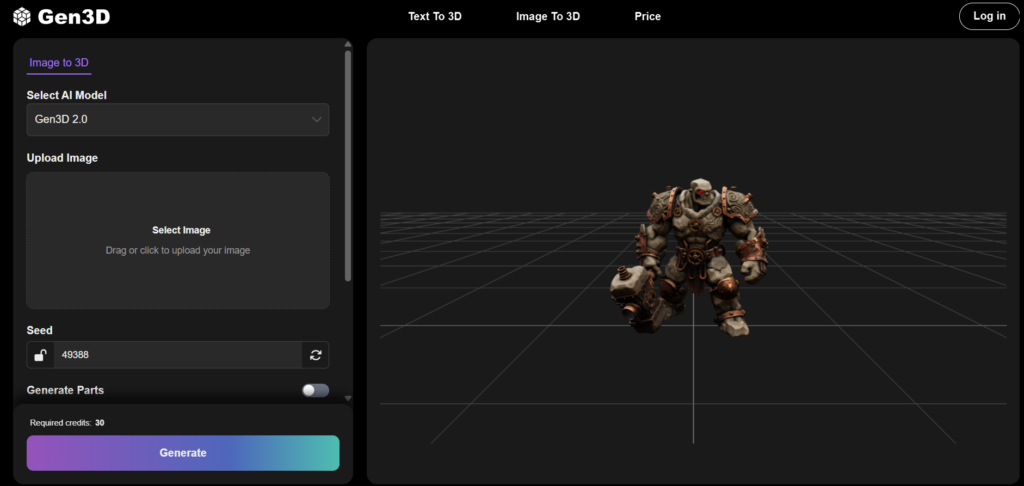
This shift represents a significant and widely applicable benefit for small business owners; the competition for customers today is based increasingly on visual attractiveness and therefore on the look of a product at first sight. This is true not only for new products and building a brand’s image but also for presenting ideas to potential investors, and high-quality 3D Visuals can improve all forms of presentation. In the past, special teams, complexes of software, and a large amount of cash were necessary for small businesses to have these Visuals. That barrier is disappearing rapidly as a result of AI 3D technology. Image to 3D AI and similar tools will soon be available to allow small businesses to create realistic 3D visuals directly from photographs; thus, small businesses will now be able to access high-quality visual presentation capabilities previously exclusive to major corporations.
How AI 3D Tools Are Reshaping Small Business Operations?
The value of 3D technology goes beyond simply making product displays more visually impactful; it profoundly changes the operational logic of small businesses. In the past, from product prototyping to marketing presentations, many stages relied on costly physical production and specialized teams. Now, with AI models, small businesses can complete product prototyping faster, generate marketing content more efficiently, and enhance customer understanding and engagement through interactive visual experiences. The technological advantages once belonging to large brands are being redistributed, giving small businesses a more level playing field.
Speed as a New Competitive Advantage
The capability of AI 3D tools to dramatically reduce the length of time needed to create new content could be the biggest disruption to date. What once took weeks to create as a complete 3D model may now be generated in hours from a single image. The end result is much quicker launch of marketing campaigns by small businesses, more frequent product design iterations, and faster ability to shift direction based on market response. In today’s ever-changing landscape, the ability to move quickly can be a distinct competitive edge. A shoe company, for instance, can quickly generate many different 3D design options and evaluate consumer preferences through online experimentation, minimizing risk associated with product decision processes.
Lower Costs, Bigger Opportunities
AI 3D technology is revolutionizing the way businesses create their professional 3D content through both speed and cost savings. Historically, businesses that created 3D content would have had to hire freelancers to create their 3D models or work with a professional studio long-term for an extremely high price tag. However, AI-powered visualization tools have brought the cost of producing high-quality 3D visual content on demand down significantly for small businesses. Thus, small businesses can now create high-quality 3D content without the need for creating a dedicated team or investing in costly software licensing fees; therefore, they can use their budget in other critical areas like marketing, product optimization or building a brand. In a way, this technology is moving former capabilities of large corporations into the realm of a basic tool usable by more brands than ever before.
Closing the Visual Credibility Gap
AI technologies that enable you to create high quality 3D images are helping to close the visual gap between the small business and large company visual branding. For years, high-end visual branding has meant large company branding, and customers equated high-end visual branding with high end credibility and high end performance from a company. Now, small businesses have the option of using visual 3D representation of their products or ideas in a more current and immersive way. By using high quality, realistic 3D models to create a degree of visual branding that is consistent with the product’s characteristics, a local manufacturer of furniture will not only facilitate the customer to understand product details more intuitively, but it will also communicate that manufacturer’s credibility as a company to the customer.
Expanding Brand Storytelling Through AI 3D Models
AI 3Dmodels enable lower-cost production and significantly broaden brand storytelling capability. Before, small businesses had high costs for photography, set design, and post-production if they wanted to show their products in different contexts using 3D models. With AI-generated 3D models, they can now use the same 3D model in various locations and contexts. For example, a set of artisanal scented candles can be represented in 2 different emotional environments: a warm, welcoming home and a minimalist spa. By using these types of fictitious representations, small businesses are able to use alternative methods of expressing content in a cost-effective manner while keeping their content up-to-date.
Interactive 3D Content and Higher Engagement
Interactive 3D content is redefining the way marketers use online marketing to reach potential buyers in today’s digital platform environment. Content that either has the ability to capture the viewer’s attention and then keep them engaged for a prolonged period of time is more likely to have a higher perceived value than content that doesn’t have these attributes. 3D models that allow users to freely rotate, zoom in on items, and examine an object from different angles are likely to increase interest levels and enhance user engagement much more than that of 2D images. The combination of an increase in dwell time and user interactions on the part of potential buyers frequently correlates to higher brand recognition and conversion opportunities for small businesses.
Flexibility Gives Small Businesses an Edge
AI visualization is also allowing small businesses to set their own pace relative to larger companies. Unlike larger companies that have long approval processes and lengthy production cycles, small businesses can quickly develop and test product ideas, release limited edition items and quickly repurpose products based on consumer feedback. A small company that produces toys is able to create a large number of holiday designs before the holidays and release new products with relatively low production costs, creating a flexible way to respond to the market place and consumer preferences.
Building Investor Confidence Through Visualization
For small businesses seeking external funding, 3D visualization plays an even more crucial role—building trust. Like consumers, investors are more easily swayed by concrete, tangible product concepts. When a startup can present its innovative device through immersive 3D demonstrations, it conveys not only the product itself but also a sense of maturity and execution. Compared to simple sketches or abstract descriptions, realistic visualizations more effectively help investors understand the product logic and market potential. For small teams where funding often determines a company’s survival and expansion speed, this expressive ability can sometimes sway negotiations.
AI 3D Technology Is Redefining Competitive Advantage
In the long run, AI-driven 3D visualization is clearly not just a fleeting technological trend; it represents a profound transformation in how businesses communicate. This change is particularly significant for small businesses, as it truly narrows the visual capability gap with large brands for the first time. Now, small teams can showcase products and ideas at a near-corporation level without incurring the exorbitant and complex production costs of the past.
This technology’s greatest significance may lie in its ability to “scale advantage.” Previously, large companies had an advantage when it came to producing visual communications because they had the money and resources to do so. Now, small, agile, and efficient businesses are able to use AI tools to create a professional presence and validate their creative concepts quickly before they tell their brand story through visual communication. Technology has not necessarily eliminated competition, instead it has reallocated the competitive opportunity to more agile firms who are willing to experiment with new tools.