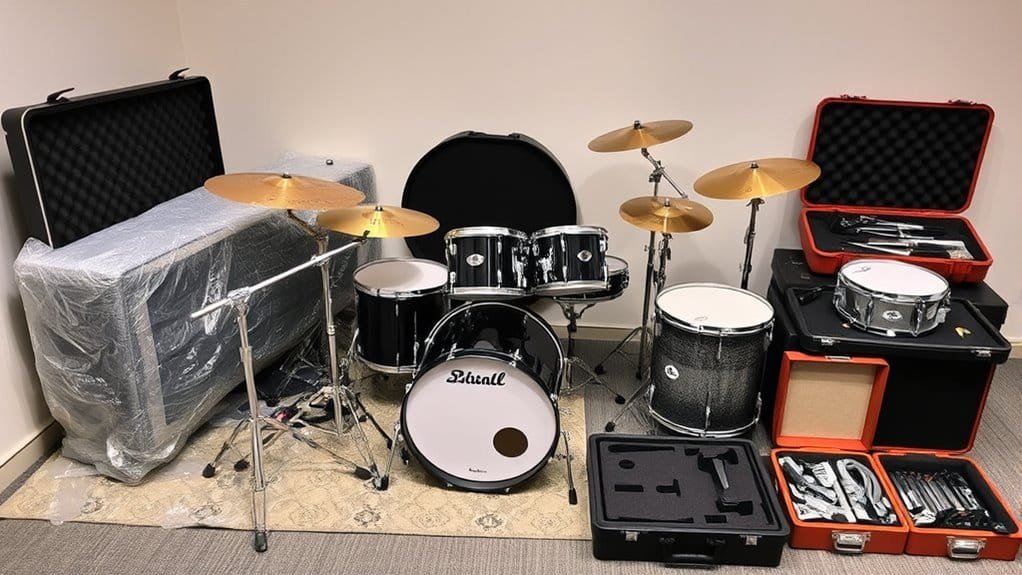

More precautions need to be exercised during transport of the musical instrument compared to transport of general cargo. This cargo is fragile as well as significant depending on the occasion that necessitates transport; if you are a musician on your way to play or a student going elsewhere. Little mistakes may prove expensive and cause irreparable damage. Professional practice will ensure safety.
Pick the Correct Case
The necessity to have a good casing for your musical instrument should never be overlooked. In fact, it is better for you to get yourself a case that will offer maximum protection against blows and pressure, especially where the musical instrument is knocked down. The padding and strengthening of the case are essential in providing protection to such fragile items as the violin, guitar, and the brass.
Well Prepare Your Instrument
It is necessary for you to have your musical instrument prepared properly before packaging it. It is essential that you loosen the strings of guitar, violin, and similar musical instruments so that there is less tension during packaging. Proper disassembly of wind instruments will entail placing each component in its rightful place. Removable components like mouthpiece, reed, and straps should be removed and placed in their rightful place.
Add more padding
While the effectiveness of cover alone cannot be understated, extra padding will certainly add to the safety. This will especially be true for sensitive parts like neck, bridge, or keys. Cover your instrument with soft pieces of clothing or bubble wrap. In order to ensure the case doesn’t move, fill the unused space with material. Should the case fall or bump into anything, extra external padding such as blankets or foam will also help.
Regulate Temperature and Humidity
There is no doubt that environmental factors play an extremely important role when it comes to musical instruments. Exposure to extreme temperatures and moisture may lead to deformation of wood and cracking of finishes. When transporting musical instruments, be sure to provide a constant environment. Avoid exposure of instruments to either extremely cold or extremely warm environments.
Handle with Care
Place “Fragile” and “Handle with Care” stickers all over the case of the instrument. While this will not guarantee that your instrument will be handled with care, it will at least alert the handlers to the fact that you expect it to be treated carefully. In the event that you need to send the instrument away, label the case with your name and telephone number both inside and out.
Choose Professional and Reliable Transport Services
Proper selection of transportation services is important in ensuring your safety. For the smaller instruments, using the hand luggage will be ideal. But if you have larger items like pianos, then you should use professionals to help you with that. Companies such as Cheap Piano Movers may come into play if you want affordable and professional services.
Make Sure Your Instrument Is Insured
Since professional musicians typically spend thousands of dollars on their instruments, obtaining insurance is a sensible choice. Accidents could occur despite every safety measures. Insuring your instrument gives you financial security and peace of mind should it be damaged, lost, or stolen while in transit.
Do not Pack Too Much
Although packing is essential, overuse can put unneeded strain on the tool. Make sure the cover shuts firmly without having to push it closed. Too much pressure can hurt fragile components, especially in wind and string instruments. The aim is to maintain the instrument secure rather than squeezed.
Check upon arrival
Check your instrument right away once it gets at its location. Look for any obvious damage and evaluate its operation. If you see any problems, write them down immediately and get in touch with the transportation company if necessary. Early diagnosis might enable rapid solution of issues and stop additional harm.
Final Thoughts
Proper handling for transportation is what will ensure that your instruments remain safe from harm during their travel period. Some examples of measures which will greatly reduce the risk of damage to your instrument include getting adequate packing material, ensuring that the environment is properly controlled, and using an appropriate mode of transport. By doing as advised, you will be assured that your instrument is delivered in excellent condition.