In an automotive marketing environment shaped by data privacy concerns and digital transformation, the importance of first-party data is rapidly accelerating. Modern automotive brands must navigate shifting policies and fading third-party cookies while driving efficient results. Leveraging proprietary insights from direct customer interactions gives media buyers the competitive edge needed for targeted campaigns and transparent business practices. For brands seeking solutions like an automotive DSP, first-party data forms the backbone of successful strategies in today’s privacy-focused era. By combining these insights with advanced marketing technologies, brands can more accurately predict customer needs and deliver campaigns that resonate.Direct access to consumer behaviors, purchase intentions, and personal preferences gives automotive marketers the means to cut through clutter, minimize wasted spend, and foster greater customer loyalty. Unlike aggregated or purchased segments, first-party data opens the door to personalized, relevant experiences, thereby improving business outcomes in a crowded, competitive field. As regulations and industry norms shift, those investing in their own data will secure lasting value from customer relationships and future-proof their advertising initiatives.
Understanding First-Party Data
First-party data is information a business gathers directly from its own audience and customers. In the automotive industry, this could include website visits, vehicle configuration preferences, scheduled test drives, service records, purchase histories, dealership inquiries, and post-sale follow-ups. Because this data originates from direct business-to-consumer interactions, it is uniquely tailored to the brand and is typically more accurate. It provides clear insights into what existing and potential customers value most, allowing marketers to make meaningful, data-driven decisions.
Enhanced Personalization
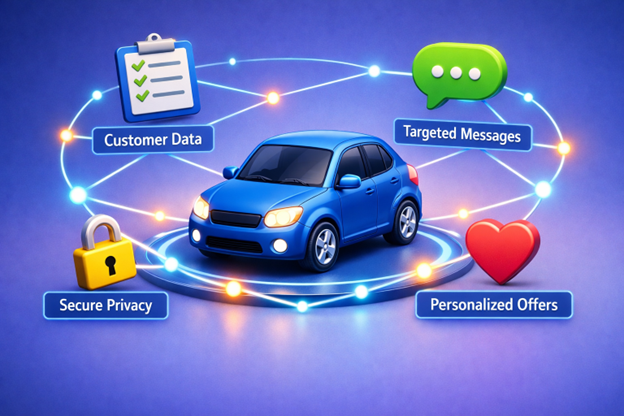
The most significant advantage of first-party data is the ability for marketers to personalize communications at scale. Automotive brands can use behavioral data, vehicle ownership records, or service milestones to segment and target their database. For example, if a dealership tracks tire rotation records, it can automate reminders for routine service, or, after a certain mileage threshold, send offers for new tires. Personalized outreach not only demonstrates attentiveness but also drives higher open and click-through rates by appealing to specific user needs.
Cost Efficiency
Reducing reliance on third-party data vendors and external aggregators has both financial and operational benefits. Proprietary data is collected without recurring purchase fees and is tailored for immediate relevance to your business goals. Furthermore, campaigns are more accurate and focused, minimizing off-target impressions and maximizing return on ad spend. For instance, retargeting previous dealership visitors with tailored offers is significantly more cost-effective than broad, generic advertising spends. Automotive marketers deploying strong data-driven personalization strategies have achieved measurable improvements in marketing efficiency and sales conversion.
Regulatory Compliance
With the ongoing evolution of privacy laws such as the General Data Protection Regulation (GDPR) and the California Consumer Privacy Act (CCPA), marketers need to prioritize compliant practices. First-party data, collected with customer consent, aligns with both current and forthcoming regulatory standards. Managing and auditing consent is easier, and consumers’ trust is reinforced. Demonstrating transparent data collection and use signals a brand’s respect for customer privacy, which is vital amid increased scrutiny from lawmakers and consumers alike.
Improved Customer Relationships
First-party data initiatives encourage two-way communication and greater transparency. When consumers see a brand using their information responsibly, responding to feedback, honoring privacy, and delivering value, they are more likely to return, refer, and even advocate. A company’s ability to remember service anniversaries and recommend upgrades at the right time builds rapport and nurtures long-term loyalty. According to Forbes, strong data stewardship correlates directly with improved customer retention in the automotive sector.
Real-World Applications
Many automotive brands are achieving notable results by leaning into first-party data strategies. For instance, a luxury carmaker used its own service-center data to identify customers nearing the end of their lease terms. They then delivered tailored promotions for new vehicle models, resulting in an 80% spike in customer engagement and a 58% boost in conversion rates. Notably, the brand reduced redundant ad impressions by 33 percent, emphasizing how smarter data use enables more effective spend and sustains audience goodwill.
Implementing First-Party Data Strategies
- Data Collection: Install robust mechanisms for capturing interactions across websites, CRM systems, dealership visits, and digital campaigns. This foundation is essential for a single, unified customer view.
- Data Management: Regularly cleanse and organize datasets to avoid duplication, errors, and compliance risks. Storing data securely ensures it remains an asset rather than a liability.
- Data Analysis: Harness analytics platforms to identify trends, segment audiences, and uncover actionable patterns that inform creative and media buys.
- Campaign Execution: Activate data to personalize remarketing, loyalty programs, and after-sales communication, increasing engagement and satisfaction.
- Performance Monitoring: Continuously track marketing metrics, tweaking and optimizing campaigns as new data insights emerge.
Conclusion
First-party data’s role in automotive media buying is foundational for long-term marketing success. Whether the objective is enhanced personalization, better cost controls, regulatory readiness, or improved customer loyalty, investing in direct data sets positions brands for performance now and resilience in the future. As competition mounts and third-party sources diminish, automotive marketers who prioritize their own data will stand out, delivering value to both their customers and their bottom line.