
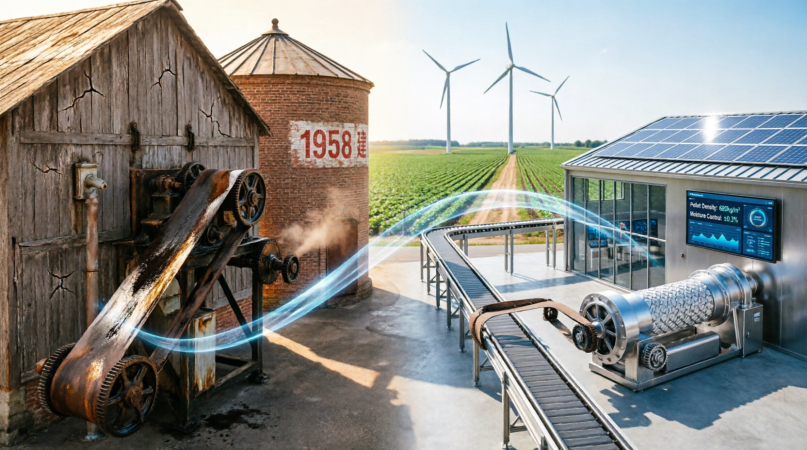

The evolution of feed mill equipment has transformed modern agriculture, shifting from manual, labor-intensive processes to highly automated systems designed for efficiency, precision, and sustainability. As global demand for livestock and poultry feed continues to rise, producers are adopting advanced technologies that improve output quality while reducing waste and energy consumption across operations.
Cruco Mill & Industrial Supply feed mill products play a vital role in this transformation by providing durable, high-performance machinery and components that support consistent production and long-term reliability. Their solutions help feed mill operators streamline processes, enhance productivity, and maintain strict quality standards while adapting to the evolving needs of modern agricultural production systems worldwide, ensuring sustainable growth across the agricultural sector to meet future demands.
Energy Consumption in Feed Mills
Feed production consumes significant energy, with pelleting processes accounting for up to 40 percent of a mill’s total power usage. Optimizing these high-energy areas, whether through motor upgrades, better insulation, or smarter scheduling, can lead to major cost savings and reduced environmental impact. A strong focus on energy efficiency also enables producers to meet evolving regulations and sustainability commitments.
In addition to technological upgrades, regular audits and real-time monitoring of energy consumption enable operators to quickly identify spikes or anomalies. Data-driven insights help facility managers make informed decisions about maintenance schedules, equipment replacements, and when to implement newer, greener solutions. Investing in energy-efficient lighting, variable frequency drives (VFDs), and automation for auxiliary systems can further reduce a feed mill’s overall carbon footprint. Workers are increasingly trained to recognize and implement energy-saving measures in their daily routines, supporting a culture of sustainability from the ground up.
Automation and Digital Integration
Digital automation is transforming feed mill operations. With programmable logic controllers (PLCs) and supervisory control and data acquisition (SCADA) systems, facilities can achieve precise process control, real-time monitoring, and rapid problem resolution. Automation boosts consistency, enables predictive maintenance, and reduces labor costs. This shift is critical as feed demand rises and global supply chains become more complex.
Additionally, blockchain technology is beginning to impact digital integration by enhancing traceability and transparency across the supply chain. Operators can now track raw material origins, monitor each processing stage, and ensure feed safety data with secure digital records. Integrated dashboard solutions bring instant visibility to key performance indicators such as batch yields, machine wear, and process anomalies. Cloud-based data storage ensures stakeholders, from managers to regulators, can access vital information anytime, streamlining audits and compliance reporting. This interconnectedness is laying the groundwork for future expansion into remote monitoring and even autonomous facility management.
Modular Feed Processing Systems
Modular design is redefining feed mill flexibility. Units like AGI’s FLEXmill combine efficient layout with scalable production, supporting operations that require compact setups and rapid adaptability. These systems can handle up to 10 metric tons of output per hour and help reduce installation times, operational disruptions, and maintenance demands. Modular solutions also support quick changes in formulation or production targets as market conditions shift.
Modular systems also simplify expansions and upgrades, making it easier for facilities to grow in response to market demands. Units can be added or reconfigured with minimal downtime, allowing businesses to stay competitive without extensive construction or workflow interruptions. This approach provides smaller operators an affordable path to world-class efficiency while allowing large facilities to trial innovations on a smaller scale before full integration. Ultimately, modularity provides unmatched agility and future-readiness in a fast-changing sector.
Conveyor Systems Enhancing Material Handling
Material handling is a core efficiency factor for feed mills. Today’s conveyor systems are more than basic transporters; advanced options integrate artificial intelligence to optimize batch accuracy, monitor flow rates, and minimize bottlenecks. These smart conveyors accelerate throughput, protect product integrity, and contribute to precise traceability, ensuring that each batch meets exact specifications.
New safety features, such as automated shutoffs and fault detection, further protect both human workers and feed quality, while hygienic design standards reduce contamination risks and cleaning downtime. Adjustable speed controls and modular conveyor segments enable adaptable routes that seamlessly respond to fluctuating production lines and different raw material characteristics. Ultimately, enhanced material handling drives consistency, traceability, and operational throughput for feed mills aiming for peak performance.
Particle Size Reduction Technologies
Reducing the size of feed particles boosts nutrient absorption for animals and lowers production costs. Roller mills, known for their superior energy efficiency (20–30 percent more efficient than hammermills), make them a popular choice in modern facilities. By selecting the optimal reduction technology for each feed type, mills achieve better performance metrics and lower power bills without sacrificing quality.
Many feed mills are also investing in multi-stage size reduction systems that allow for flexible adjustment of granule size. This level of control supports specialized feed formulation for different livestock species, maximizing feed conversion ratios and overall animal health. Enhanced dust-collection technology is often integrated into these systems to maintain air quality and protect worker health. Periodic calibration and maintenance routines ensure cutting and grinding systems deliver consistent results, reinforcing operational efficiency and quality assurance.
Artificial Intelligence in Feed Mill Operations
Artificial Intelligence is reshaping feed mill management. AI solutions process vast data streams on ingredient quality, equipment health, and animal responses to optimize decisions and improve margins. Predictive analytics reduces downtime, anticipates inventory needs, and highlights opportunities for formulation improvements, all enhancing both profitability and animal health.
Implementing AI-driven decision-making fosters smarter scheduling, effective resource allocation, and better risk detection. For example, machine learning algorithms can suggest optimal feed blend recipes based on weather data, seasonality, or recent health outcomes, improving nutritional profiles and reducing supply waste. AI also enhances customer service, offering automated reporting tools and support channels for producers. As these technologies mature, AI is expected to become integral to daily mill operations, driving long-term industry transformation.
Conclusion
Efficient feed mill equipment is revolutionizing agriculture by boosting productivity, reducing costs, and advancing sustainability through automation and artificial intelligence. This development enables producers to meet future global demands while encouraging sustainable practices. Collaboration among manufacturers, producers, and researchers will foster innovation, supported by continuous education and industry networking. By embracing technology and sustainable practices, feed mills are laying the foundation for efficient food production in an evolving agricultural landscape.