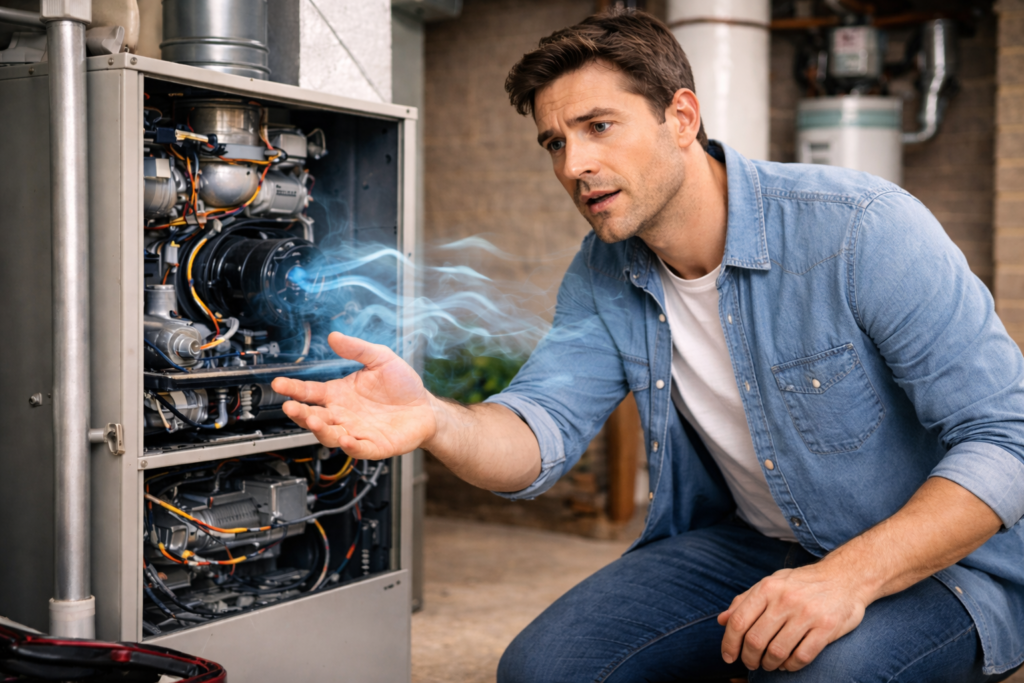

A furnace that turns on, runs briefly, and shuts off again may seem to be doing its job, but that pattern often signals trouble. During cold weather, this stop-and-start behavior can leave rooms unevenly heated, push energy bills higher, and place extra strain on parts that should last much longer. Many homeowners first notice it when their house never feels fully comfortable, even though the system seems to be running all day. Short cycling is not just an annoyance in winter. It is usually a sign that the furnace is responding to a control issue, an airflow restriction, a sizing problem, or a safety condition.
What This Article Covers
- Thermostat Signals Can Disrupt Heating Cycles
One of the most common reasons a furnace starts and stops too often during cold weather is poor thermostat control. If the thermostat is installed in a spot that warms up too quickly, such as near a supply vent, near direct sunlight, or too close to a busy room with extra heat, it can shut the furnace down before the rest of the home reaches the set temperature. Then, as the area cools again, the furnace starts back up, creating a repeating pattern that feels wasteful and frustrating. Faulty thermostat calibration can cause the same result by reading the indoor temperature incorrectly and sending mixed signals to the furnace throughout the day.
Cold weather makes this problem more obvious because the heating system is already working harder and cycling more often to keep up with outdoor conditions. Even a small thermostat error becomes more noticeable when the temperature outside drops sharply. Wiring issues, weak batteries in certain thermostat models, or outdated controls can also interrupt normal furnace operation. Instead of allowing a full heating cycle, the system keeps receiving start and stop commands that do not match the house’s actual needs. When that happens, comfort suffers first, but long-term wear on igniters, blowers, and control boards usually follows close behind.
- Airflow Restrictions Force The Furnace Off
A furnace also short-cycles when it cannot move air through the system as it was designed to. Dirty air filters are one of the simplest but most overlooked causes. When the filter is clogged, warm air stays trapped inside the furnace longer than it should, causing the heat exchanger to overheat. Once internal temperatures exceed safe operating limits, the high-limit switch shuts off the burner to protect the equipment. After the unit cools slightly, it starts again, only to repeat the same pattern. That repeated shutdown is often mistaken for a furnace problem when the real issue is airflow.
Blocked return vents, closed supply registers, dirty blower components, or undersized ductwork can create similar stress on the system. In some homes, changes in furniture placement or remodeling can reduce air movement enough to affect furnace performance during deep winter conditions. A heating contractor may also check whether the blower speed is set correctly for the furnace and duct system, as low airflow can trigger overheating even when the burner itself is operating normally. If homeowners notice short cycling, weak airflow from vents, a stale smell, or uneven heating in rooms, it often makes sense to have the system checked by a qualified company such as Besco Air Inc. before repeated overheating causes further damage.
- Oversized Equipment Heats Too Fast
Another major cause of frequent start-and-stop behavior is a furnace that is too large for the home. Bigger does not always mean better in heating. When a furnace has more output than the house actually needs, it reaches the thermostat setting very quickly and shuts down before completing a long, steady cycle. That may sound efficient at first, but it usually creates uneven temperatures from room to room and keeps the furnace from running long enough to distribute heat properly. During cold weather, the problem becomes more frustrating because some areas of the house may still feel chilly even though the thermostat appears satisfied.
Oversized furnaces are often found in homes where equipment was replaced without a proper load calculation. Sometimes an older unit was swapped out based on square-footage estimates or the size of the previous furnace, rather than actual heat-loss conditions. Insulation improvements, window upgrades, and air sealing can also reduce heating demand over time, leaving an existing furnace oversized for current conditions. Each short cycle adds another round of ignition, blower startup, and shutdown, which increases wear on internal parts. Instead of steady comfort, the house experiences bursts of heat followed by quick drops in temperature. That pattern is especially common in cold snaps, when homeowners expect reliable performance but get a system that behaves more like an on-off switch than a controlled heating appliance.
Repeated Cycling Should Not Be Ignored
When a furnace starts and stops too often during cold weather, the issue is usually tied to thermostat miscommunication, restricted airflow, incorrect sizing, or a safety control reacting to a real fault. The pattern may begin quietly, but it often leads to rising utility costs, uneven comfort, and extra wear on the system’s most important parts. Winter puts every weakness under pressure, which is why short cycling tends to show up when homeowners need heat the most. Addressing the cause early can protect the furnace, improve comfort, and reduce the chance of a more serious breakdown during the coldest part of the season.