
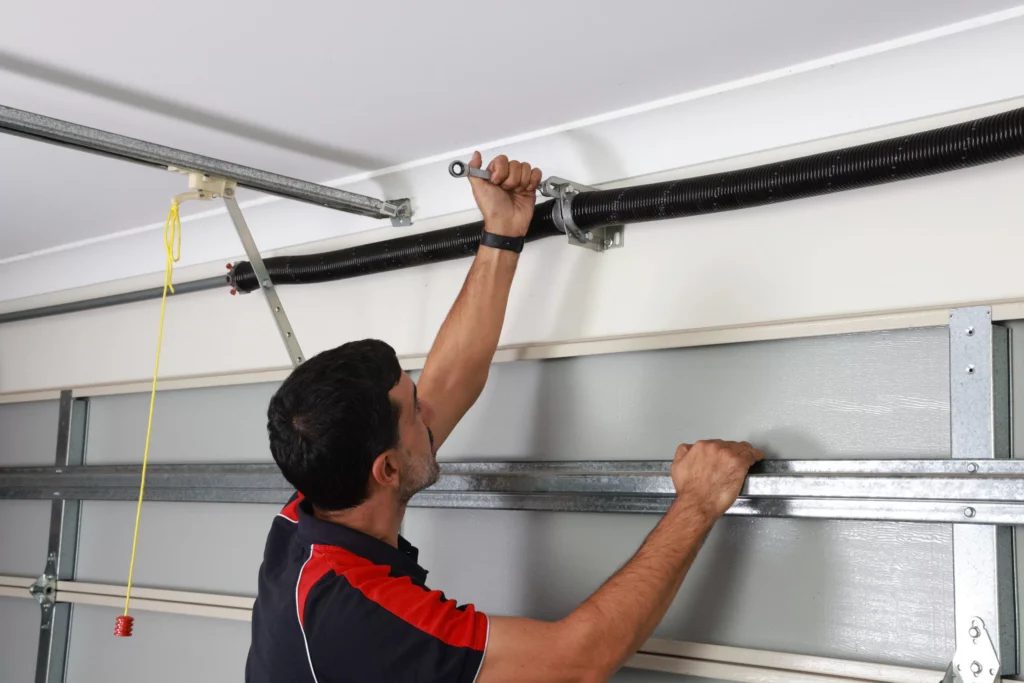

Garage door springs carry much more responsibility than many homeowners realize. They support the door’s weight, control movement, and help the opener work without strain. When springs weaken, snap, or lose tension, the entire system becomes harder and more dangerous to use. Because these parts store powerful energy, repair work should never be treated as a simple home project. Proper handling protects people, vehicles, walls, tracks, cables, and the door itself. Understanding the risks behind spring repair shows why trained service is the safer choice.
Spring Safety Matters
Stored Tension Creates Real Danger
Garage door springs operate under high tension, allowing them to lift and lower a heavy door with controlled movement. That stored force is useful during normal operation, but it becomes hazardous when someone tries to loosen, adjust, or replace a spring without proper tools and training. A spring can release suddenly, propelling metal parts, winding bars, or cables with enough force to cause serious injury. The danger is not always visible because a worn spring may still look stable from the outside. A trusted Garage door supplier can connect homeowners with the correct parts and trained service, reducing the risk of unsafe repair attempts. Even small mistakes, such as using the wrong tool or turning a spring the wrong way, can cause sudden movement. This is why spring work should be handled carefully from the start.
Correct Spring Matching Protects the Door
Garage door springs are not one-size-fits-all parts. The right spring depends on the door’s height, width, weight, material, and design. A steel double door needs different support than a lightweight single door, and an insulated door may require a different spring size than a non-insulated one. When the wrong spring is installed, the door may feel too heavy, rise too quickly, close unevenly, or place too much strain on the opener. Over time, this can damage cables, rollers, hinges, tracks, and the motor. Trained technicians measure the door and match the spring to the system’s actual load instead of guessing. They also consider spring cycle life, balance, and compatibility with the existing hardware. Proper matching helps the door move smoothly and reduces wear throughout the system, supporting long-term performance and safer daily use.
Balance Keeps the System Working Smoothly
A garage door depends on balance. When springs are adjusted correctly, the door should lift with controlled effort and stay steady when opened partway. If the tension is too weak, the opener may struggle to lift the door, creating extra stress on the motor and drive system. If the tension is too strong, the door may rise too fast or fail to close properly. Both conditions can pose safety risks and shorten the lifespan of connected parts. Trained technicians test the balance before and after spring work to confirm that the door moves evenly along the tracks. They also check cables, drums, brackets, and rollers because spring failure can affect more than one component. This careful adjustment helps prevent jerky movement, uneven gaps, loud operation, and repeated breakdowns. A balanced system protects the door and makes daily operation more dependable.
Hidden Damage Can Be Missed
When a garage door spring fails, the broken spring may not be the only problem. The sudden loss of tension can strain cables, bend brackets, shift drums, loosen hardware, or pull the door slightly out of alignment. A homeowner may replace the obviously broken part and still have a door that operates poorly because deeper issues were missed. Trained service includes inspection of the full lifting system, not only the spring. This matters because a damaged cable or worn bearing can cause another failure soon after the repair. Technicians also check whether the door panels are moving squarely within the tracks and whether the opener is carrying weight it shouldn’t. Finding these issues early prevents repeated service calls and protects the door from further damage. Spring repair is not just about replacing metal; it is about restoring the whole lifting system.
Proper Tools Reduce Repair Risks
Garage door spring work requires tools designed for handling controlled tension. Improvised tools, such as screwdrivers or basic household bars, can slip during winding or unwinding and cause injury or equipment damage. Trained technicians use winding bars, clamps, ladders, sockets, safety supports, and measuring tools suited to the job. They also follow a controlled sequence: securing the door, safely releasing tension, removing damaged parts, installing the correct spring, winding it to the appropriate level, and testing movement. Each step affects the next one. Skipping a step or rushing the process can leave the system unstable. Proper tools also help protect the door surface, tracks, and surrounding walls from accidental impact. A careful repair process reduces sudden movement and gives the finished door a smoother, safer operation. This is one of the clearest reasons spring work should not be treated as a casual repair.
Professionals should handle garage door springs because they control a heavy moving system under high tension. The risks include injury, wrong part selection, poor balance, hidden damage, and added strain on the opener. Trained service protects the entire door by using proper tools, accurate measurements, and careful testing. A spring repair done correctly can restore smooth movement, reduce noise, and help prevent future failures. For homeowners, the safer choice is to avoid risky adjustments and to rely on professional help whenever springs show signs of wear, break, or lose tension.