
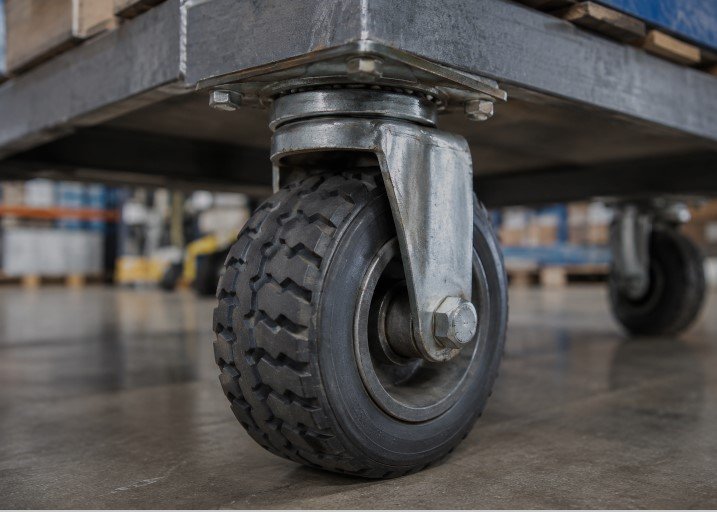

Casters may be small components, but they have a major effect on how carts, racks, mobile workstations, and equipment move through a facility. Selecting the right 5 inch caster wheels or another wheel size can influence starting force, steering control, floor protection, noise, and the ability to handle transitions such as thresholds and dock plates.
A poor caster match can make routine material handling harder than it needs to be. Wheels that bind, vibrate excessively, skid, or struggle over uneven surfaces can interrupt work and make loads more difficult to guide. A careful selection process helps match the equipment to its load, floor, environment, and movement pattern.
Why Caster Choice Matters
Mobile equipment should be easy to start, stop, turn, and guide without unnecessary force. The wrong caster can increase vibration, create excessive noise, mark finished floors, or reduce control around people and machinery. Wheel selection is therefore part of a practical material-handling and workstation design decision, rather than an afterthought made only when a wheel fails.
Layout also matters. Handle placement, aisle width, turning frequency, and the distance a cart travels all affect which wheel configuration makes sense. In general, equipment should be pushed when possible, and OSHA’s guidance on pushing materials highlights how wheel condition, surface quality, and maintenance can affect the force needed to move a load.
Start With The Full Load
Begin with the complete working weight, not just the empty cart. Include the equipment itself, containers, tools, products, attachments, and the heaviest normal load. A basic starting point is:
Total Working Load ÷ Number Of Casters = Basic Load Per Caster
That number is only a baseline. Weight is rarely evenly distributed across all wheels, especially when a cart crosses a crack, turns sharply, or sits on an uneven surface. Selecting a caster with an appropriate margin above the calculated minimum helps account for changing loads and real operating conditions.
Match The Wheel To The Floor
Floor conditions strongly influence wheel performance. Hard wheels can roll efficiently on smooth, clean surfaces, while softer treads may reduce noise and help protect finished floors. However, softer materials may create more rolling resistance under heavier loads, so the best option depends on the application.
Floor Questions To Ask
- Is the surface smooth, rough, cracked, wet, dusty, or uneven?
- Will the equipment cross thresholds, expansion joints, ramps, or dock plates?
- Does the floor need protection from scuffs, marks, or indentation?
- Is debris such as wire, tape, fabric, chips, or residue common?
- Will the cart travel through tight aisles or over sloped areas?
Choose The Right Wheel Size
Wheel diameter affects how the equipment handles obstacles. Larger wheels generally roll over small gaps, cracks, and transitions more easily than smaller wheels. They can also be useful for heavier loads and longer travel routes. The trade-off is that larger wheels may increase equipment height and require more clearance around the mounting area.
General Wheel-Size Considerations
- Small wheels: Often useful where a low overall height and compact footprint are priorities.
- Medium wheels: Common for carts, fixtures, and mobile workstations used on relatively smooth floors.
- Large wheels: Often better suited to heavier loads, floor transitions, ramps, and less even surfaces.
Before replacing a caster, verify the overall caster height, wheel width, mounting dimensions, and clearance beneath the equipment. A wheel that fits the mounting plate but changes the equipment height substantially may affect stability or alignment.
Compare Swivel, Rigid, And Dual-Wheel Designs
Swivel casters rotate around a vertical axis, making them useful for turning in confined areas. Rigid casters point in one direction and help equipment track more consistently in a straight path. Many carts use a combination of both designs to balance maneuverability with directional control.
- Swivel casters: Useful for frequent turns and close-quarters movement.
- Rigid casters: Useful for longer straight travel and predictable tracking.
- Dual-wheel casters: Can distribute weight across a wider contact area in suitable applications.
- Kingpinless designs: May be considered where frequent impacts or demanding service conditions are expected.
Add Brakes And Movement Controls
Brakes, swivel locks, directional locks, and total-lock systems can help prevent unwanted movement. These features are especially valuable when equipment is loaded, used as a temporary workstation, parked near doorways, or positioned on a slope. A brake should support safe positioning, not replace it.
Test the braking and locking features under a normal working load before putting the equipment into regular service. Material-handling safety considerations for casters and wheels also emphasize that load capacity, surface conditions, and braking choices should be evaluated together.
Account For The Work Environment
The operating environment can change the right caster choice. Heat, moisture, cleaning routines, chemicals, outdoor exposure, and static-sensitive work areas may affect wheel tread, bearings, finishes, and mounting hardware. A wheel that performs well in a dry warehouse may not be appropriate for washdown, food-service, laboratory, or outdoor applications.
Environment-Specific Factors
- Check temperature limits where heat exposure is expected.
- Consider corrosion-resistant materials in damp or washdown areas.
- Confirm tread and frame compatibility where chemicals are present.
- Choose designs that are easier to clean where debris buildup is a concern.
- Review anti-static or conductive requirements for sensitive environments.
Build A Simple Inspection Routine
Regular checks can prevent a small caster issue from becoming a handling problem. Inspect wheels for flat spots, cracks, cuts, uneven wear, and debris wrapped around the axle. Check mounting bolts, stems, forks, and plates for looseness or visible damage. Spin each wheel and test brakes or locks under normal operating conditions.
Replace components that no longer roll, swivel, or lock correctly. Keeping a simple inspection record can also help teams identify recurring failures and determine whether the issue stems from overload, floor conditions, environmental exposure, or an unsuitable caster specification.
Use A Caster Selection Checklist
- Measure the equipment and identify its mounting method.
- Calculate the full working load and allow for uneven distribution.
- Inspect floors for cracks, slopes, thresholds, debris, and moisture.
- Select tread material based on the floor and operating environment.
- Choose a wheel diameter that provides sufficient clearance and obstacle-handling capability.
- Decide on swivel, rigid, dual-wheel, and locking requirements.
- Confirm overall height, bolt pattern, stem size, and available mounting space.
- Test the equipment under a normal load before broad deployment.
Final Thoughts
Caster selection is as much a workflow and safety decision as a hardware purchase. The most effective choice balances load capacity, wheel size, tread material, floor conditions, movement controls, environmental demands, and maintenance needs. A careful fit check and a routine inspection process can help mobile equipment move more smoothly, remain easier to control, and provide more dependable service.
Read Also:- https://flypapermagazine.com/