

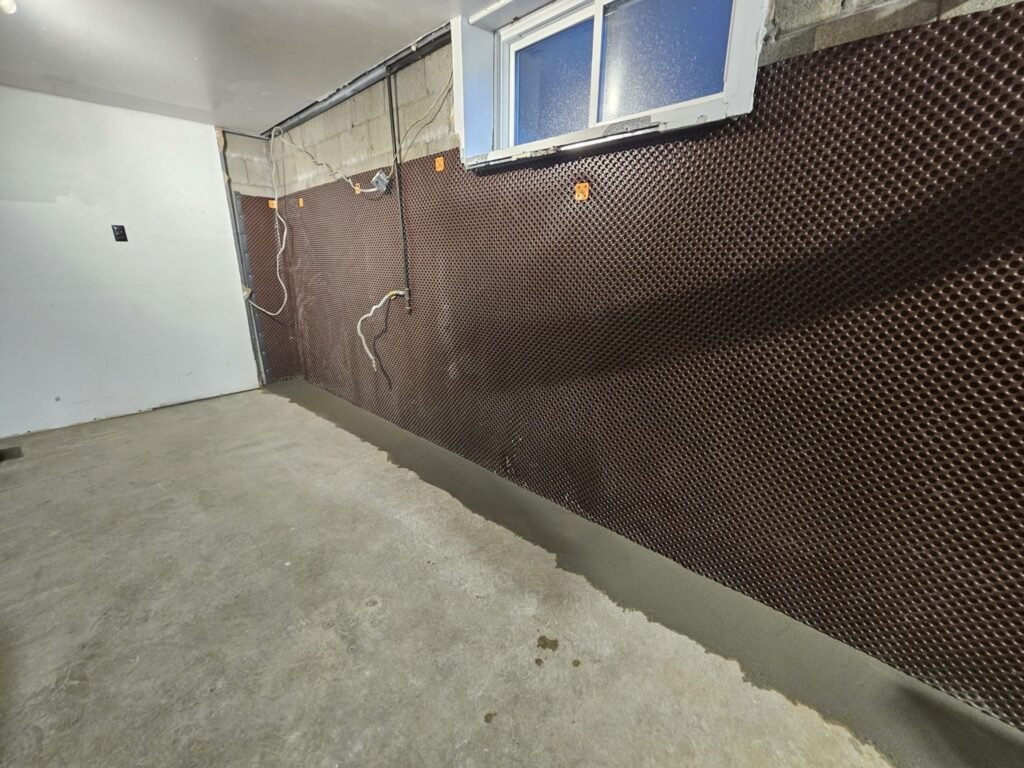
Most basements start the same way: concrete floors, bare walls, a sump pump in the corner, and a collection of things that didn’t fit anywhere else. They feel cold, echo when you walk through them, and get used about three times a year. But the bones of a great living space are already there. What’s missing is intention — a plan that addresses the specific challenges basements present and turns them into features rather than obstacles.
These seven tips are the difference between a basement that gets tolerated and one that becomes a room people actually want to be in.
Tip 1: Solve the Moisture Problem First — Everything Else Depends on ItThis tip comes first because skipping it makes every other tip pointless.
A basement with unresolved moisture issues cannot be made cozy. Humidity damages flooring, causes paint to peel, grows mold behind walls, and produces the persistent smell that no amount of candles or fresh paint will cover permanently. Every dollar invested in finishing or decorating an unprotected basement is a dollar at risk.
Before anything else, have the space assessed by a waterproofing professional. Find out whether your foundation has active seepage, whether the humidity levels are being managed properly, and whether your sump pump is adequately sized and functioning. If issues exist, address them first. Direct Waterproofing in Markham offers free inspections and can tell you exactly what your basement needs before a renovation begins — protecting everything you invest in the space afterward.
A dry basement is the foundation every other tip builds on. Without it, you’re decorating a problem, not solving one.
Tip 2: Raise the Floor Temperature
Cold floors are one of the most immediate sensory signals that a basement doesn’t feel like a living space. Concrete subfloors stay cool regardless of what your thermostat says — and that coldness travels through whatever surface material sits on top of it unless you intervene.
The solution is a combination of the right underlayment and the right flooring material. A foam or cork underlayment beneath your finished floor creates thermal separation between the cold slab and the surface you walk on. Luxury vinyl plank over a quality underlayment is one of the best choices available — warm underfoot, moisture-tolerant, and genuinely attractive. Engineered hardwood is another strong option if you prefer real wood.
Layer large area rugs over your finished flooring in seating and activity areas. The tactile warmth of a rug underfoot changes how a room feels more immediately than almost any other single change you can make.
Tip 3: Fix the Lighting Before You Fix Anything Else
Bad lighting is the fastest way to make a basement feel oppressive. A single overhead fixture in the center of the ceiling produces shadows, flattens the room, and does nothing to address the natural darkness of a below-grade space.
The approach that works is layering. Recessed pot lights distributed evenly across the ceiling eliminate dark corners and create a clean baseline. Table lamps and floor lamps in activity areas add warmth and dimension at eye level. Under-shelf lighting in built-in areas and along kick boards creates a sense of depth that makes the space feel larger.
Bulb temperature is critical. Warm white bulbs — 2700K to 3000K — make basements feel intentional and inviting. Cool white or daylight bulbs reinforce every negative assumption people have about basements. Warm light is not negotiable in this context.
If your layout allows for egress windows or window well enlargement, prioritize it. Natural light changes the character of a basement in ways that artificial lighting can approach but never fully replicate.
Tip 4: Address the Ceiling Deliberately
The ceiling is the element most people leave unresolved — and it shows. An unfinished ceiling with exposed joists, pipes, and ductwork can look either intentional or neglected depending entirely on how it’s handled.
If you’re keeping it open, paint everything — joists, pipes, ducts, electrical — in a single matte dark color. Black or deep charcoal works particularly well. The uniformity makes the ceiling recede visually, the elements look designed rather than exposed, and the contrast with lighter walls gives the space a confident, purposeful quality.
If you’re drywalling, keep soffits consistent and push the drywall as high as possible to maximize perceived ceiling height. Recessed lighting flush with the drywall surface eliminates any fixture that hangs down and visually lowers the ceiling further.
Drop ceilings work well where access to plumbing or electrical is required, but choose a tile with visual weight — flat white ceiling tiles in a basement look institutional. Darker, textured panels look deliberate.
Tip 5: Define Zones Rather Than Filling Space
An open basement without defined zones feels unfinished no matter how much furniture is in it. A basement with clear, intentional zones feels designed even when it’s modestly furnished.
Think about how you’ll actually use the space. A seating area anchored by a rug and a sofa. A built-in desk or workstation in a dedicated corner. A play zone for kids with durable flooring and wall-mounted storage. A wet bar along one wall. Each zone has its own identity, its own lighting, its own furniture — and together they make the basement feel like a multi-functional living space rather than a large room with stuff in it.
The transition between zones matters too. A change in flooring material, a half-wall, open shelving as a divider, or simply a shift in the rug and furniture arrangement can define separate areas without building walls.
Tip 6: Bring in Texture to Replace What Basements Lack
Cozy is a tactile experience. Rooms that feel warm and inviting have it because of the range of materials present — soft against hard, smooth against rough, light against heavy. Basements that feel cold usually feel that way because every surface is the same: hard, smooth, and cool.
Introduce texture deliberately. A deep sectional with removable cushion covers. Curtains hung floor to ceiling — even without windows — that add softness and the illusion of height. Woven baskets for storage. A chunky knit throw draped over seating. Cushioned ottomans that serve as both seating and a coffee table surface. Wooden shelving that introduces organic warmth against painted concrete or drywall.
None of these need to be expensive. The effect comes from the layering, not the price tag.
Tip 7: Control Sound
Basements with hard surfaces — concrete, drywall, tile — have notoriously poor acoustics. Sound bounces rather than absorbs, creating an echo that makes the space feel empty regardless of what’s in it.
Soft furnishings absorb sound naturally: rugs, upholstered furniture, curtains, throw pillows. Bookshelves full of books are surprisingly effective acoustic diffusers. Acoustic panels — which now come in designs that look like art — can be added to walls where echo is most pronounced.
If the basement is being used as a home theater or music space, basic acoustic treatment on the walls makes an enormous difference to how the room sounds and feels. For general living use, the combination of a large rug, an upholstered sofa, and curtains handles most of the problem without any specialized treatment at all.