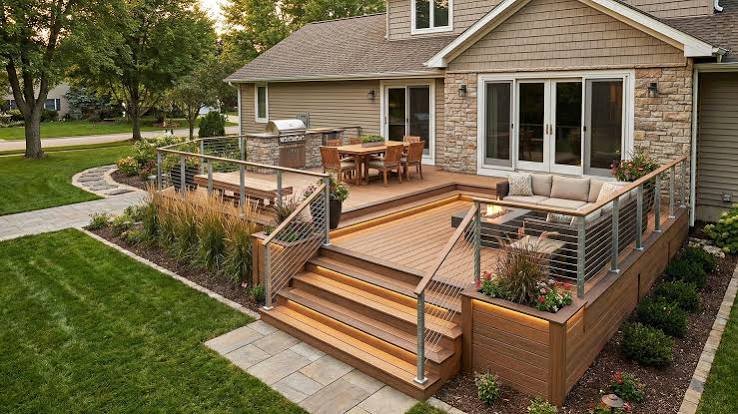

A backyard deck can become a favorite place for meals, quiet mornings, gatherings, and time outdoors, but the best results start well before materials are ordered. Reviewing examples of deck construction can help homeowners identify the features, circulation paths, and levels that may suit their own property.
Rather than treating a deck as empty square footage to fill, begin by deciding how it should work in everyday life. A modest platform with a clear purpose often feels more comfortable and useful than a larger space with no plan for seating, cooking, shade, or movement.
Start With Purpose
Write down the activities the deck needs to support before choosing its dimensions. Common priorities include outdoor dining, grilling, reading, pet-friendly play, family visits, or a smooth connection to a pool, garden, or lawn. This list provides a practical basis for deciding where to place stairs, how much open floor area is needed, and whether shade or storage should be included from the start.
Study The Yard Before Drawing Plans
The yard itself should guide the design. Observe available space, slope, drainage after rain, tree roots, sun exposure, wind, neighboring views, and access from doors and walkways. Visit the area at several times of day. A spot that feels inviting for breakfast may receive intense afternoon sun, while a shaded corner may be more suitable for a lounge area.
Choose Materials For Weather And Maintenance
Decking should be selected for more than color. Local weather, foot traffic, expected upkeep, surface temperature, texture, and long-term appearance all matter. Carefully compare care instructions and warranty terms, and consider how wet leaves, spilled food, pets, and direct sunlight may affect the chosen surface.
Details such as railings, privacy panels, stair components, and decorative screens may also influence the final design. When a project calls for durable, custom-sized metal elements, metal fabrication can be relevant to planning pieces that fit the deck layout and overall exterior style.
Wood Decking
- Provides a traditional, natural appearance and can be stained in many colors.
- Usually requires regular cleaning, sealing, staining, or refinishing.
- May be affected by moisture, insects, cracking, and prolonged sun exposure.
- Can be a good option for homeowners who are comfortable with recurring maintenance.
Composite And PVC Decking
- Generally needs less routine maintenance than many wood products.
- Is available in a broad range of colors, grain patterns, and board widths.
- May resist moisture and staining better, depending on the product.
- Often has a higher initial cost, so long-term care expectations should be part of the comparison.
Metal And Specialty Options
Aluminum and other specialty systems can make sense for particular structural or design goals. Consider heat in direct sun, traction in wet conditions, sound underfoot, weight, finish durability, and how the material will coordinate with stairs and railings. No, a single product is ideal for every yard or budget.
Plan A Layout That Supports Daily Life
A deck feels more spacious when it has clear activity zones. Measure existing or planned furniture before finalizing dimensions, including the room needed to pull out chairs, open storage boxes, and walk safely around a grill. Leave a direct route between the house, seating areas, stairs, and the yard so people do not need to weave around furniture.
- Dining zone: Allow room for chairs and a clear path around the table.
- Lounge zone: Group seating for conversation without blocking circulation.
- Cooking zone: Keep grills and food-prep surfaces away from doors, railings, and combustible materials.
- Transition zone: Place stairs, gates, and paths where they support natural movement through the yard.
Build Safety Into The Design
Structural planning deserves the same attention as finishes. Footings, framing, fasteners, stairs, railings, drainage, and attachment points must be suited to the site and project. In particular, a deck connected to a house needs an appropriate structural connection, since deck ledger connections should not rely on nails alone. Local permit and inspection requirements can vary, so confirm them before construction begins.
Safe planning also includes stable stairs with consistent dimensions, railings where required, sensible spacing between railing components, slip-resistant walking surfaces, and proper ventilation beneath the deck. Plan the locations of grills, heaters, outlets, and lighting to address safety clearances and weather protection early.
Add Shade, Light, And Comfort
Comfort features can extend the time a deck is usable without making it overly complicated. Pergolas, umbrellas, covered sections, outdoor fans, privacy screens, benches, and weather-resistant cushions can all improve the experience. Lighting is easiest to coordinate before framing and finishes are complete. Low-glare stair and walkway lights improve visibility, while well-designed LED lighting is durable and energy-efficient.
Control Costs Before Construction Begins
A realistic budget includes more than deck boards. Account for design work, permits, demolition, grading, drainage, framing, footings, stairs, railings, electrical work, lighting, furniture, and future maintenance. Set a total spending range, separate required features from optional upgrades, request a written scope of work, and retain a reserve for hidden site conditions. The lowest initial price is not always the lowest long-term cost.
Avoid Common Planning Mistakes
- Making the deck too small for the intended furniture and activities.
- Ignoring drainage patterns, grade changes, or tree roots.
- Choosing a surface based only on appearance.
- Forgetting shade, storage, electrical needs, or maintenance access.
- Placing stairs where they interrupt natural movement.
- Failing to confirm permits, property restrictions, and structural requirements.
Common Questions About Deck Planning
How Early Should Planning Begin?
Begin several months before the intended construction date when possible. Extra time allows for site observation, material comparisons, permit research, budgeting, and layout revisions.
Should A Deck Match The Home?
It should coordinate rather than match exactly. Repeating a trim color, material texture, or architectural line can create a cohesive appearance while allowing the deck to retain its own character.
Is A Large Deck Always Better?
No. Size should follow use. A well-zoned deck that fits daily routines can be more comfortable, easier to maintain, and less costly than an oversized structure.
What Should Be Discussed With A Builder?
Discuss site conditions, drainage, structural support, materials, maintenance, permit responsibilities, stair and railing details, project schedule, payment stages, and warranty coverage. Clear conversations before work begins reduce the risk of expensive changes later.
Conclusion
A successful deck begins with thoughtful planning. When its layout supports real routines, its materials fit the climate and maintenance expectations, and safety is addressed from the beginning, the finished space can remain comfortable and useful for years. Careful preparation also makes it easier to compare options, manage costs, and make confident decisions before construction starts.
Read Also: flypapermagazine.com