
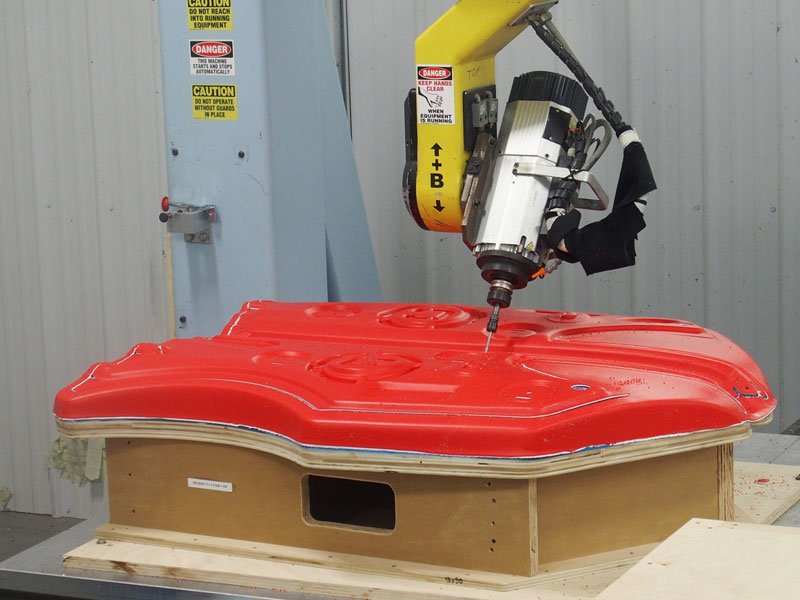

Key Takeaways
- Successful thermoformed parts begin with design decisions made before production.
- Material selection should reflect the part’s environment, appearance, strength, and cleaning needs.
- Draft, corner radii, draw depth, wall thickness, and trimming all influence part quality.
- Vacuum forming and pressure forming support different levels of detail and surface definition.
- Prototype testing and repeatable inspections help prevent expensive production changes.
- Kansas manufacturers can improve efficiency by reducing material waste and planning for scalable production.
For Kansas equipment builders, agricultural suppliers, OEMs, and product teams, thermoforming can be a practical way to produce durable plastic covers, housings, trays, panels, and protective components. Teams evaluating custom parts can browse the website to see how a thermoforming partner can support projects from early design review through production. A well-planned part is especially important when it will face real Midwest working conditions, including frequent handling, outdoor exposure, dust, moisture, temperature changes, and demanding assembly environments. The most reliable results come from treating geometry, material, tooling, finishing, and inspection as connected decisions rather than separate tasks.
The Role Of Thermoforming In Modern Product Design
Thermoforming shapes a heated thermoplastic sheet over or into a tool, then cools the material so it retains its three-dimensional form. This flexible process can accommodate large components that would be costly or impractical to make using other methods. A basic thermoforming process overview is useful background, but project success depends on the details of the actual part. Compared with injection molding, thermoforming may require less complex tooling for appropriate applications and can make design iteration more approachable. Compared with sheet metal, it can provide corrosion-resistant plastic surfaces, integrated contours, color options, and lower part weight. It is commonly considered for equipment enclosures, vehicle panels, medical trays, material-handling products, and agricultural equipment components.
Design Basics That Shape The Final Part
A thermoformed part should be designed for controlled stretching. Copying a design directly from an injection-molded or fabricated-metal component can create avoidable problems with thinning, release from the tool, trimming, or fit.
Important Design Factors
- Draft: Angled walls help the finished part release from the tool without dragging or damage.
- Wall thickness: Material becomes thinner where it stretches most, particularly in deep draws and around sharp transitions.
- Corner radii: Generous radii encourage smoother material flow and reduce stress at tight corners.
- Ribs and supports: Properly placed formed features can add stiffness without relying only on a thicker sheet.
- Cutouts and openings: Holes, slots, and mounting locations should be planned around trimming, assembly access, and required tolerances.
- Surface detail: Texture, gloss, logos, and decorative finishes should be reviewed early because tool surfaces influence the formed appearance.
How To Select The Right Thermoplastic
Material choice should start with the part’s service environment. A component used inside a clean facility may need a different balance of properties than a protective cover on Kansas farm, industrial, or transportation equipment. Consider expected heat, impact, chemical contact, ultraviolet exposure, cleaning procedures, stiffness, and appearance before selecting a sheet. ABS, HDPE, PETG, polycarbonate, acrylic, and thermoplastic olefin are among the materials used in thermoforming applications. Each has tradeoffs involving impact performance, chemical resistance, rigidity, transparency, weatherability, finish, and forming behavior. Material suppliers and manufacturing teams should confirm the appropriate grade for the specific application rather than choosing solely based on cost or a familiar material name.
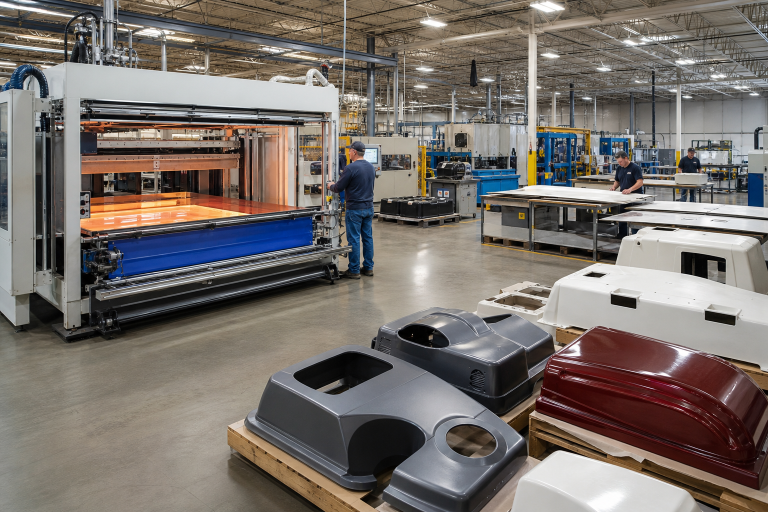
Vacuum Forming And Pressure Forming
Both methods begin with heating a plastic sheet, but they create different design opportunities.
- Vacuum forming: A vacuum pulls the heated sheet against the tool. It is often a strong fit for larger parts with broad curves, protective covers, trays, and liners, as well as applications where efficient production is a priority.
- Pressure forming: Added air pressure works with vacuum to press the heated sheet more firmly against the tool. It can better reproduce sharper surface definition, textures, lettering, and detailed features.
- Planning decision: Select the method based on the required visual detail, geometry, tolerances, production volume, and budget. A detailed customer-facing panel may justify pressure forming, whereas a straightforward equipment guard may not.
Tooling Choices And Prototype Planning
Tooling affects surface finish, cycle time, dimensional consistency, and development cost. A prototype tool can be useful when the design is still changing, while a production-grade tool may be better when repeatability and long-term output matter most. Tool vents must allow air to escape during forming, and cooling considerations can influence both throughput and part stability. Prototype parts should be checked in the environment where they will actually work. That may mean installing a cover on equipment, testing attachment points, evaluating clearance around moving parts, or confirming that operators can clean and service the finished assembly. Early testing turns assumptions into observable results.
Quality Control From First Sample To Production
Quality control should begin with design review, not final inspection. The first samples should be evaluated for critical dimensions, wall thickness, warpage, webbing, surface marks, trim quality, color, texture, and fit with mating components. Functional tests should reflect the stresses the part is expected to encounter. Repeatable inspection methods are important because one acceptable sample does not prove that a process will remain consistent. Process records, documented acceptance criteria, digital measurement tools, and checks across multiple production parts help teams identify variation before it affects downstream assembly or customers.
Material Efficiency And Sustainability
Sustainability in thermoforming begins with efficient engineering. Reducing unnecessary thickness, improving sheet utilization, minimizing secondary components, and planning trim scrap handling can reduce material use and simplify production. Recycled-content materials may be appropriate for some applications, but their appearance, consistency, performance, and application requirements must be reviewed carefully. Lightweighting should never come at the expense of required durability. The best approach is to use only the material needed to meet functional demands, then validate the part through prototype and production testing.
A Practical Project Checklist
- Define the part’s purpose, operating environment, and expected service life.
- Document critical dimensions, mating features, tolerances, and appearance requirements.
- Identify material needs for impact, heat, chemicals, weather, stiffness, and cleaning.
- Review draft, depth, corners, ribs, cutouts, and trimming with a manufacturing team.
- Select the forming method and tooling approach that fit the project.
- Build prototypes, test them under realistic conditions, and revise as needed.
- Set measurable inspection standards before full production begins.
Final Thoughts
Durable rotationally molded products begin with practical decisions about shape, wall structure, material, tooling, and expected production volume. For Kansas organizations building products that must handle demanding outdoor, agricultural, industrial, or recreational use, early collaboration between design and manufacturing teams can prevent costly changes and support reliable performance over time. Product requirements should be reviewed alongside expected operating conditions, including exposure to sunlight, moisture, temperature changes, chemicals, impacts, and repeated handling when applicable. Designers should also consider draft angles, corners, openings, inserts, mounting points, and other features that may affect molding, part removal, or consistency. Wall thickness should be evaluated carefully because uneven or overly thin sections can affect part performance and production results. Material selection should match the intended application while also considering processing requirements and long-term environmental exposure. Tooling costs and expected production volume should be reviewed together so the manufacturing approach remains practical for the project’s business case. Prototypes or sample parts can provide an opportunity to evaluate fit, function, and manufacturability before making larger production commitments. By addressing these factors early and maintaining communication throughout design and production, Kansas manufacturers can develop rotationally molded products that are easier to produce consistently and better suited to their intended use.